George Orwell - The Complete Works
Здесь есть возможность читать онлайн «George Orwell - The Complete Works» — ознакомительный отрывок электронной книги совершенно бесплатно, а после прочтения отрывка купить полную версию. В некоторых случаях можно слушать аудио, скачать через торрент в формате fb2 и присутствует краткое содержание. Жанр: unrecognised, на английском языке. Описание произведения, (предисловие) а так же отзывы посетителей доступны на портале библиотеки ЛибКат.

- Название:The Complete Works
- Автор:
- Жанр:
- Год:неизвестен
- ISBN:нет данных
- Рейтинг книги:3 / 5. Голосов: 1
-
Избранное:Добавить в избранное
- Отзывы:
-
Ваша оценка:
The Complete Works: краткое содержание, описание и аннотация
Предлагаем к чтению аннотацию, описание, краткое содержание или предисловие (зависит от того, что написал сам автор книги «The Complete Works»). Если вы не нашли необходимую информацию о книге — напишите в комментариях, мы постараемся отыскать её.
Eric Arthur Blair (25 June 1903 – 21 January 1950), known by his pen name George Orwell, was an English novelist, essayist, journalist and critic. His work is characterised by lucid prose, biting social criticism, opposition to totalitarianism, and outspoken support of democratic socialism.
Novels included in this collection:
– Down and Out in Paris and London (1933)
– Burmese Days (1934)
– A Clergyman's Daughter (1935)
– Keep the Aspidistra Flying (1936)
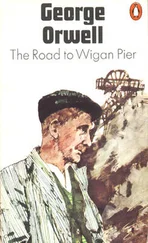
– The Road to Wigan Pier (1937)
– Homage to Catalonia (1938)
– Coming Up for Air (1939)
– Animal Farm (1945)
– Nineteen Eighty-Four (1949)
The Complete Works — читать онлайн ознакомительный отрывок
Ниже представлен текст книги, разбитый по страницам. Система сохранения места последней прочитанной страницы, позволяет с удобством читать онлайн бесплатно книгу «The Complete Works», без необходимости каждый раз заново искать на чём Вы остановились. Поставьте закладку, и сможете в любой момент перейти на страницу, на которой закончили чтение.
Интервал:
Закладка:
At this the surly man looked less suspicious, and sat down on the edge of the table. The unshaven one began to question me in French, making notes on a slip of paper. Was I a Communist? he asked. By sympathy, I answered; I had never joined any organization. Did I understand the political situation in England? Oh, of course, of course. I mentioned the names of various Ministers, and made some contemptuous remarks about the Labour Party. And what about Le Sport? Could I do articles on Le Sport? (Football and Socialism have some mysterious connection on the Continent.) Oh, of course, again. Both men nodded gravely. The unshaven one said:
'Évidemment, you have a thorough knowledge of conditions in England. Could you undertake to write a series of articles for a Moscow weekly paper? We will give you the particulars.'
'Certainly.'
'Then, comrade, you will hear from us by the first post tomorrow. Or possibly the second post. Our rate of pay is a hundred and fifty francs an article. Remember to bring a parcel of washing next time you come. Au revoir, comrade.'
We went downstairs, looked carefully out of the laundry to see that there was no one in the street, and slipped out. Boris was wild with joy. In a sort of sacrificial ecstasy he rushed into the nearest tobacconist's and spent fifty centimes on a cigar. He came out thumping his stick on the pavement and beaming.
'At last! At last! Now, mon ami, our fortune really is made. You took them in finely. Did you hear him call you comrade? A hundred and fifty francs an article—Nom de Dieu, what luck!'
Next morning when I heard the postman I rushed down to the bistro for my letter; to my disappointment, it had not come. I stayed at home for the second post; still no letter. When three days had gone by and I had not heard from the secret society, we gave up hope, deciding that they must have found somebody else to do their articles.
Ten days later we made another visit to the office of the secret society, taking care to bring a parcel that looked like washing. And the secret society had vanished! The woman in the laundry knew nothing—she simply said that 'ces messieurs' had left some days ago, after trouble about the rent. What fools we looked, standing there with our parcel! But it was a consolation that we had paid only five francs instead of twenty.
And that was the last we ever heard of the secret society. Who or what they really were, nobody knew. Personally I do not think they had anything to do with the Communist Party; I think they were simply swindlers, who preyed upon Russian refugees by extracting entrance fees to an imaginary society. It was quite safe, and no doubt they are still doing it in some other city. They were clever fellows, and played their part admirably. Their office looked exactly as a secret Communist office should look, and as for that touch about bringing a parcel of washing, it was genius.
Chapter IX
For three more days we continued traipsing about looking for work, coming home for diminishing meals of soup and bread in my bedroom. There were now two gleams of hope. In the first place, Boris had heard of a possible job at the Hôtel X., near the Place de la Concorde, and in the second, the patron of the new restaurant in the Rue du Commerce had at last come back. We went down in the afternoon and saw him. On the way Boris talked of the vast fortunes we should make if we got this job, and of the importance of making a good impression on the patron.
'Appearance—appearance is everything, mon ami. Give me a new suit and I will borrow a thousand francs by dinner-time. What a pity I did not buy a collar when we had money. I turned my collar inside out this morning; but what is the use, one side is as dirty as the other. Do you think I look hungry, mon ami?'
'You look pale.'
'Curse it, what can one do on bread and potatoes? It is fatal to look hungry. It makes people want to kick you. Wait.'
He stopped at a jeweller's window and smacked his cheeks sharply to bring the blood into them. Then, before the flush had faded, we hurried into the restaurant and introduced ourselves to the patron.
The patron was a short, fattish, very dignified man with wavy grey hair, dressed in a smart double-breasted flannel suit and smelling of scent. Boris told me that he was an ex-colonel of the Russian Army. His wife was there too, a horrid fat Frenchwoman with a dead-white face and scarlet lips, reminding me of cold veal and tomatoes. The patron greeted Boris genially, and they talked together in Russian for a few minutes. I stood in the background, preparing to tell some big lies about my experience as a dishwasher.
Then the patron came over towards me. I shuffled uneasily, trying to look servile. Boris had rubbed it into me that a plongeur is a slave's slave, and I expected the patron to treat me like dirt. To my astonishment, he seized me warmly by the hand.
'So you are an Englishman!' he exclaimed. 'But how charming! I need not ask, then, whether you are a golfer?'
'Mais certainement,' I said, seeing that this was expected of me.
'All my life I have wanted to play golf. Will you, my dear monsieur, be so kind as to show me a few of the principal strokes?'
Apparently this was the Russian way of doing business. The patron listened attentively while I explained the difference between a driver and an iron, and then suddenly informed me that it was all entendu; Boris was to be maître d'hôtel when the restaurant opened, and I plongeur, with a chance of rising to lavatory attendant if trade was good. When would the restaurant open? I asked. 'Exactly a fortnight from today,' the patron answered grandly (he had a manner of waving his hand and flicking off his cigarette ash at the same time, which looked very grand), 'exactly a fortnight from today, in time for lunch.' Then, with obvious pride, he showed us over the restaurant.
It was a smallish place, consisting of a bar, a dining-room, and a kitchen no bigger than the average bathroom. The patron was decorating it in a trumpery 'picturesque' style (he called it 'normand'; it was a matter of sham beams stuck on the plaster, and the like) and proposed to call it the Auberge de Jehan Cottard, to give a medieval effect. He had had a leaflet printed, full of lies about the historical associations of the quarter, and this leaflet actually claimed, among other things, that there had once been an inn on the site of the restaurant which was frequented by Charlemagne. The patron was very pleased with this touch. He was also having the bar decorated with indecent pictures by an artist from the Salon. Finally he gave us each an expensive cigarette, and after some more talk we went home.
I felt strongly that we should never get any good from this restaurant. The patron had looked to me like a cheat, and, what was worse, an incompetent cheat, and I had seen two unmistakable duns hanging about the back door. But Boris, seeing himself a maître d'hôtel once more, would not be discouraged.
'We've brought it off—only a fortnight to hold out. What is a fortnight? Food? Je m'en fous. To think that in only three weeks I shall have my mistress! Will she be dark or fair, I wonder? I don't mind, so long as she is not too thin.'
Two bad days followed. We had only sixty centimes left, and we spent it on half a pound of bread, with a piece of garlic to rub it with. The point of rubbing garlic on bread is that the taste lingers and gives one the illusion of having fed recently. We sat most of that day in the Jardin des Plantes. Boris had shots with stones at the tame pigeons, but always missed them, and after that we wrote dinner menus on the backs of envelopes. We were too hungry even to try and think of anything except food. I remember the dinner Boris finally selected for himself. It was: a dozen oysters, borscht soup (the red, sweet, beetroot soup with cream on top), crayfishes, a young chicken en casserole, beef with stewed plums, new potatoes, a salad, suet pudding and Roquefort cheese, with a litre of Burgundy and some old brandy. Boris had international tastes in food. Later on, when we were prosperous, I occasionally saw him eat meals almost as large without difficulty.
Читать дальшеИнтервал:
Закладка:
Похожие книги на «The Complete Works»
Представляем Вашему вниманию похожие книги на «The Complete Works» списком для выбора. Мы отобрали схожую по названию и смыслу литературу в надежде предоставить читателям больше вариантов отыскать новые, интересные, ещё непрочитанные произведения.










Обсуждение, отзывы о книге «The Complete Works» и просто собственные мнения читателей. Оставьте ваши комментарии, напишите, что Вы думаете о произведении, его смысле или главных героях. Укажите что конкретно понравилось, а что нет, и почему Вы так считаете.