Rodney Whitaker - The Main
Здесь есть возможность читать онлайн «Rodney Whitaker - The Main» весь текст электронной книги совершенно бесплатно (целиком полную версию без сокращений). В некоторых случаях можно слушать аудио, скачать через торрент в формате fb2 и присутствует краткое содержание. Год выпуска: 1989, ISBN: 1989, Издательство: Jove Books; Reissue edition (January 1, 1989), Жанр: Прочие приключения, на английском языке. Описание произведения, (предисловие) а так же отзывы посетителей доступны на портале библиотеки ЛибКат.
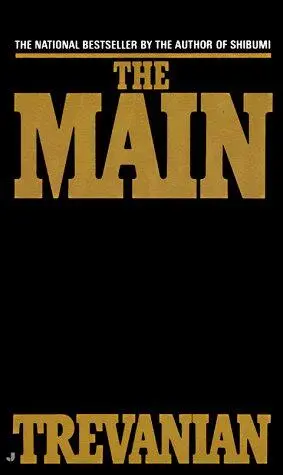
- Название:The Main
- Автор:
- Издательство:Jove Books; Reissue edition (January 1, 1989)
- Жанр:
- Год:1989
- ISBN:051509272X
- Рейтинг книги:4 / 5. Голосов: 1
-
Избранное:Добавить в избранное
- Отзывы:
-
Ваша оценка:
The Main: краткое содержание, описание и аннотация
Предлагаем к чтению аннотацию, описание, краткое содержание или предисловие (зависит от того, что написал сам автор книги «The Main»). Если вы не нашли необходимую информацию о книге — напишите в комментариях, мы постараемся отыскать её.
The Main — читать онлайн бесплатно полную книгу (весь текст) целиком
Ниже представлен текст книги, разбитый по страницам. Система сохранения места последней прочитанной страницы, позволяет с удобством читать онлайн бесплатно книгу «The Main», без необходимости каждый раз заново искать на чём Вы остановились. Поставьте закладку, и сможете в любой момент перейти на страницу, на которой закончили чтение.
Интервал:
Закладка:
She thrusts out her lower lip and shrugs.
He signals the waitress.
A party of older men clatters up the stairs, half drunk from celebrating a wedding. They drag out the tables from two booths and put them together, collecting chairs from everywhere. One man slaps his hand on the table and clamors for ouzo, and they are served two ice-cold bottles and a tray of glasses. One rises and proposes a toast to the father of the bride, who is the drunkest and happiest of the lot. The toaster is long-winded and somewhat incoherent; the others complain that they will never get a chance to drink, and finally they shout him down and slap back the first glasses.
One of the young men has put money into the jukebox. As the music starts he saunters toward LaPointe’s booth.
“You don’t mind, do you?” Marie-Louise asks.
He shakes his head.
The proprietor comes up from the restaurant to check on things. When he notices the boy dancing with Marie-Louise, he frowns and crosses to the booth with the three young men. There is a short conversation during which one of the boys stretches his neck to take a look at LaPointe. As he passes the booth to offer insincere congratulations to the father of the bride, the proprietor nods and winks conspiratorially at the Lieutenant. He has taken care of everything. The young men won’t be horning in on his girl again.
Marie-Louise finishes her ouzo and wants a third. For some minutes she sits, swaying her shoulders in tempo to a melody she is humming. She doesn’t understand why the boys don’t play more records and ask her to dance.
LaPointe is about to suggest that they go home, when one of the wedding party rises and navigates an arcing course to the jukebox. He pushes in a coin with operatic thoroughness, then presses first one button, then another. In a moment there comes the first twanging note of a stately traditional song. The old man lifts his arms slowly; his head is turned to one side and his eyes are closed; his fingers snap crisply to every second beat of the music.
The boys in the booth groan over the old-fashioned selection.
The old man looks directly at them, his eyes smiling and clever, and he slowly shuffles toward them, snapping his fingers and dipping gracefully with every third step.
“No way!” says one of the boys. “Forget it!”
But the old man advances confidently. These kids may be modern and may speak English, but their blood is Greek, and he will win.
Three other members of the wedding party are now on the dance floor, their arms around one another’s shoulders, the outside two snapping then: fingers to the compelling tempo, and dipping with each third step. Too drunk to walk perfectly, they dance with balance, grace, and authority.
There is a friendly scuffle in the young men’s booth and one of them is pushed out onto the floor. With peevish reservation, he begins to snap his fingers mechanically, making it perfectly clear that this old-country shit is not for him. But the old man dances directly in front of him, looking him steadily in the eye and insisting silently on their common heritage. And when he puts his arm around the boy’s shoulders, the peevishness evaporates and he falls into step. After all, he is a man.
The tempo of the music increases relentlessly. The five link up. Two other old men join the end of the line, one of them brandishing an ouzo bottle in his free hand. It is two steps to the side, then a strong dip forward. Marie-Louise watches with fascination. She is surprised when she notices that LaPointe is clapping his hands in time with the music, then she sees that the men at the double table are clapping also. When she starts to rise to join the dancing, LaPointe shakes his head.
“It’s a men’s dance.”
“Oh, they won’t mind.”
He shrugs. Perhaps they won’t. After all, she is not a Greek girl. In fact, they part to make a place for her in the line, and from the first step she is native to the simple, inevitable dance. She adds to it a flair of her own, dipping very low and bowing her head almost to the floor, then whipping it back as she snaps up again.
With this the other three young men run out to join the dance.
When the music ends, there are yelps of joy and everyone applauds his own performance. Instantly another coin is in the machine. LaPointe is recognized, and an envoy of two old men come to invite him to join the larger table. He signals for a bottle of ouzo as his contribution and brings his glass along. The instant he sits down, the glass is filled to overflowing with ouzo. He had not finished the Armagnac, and the mixture is ugly, so he downs it quickly to be rid of it. And his glass is instantly filled again.
Because she is Greek, the barmaid does not join the dancing, but she sits at the common table between two old men, one of whom complains drunkenly that nobody let him finish the toast he had rehearsed all day long. The other occasionally slips his hand between her legs where the thick thighs touch. She laughs and rolls her eyes, sometimes slapping the hand away and sometimes giving it a hard squeeze with her thighs that makes the old man whoop with naughty pleasure.
After the fourth or fifth dance, Marie-Louise is exhausted, and she sits one out, pulling up a chair across from LaPointe, between one of the boys and an old man. The old man is very drunk and insists on telling her a very important story that he cannot quite remember. She listens and laughs, despite the fact that he speaks only Greek. LaPointe knows that the boy has his hand in her lap under the table. His extravagant nonchalance gives him away.
An hour and a half later, Marie-Louise is dancing with one of the boys, while one of the old men clings to LaPointe, his hand gripping the nape of his neck, and explains that all cops are bastards, except of course LaPointe, who is a good man… so good that he is almost Greek. Not quite, but almost.
By the end of the night, the table is awash with water that has condensed from the icy bottles, and with spilled ouzo.
When he finds the problem of getting his key into the lock both fascinating and amusing, LaPointe realizes that he is drunk for the first time in years. Drunk on ouzo. A sick drunk. Stupid.
It is hot in the room because he forgot to turn the fire off when they left. He does it now, while she slips through to the bathroom, humming one of the Greek songs and occasionally snapping her fingers.
“Did you have a good time?” she calls when he comes into the bedroom and sits heavily on the bed. She is on the toilet, with the door wide open, talking to him without embarrassment while she pisses.
She doesn’t wait for his answer. “I had a great time!” she says. “Best time of my life. I wish you could dance. Can we go there again?” As he tugs off his shoes, she wipes herself and stands up, shaking down her skirt as the toilet flushes.
LaPointe, drunk, is touched by the marital intimacy of it. It is as if they had been together for years. She must like me, he thinks. She must feel safe with me, if she doesn’t mind pissing in my presence.
Now he knows he is drunk. He laughs at himself. Come on, LaPointe! Is that an act of love? A gesture of confidence? Pissing in your presence? With sodden seriousness, he confirms that, yes, it is. How long was it after your marriage before Lucille lost her embarrassment with you? She didn’t even like to brush her teeth in your presence at first.
But… it could be something other than confidence, this pissing while chatting. It could be indifference.
Who cares?
Stupid, stupid. Drunk on ouzo. And you shouldn’t drink with that aneur… anor… whateverthehell it is!
She undresses quickly, leaving things where they fall, and slips under the covers. The sheets are cold and she shudders as her naked legs touch them. “Hurry up. Get into bed. Make me warm.”
Читать дальшеИнтервал:
Закладка:
Похожие книги на «The Main»
Представляем Вашему вниманию похожие книги на «The Main» списком для выбора. Мы отобрали схожую по названию и смыслу литературу в надежде предоставить читателям больше вариантов отыскать новые, интересные, ещё непрочитанные произведения.









Обсуждение, отзывы о книге «The Main» и просто собственные мнения читателей. Оставьте ваши комментарии, напишите, что Вы думаете о произведении, его смысле или главных героях. Укажите что конкретно понравилось, а что нет, и почему Вы так считаете.