Rodney Whitaker - The Main
Здесь есть возможность читать онлайн «Rodney Whitaker - The Main» весь текст электронной книги совершенно бесплатно (целиком полную версию без сокращений). В некоторых случаях можно слушать аудио, скачать через торрент в формате fb2 и присутствует краткое содержание. Год выпуска: 1989, ISBN: 1989, Издательство: Jove Books; Reissue edition (January 1, 1989), Жанр: Прочие приключения, на английском языке. Описание произведения, (предисловие) а так же отзывы посетителей доступны на портале библиотеки ЛибКат.
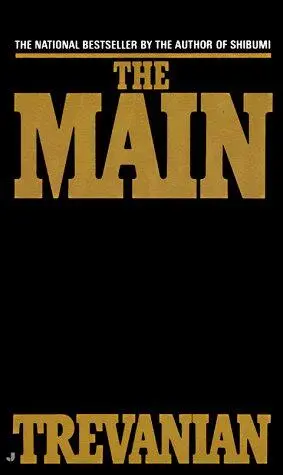
- Название:The Main
- Автор:
- Издательство:Jove Books; Reissue edition (January 1, 1989)
- Жанр:
- Год:1989
- ISBN:051509272X
- Рейтинг книги:4 / 5. Голосов: 1
-
Избранное:Добавить в избранное
- Отзывы:
-
Ваша оценка:
The Main: краткое содержание, описание и аннотация
Предлагаем к чтению аннотацию, описание, краткое содержание или предисловие (зависит от того, что написал сам автор книги «The Main»). Если вы не нашли необходимую информацию о книге — напишите в комментариях, мы постараемся отыскать её.
The Main — читать онлайн бесплатно полную книгу (весь текст) целиком
Ниже представлен текст книги, разбитый по страницам. Система сохранения места последней прочитанной страницы, позволяет с удобством читать онлайн бесплатно книгу «The Main», без необходимости каждый раз заново искать на чём Вы остановились. Поставьте закладку, и сможете в любой момент перейти на страницу, на которой закончили чтение.
Интервал:
Закладка:
She pauses for a second, her back to him. “No. I walked.” Her hollow tone tells him there is something in the way of a confession coming. He wishes he hadn’t asked.
“No cabs?” he asks, affording her a facile excuse.
She sits on the sofa and looks directly at him for the first time. She might as well get it over with. “No money,” she says. “I’m sorry, but I spent all you gave me. I got other things besides the coat and dress.”
That is the confession? He smiles at himself, aware that he has been acting and thinking like a kid. “It doesn’t matter,” he says.
She turns her head slightly to the side and looks at him uncertainly out of the sides of her eyes. “Really?”
He laughs. “Really.”
“Hey! Look at what I got!” Instantly she is up from the sofa, tearing open bags. “And I shopped around for bargains, too. I didn’t waste money. Oh, did you see these?” She parts her long cloth coat and shows him thick-soled boots that go to the knee. They are a wet red plastic that clashes with the burnt orange of the coat. She rips open a bag and draws out a long dress that looks as though it were made of patchwork. She holds it up to herself by the shoulders and kicks out at the hem. “What do you think?”
“Nice. It looks… warm.”
“Warm? Oh, I suppose so. The girl told me it’s the in thing. Oh, and I got a skirt.” She opens her coat again to show him the mini she is wearing. “And I got this blouse. There was another one I really liked. You know, one of those frilled collars like you see on old-time movies on TV? You know the kind I mean?”
“Yes,” he lies.
“But they didn’t have my size. And I got… let’s see… oh, a sweater! And… I guess that’s about it. No! I got some panties and things… there must have been something else. Oh, the coat! That’s what cost the most. And I guess that’s it!” She plunks down on the sofa amongst the clothes and ravished bags, her hands pressed between her knees, her elation suddenly evaporated. “You don’t like them, do you?” she says.
“What? No, sure. I mean… they’re fine.”
“It’s all the money, isn’t it?”
“Don’t worry about it.”
“You know, we don’t have to go out to dinner tonight like you promised. We could just stay home. That would save money.”
There is a quality of pimpish insinuation in the way the proprietor of the Greek restaurant finds them a secluded table, in the way he keeps refilling her glass with raisin wine, in the way he grins and nods to the Lieutenant from behind her chair. LaPointe resents this, but Marie-Louise seems to be enjoying the special attention, so he lets it go.
Greek food is alien to her, but she eats with relish, unfolding the cooked grape leaves to get at the rice and lamb within. She doesn’t eat the leaves, considering them to be only wrappings.
A candle set in red glass lights her face from a low angle that would be unkind to an older woman, but it only accents her animation as she recounts her shopping trip, or comments on the other patrons of the restaurant. He has chosen to sit with his back to the room so she can have the amusement of looking at the people and the pleasure of having the people look at her. It is a deliberate and uncommon gesture on the part of a man who normally keeps his back to walls and rooms open before him.
She doesn’t really like the Greek wine, but she drinks too much of it. By the time the meal is over, she is laughing a little too loudly.
He enjoys watching the uncensored play of expression over her face. She has not yet developed a mask. She is perfectly capable of lying, but not yet of dissimulating. She is capable of wheedling, but not yet of treachery. She is vulgar, but not yet hardened. She is still young and vulnerable. He, on the other hand, is old and… tough.
As they finish their coffee—that Turkish coffee with thick dregs that Greeks think is Greek—she hums along with jukebox music coming from the floor above the restaurant.
“What’s up there?” she asks, looking toward the stairs.
“A bar of sorts.”
“With dancing?”
He shrugs. “Oh, there’s a dance floor…” He really feels like going home.
“Could we dance there?”
“I don’t dance.”
“Didn’t you ever? Even when you were young?”
He smiles. “No. Not even then.”
“How old are you anyway?”
“Fifty-three. I told you before.”
“No, you didn’t.”
“I did. You forgot.”
“You’re older than my father. Do you realize that? You are older than my father.” She seems to think that is remarkable.
It is so obvious a tactic that it would be unkind not to let it work. So they climb the stairs and enter a large dark room with a bar lit by colored bulbs behind ripple glass and a jukebox that glows with lights of ever-changing hues. They take one of the booths along the wall. The only other people there are the barmaid and a group of four young Greek boys at the next booth but one, sharing a bottle of ouzo that has been iced until it leaves wet rings on the tabletop. One of the boys leaves the booth and goes to the bar, where he lightheartedly sings the apple to the barmaid. She is wearing a short dress, and her thighs are so thick that her black hose squeaks with friction when she walks to serve the tables.
“What would you like?” LaPointe asks.
“What are they having?” She indicates the group of young men.
“Ouzo.”
“Would I like that?”
“Probably.”
“Do you like it?”
“No.”
She feels there is a mild dig in that, so she orders ouzo defiantly. He has an Armagnac.
While the barmaid squeaks away to fetch the drinks, Marie-Louise rises and goes to the jukebox to examine its selections, slightly bending the knee of her good leg to make her limp imperceptible. LaPointe knows she doesn’t care if he notices it, so the caution must be for the young Greek boys. As she leans over the jukebox, its colored light is caught in the frizzy mop of her hair, and she looks very attractive. Her bottom is round and tight under the new mini-skirt. He is proud of her. And the Greek boys do not fail to notice her and exchange appreciative looks.
She is the same age as his imaginary daughters sometimes are. She is the same age as his real wife always is. He feels two things simultaneously: he is proud of his attractive daughter, jealous of his attractive wife. Stupid.
There is some playful nudging among the Greek boys, and one of them—the boldest, or the clown—gets up and joins her, leaning close to study the record offerings. He puts a coin into the slot and gestures to her to make a selection. She smiles thanks and pushes two buttons. When he asks her to dance, she accepts without even looking at LaPointe. The music is modern and loud, and they dance without touching. Despite the jerky, primitive movements of the dance, she seems strong and controlled and graceful, and the dancing completely camouflages her limp. It is easy to see why she enjoys it so much.
The record stops without ending, like all modern music, a fade-out concealing its inability to resolve, and the dance is over. The young man says something to her, and she shakes her head, but she smiles. They return, each to his own table. As he passes, the Greek boy salutes LaPointe with a sassy little wave.
Marie-Louise slides into the booth a little out of breath and exuberant. “He’s a good dancer.”
“How can you tell?” LaPointe asks.
“Oh, the drinks are here. Well, ‘bottoms up.’ “ She speaks the toast in English so accented that the second word sounds like “zeup.” “Hey, this is good. Like licorice candy. But hot.” She finishes it off. “May I have another one?”
“Sure. But it might make you sick.”
Читать дальшеИнтервал:
Закладка:
Похожие книги на «The Main»
Представляем Вашему вниманию похожие книги на «The Main» списком для выбора. Мы отобрали схожую по названию и смыслу литературу в надежде предоставить читателям больше вариантов отыскать новые, интересные, ещё непрочитанные произведения.








Обсуждение, отзывы о книге «The Main» и просто собственные мнения читателей. Оставьте ваши комментарии, напишите, что Вы думаете о произведении, его смысле или главных героях. Укажите что конкретно понравилось, а что нет, и почему Вы так считаете.