Harry Sidebottom - The Amber Road
Здесь есть возможность читать онлайн «Harry Sidebottom - The Amber Road» весь текст электронной книги совершенно бесплатно (целиком полную версию без сокращений). В некоторых случаях можно слушать аудио, скачать через торрент в формате fb2 и присутствует краткое содержание. Год выпуска: 2013, ISBN: 2013, Издательство: Penguin Books Ltd, Жанр: Исторические приключения, на английском языке. Описание произведения, (предисловие) а так же отзывы посетителей доступны на портале библиотеки ЛибКат.
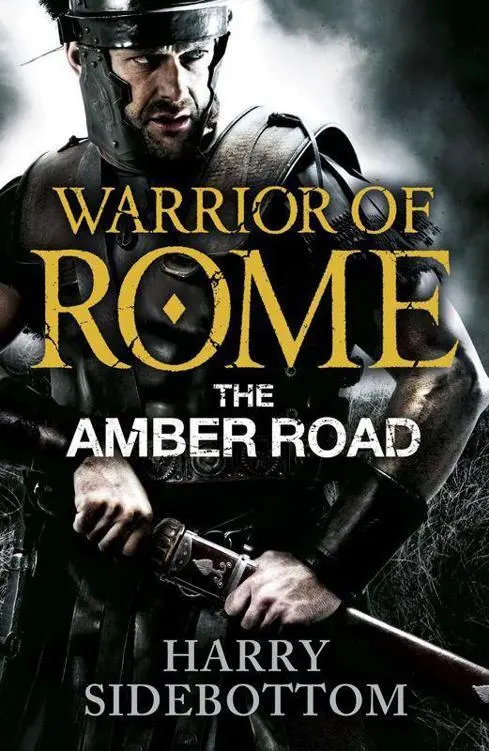
- Название:The Amber Road
- Автор:
- Издательство:Penguin Books Ltd
- Жанр:
- Год:2013
- ISBN:9780141935287
- Рейтинг книги:5 / 5. Голосов: 1
-
Избранное:Добавить в избранное
- Отзывы:
-
Ваша оценка:
The Amber Road: краткое содержание, описание и аннотация
Предлагаем к чтению аннотацию, описание, краткое содержание или предисловие (зависит от того, что написал сам автор книги «The Amber Road»). Если вы не нашли необходимую информацию о книге — напишите в комментариях, мы постараемся отыскать её.
The Amber Road — читать онлайн бесплатно полную книгу (весь текст) целиком
Ниже представлен текст книги, разбитый по страницам. Система сохранения места последней прочитанной страницы, позволяет с удобством читать онлайн бесплатно книгу «The Amber Road», без необходимости каждый раз заново искать на чём Вы остановились. Поставьте закладку, и сможете в любой момент перейти на страницу, на которой закончили чтение.
Интервал:
Закладка:
There were only twenty members of the Boule . Zeno studied them. They were all dressed in native style: embroidered Sarmatian tunics and trousers, small black cloaks, long swords on their hips. Zeno thought of the story of Scyles in Herodotus. Scyles had been king of the nomadic Scythians in these parts, but his mother had been a Greek woman. She had taught him that language, and brought him up to love all things Hellenic. When Scyles had come to Olbia he had left his army outside the walls and entered the gates alone. Inside, Scyles had changed his Scythian clothes for Greek. He had a home in the city, in which he kept a woman he treated as his wife. Maybe they had children; Herodotus did not say. Each time, he had stayed for a month or more. This state of affairs had persisted for a number of years. In the end a citizen of Olbia had told the Scythians, who could say for what motive. Rejected by his people, hunted and finally betrayed, Scyles was decapitated.
Looking at the councillors of Olbia, Zeno thought the cultural influences now ran strongly the other way. They had done so for a long time. The citizens of Olbia had been wearing nomad garb over a hundred and fifty years before when the philosopher Dio of Prusa had come to the town. Yet Dio had judged them Hellenic, had found merit in them. They were brave, knew Homer by heart, some of them loved Plato, and — always an important factor with Dio — they had listened to his philosophizing and honoured him. Dio had been a slippery man, often saying more or less than was true about himself and others. Zeno knew one thing which Dio had suppressed about the Olbians. Many of them carried barbarian names, like this agoranomos Dadag, or Padag, whatever he was called.
At long, long last the Greek magistrate with the Sarmatian or Persian name ceased talking. The floor was taken by the strategos in charge of the defence of the city. The name of this one was entirely Roman. Marcus Galerius Montanus Proculus, like many in the Boule , was clean-shaven. Zeno smiled at the recollection of Dio claiming only one man in the whole town had shaved — in flattery of the Romans; and all his fellow citizens had reviled him for it. Maybe fashions had changed, or maybe again Dio had played with the truth. Many intellectuals were not to be trusted.
Montanus told another story of woe. A group of slaves had run. They had stolen a boat and made their way to somewhere called Hylaea. Evidently, this place was nearby, somewhere in the great marshy estuary where the rivers Hypanis and Borysthenes came together. There were altars and sacred groves there, which the slaves had violated. The heavily wooded terrain was blamed for the failure of the Olbian militia under Montanus to kill, capture or dislodge them. Lately, the runaways had turned to piracy.
Zeno was wondering if he needed to relieve himself, when he realized he was being directly addressed. So there was a reason beyond the killings in the waterfront bar why his presence had been requested. Montanus was claiming a providential deity had sent an imperial warship and its forty crew to aid the city in this trial.
In the hush, Zeno got slowly to his feet, walked the three paces to the centre of the shabby room. He looked at Montanus, then at the floor, furrowing his brow, nodding thoughtfully. He did not care much for modern sophists — much preferring a recitation of Homer — but he had attended enough of their display oratory to learn a trick or two. He let time pass before looking up sharply, as if his weighty deliberations had reached some inescapable conclusion.
‘It is a grave situation, and my heart urges me to help.’ Again Zeno paused, the very image of philanthropy wrestling with duty. ‘Yet in all conscience, I cannot. I have the honour to be charged with a mission by the most noble Augustus himself. To delay would amount to disobeying imperial mandata .’
There were loud mutterings about the triviality of his task. Some, perfectly audible, questioned what type of emperor concerned himself with amber ornaments over the wellbeing of his subjects. One called out Gallienus’s infamous line on being informed of the revolt of Postumus in Gaul: Can the Res Publica be safe without Atrebatic cloaks?
‘It must be remembered, failure to carry out imperial orders is nothing less than maiestas .’
At the Latin word for treason, the Boule became very quiet.
‘As I understand, the city of Olbia falls under the military competence of the governor of Moesia Inferior, and you should apply to him.’ Zeno resumed his seat. Whenever possible, pass responsibility. All he had said was true, as far as it went, and this backwater meant nothing to him.
The councillors fell to wrangling about what measures, if any, they could take about the slaves.
Gods below, thought Zeno, it was hard to imagine Olbia was once a powerful city that had defied Alexander the Great, defeated an army of thirty thousand men and killed his governor of Thrace. Now what sort of polis hoped one river patrol boat and forty men would bring them salvation? Was Olbia a Hellenic polis at all?
To take his mind off his growing need to urinate, Zeno turned over the question in his head. What made a polis ? An urban centre, buildings of course; Olbia had these, if in a much reduced state. Certain institutions were vital: magistrates, council, assembly. The latter had been mentioned. Zeno wondered what it was like, given the Boule seemed just to consist of four or five rich men who dominated the magistracies and some fifteen others who lacked the means or initiative to leave this beleaguered outpost. Then there was culture. Did the Olbians possess paideia ? It was true they worshipped the traditional Greek gods, among them Zeus, Apollo and Demeter. Zeno had witnessed no barbaric religious practices. They spoke Greek, if with bad pronunciation and strange word order. Wearing Sarmatian clothes could be dismissed as a thing of no importance. But blood will out. Some philosophers might argue that a man of any race could become Greek if he adopted Hellenic paideia . Zeno did not agree. These Olbians were descended from waves of nomadic horsemen. Their names gave them away: Padag, Dadag, the names of dogs or slaves. They could never be truly Greek. Zeno himself was born in the heart of the Peloponnese, in Arcadia, under the sheer peak of Cyllene. He would remain a Hellene, even if he lived alone in a hut on the side of a remote mountain, cut off from men and gods, never speaking his native tongue.
Callistratus brought the debate about the slaves to an end by volunteering to equip and serve on an embassy to the governor of Moesia Inferior. The first archon moved on to raise matters he described of the utmost importance. This spring the king of the Gothic Tervingi had not appeared with his men on the borders to demand his customary gifts. The councillors called out like a disturbed flock of birds. Zeno, his bladder ever more urgent, could not see the cause of their alarm. Surely given the impecunious state of their civic treasury they should welcome the absence of the Goth?
There was more, Callistratus continued. Word had come downriver that the Castle of Achilles, the most northerly fortified settlement on the right bank of the Hypanis, was deserted; the half-Greek inhabitants had fled. Zeno nearly snorted with derision. Who were these Olbians to judge others half-Greek?
What was he doing in this barbarous place? How had it come to this? Four years before, he, Aulus Voconius Zeno, Vir Perfectissimus , had been governor of Cilicia. In the revolt of Macrianus and Quietus, he had remained loyal. Although unable to defend his province, his fides — and his devotion to paideia — had been rewarded by Gallienus with the post of a Studiis at the imperial court. Zeno had carried out his duties with diligence, searching out the texts Gallienus wished to read and the intellectuals he wanted to talk to, discussing them with him. He had spoken out in the consilium with the freedom of speech expected of a friend of the emperor, always arguing for the traditions of Rome. Despite it all, last year he had been dismissed, sent away to the Ister as deputy to the senator Sabinillus on a diplomatic mission to turn the tribes of the Carpi, Gepidae and Tervingi against each other. Of course the attempt had failed. Yet — and here he could barely stomach his bitterness — Sabinillus had been summoned back to court, while he had been ordered to undertake this most likely equally hopeless and certainly far more dangerous embassy.
Читать дальшеИнтервал:
Закладка:
Похожие книги на «The Amber Road»
Представляем Вашему вниманию похожие книги на «The Amber Road» списком для выбора. Мы отобрали схожую по названию и смыслу литературу в надежде предоставить читателям больше вариантов отыскать новые, интересные, ещё непрочитанные произведения.



Обсуждение, отзывы о книге «The Amber Road» и просто собственные мнения читателей. Оставьте ваши комментарии, напишите, что Вы думаете о произведении, его смысле или главных героях. Укажите что конкретно понравилось, а что нет, и почему Вы так считаете.