Уистан Оден - Стихи и эссе
Здесь есть возможность читать онлайн «Уистан Оден - Стихи и эссе» весь текст электронной книги совершенно бесплатно (целиком полную версию без сокращений). В некоторых случаях можно слушать аудио, скачать через торрент в формате fb2 и присутствует краткое содержание. Жанр: Поэзия, Публицистика, на русском языке. Описание произведения, (предисловие) а так же отзывы посетителей доступны на портале библиотеки ЛибКат.
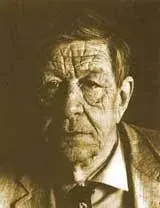
- Название:Стихи и эссе
- Автор:
- Жанр:
- Год:неизвестен
- ISBN:нет данных
- Рейтинг книги:3 / 5. Голосов: 1
-
Избранное:Добавить в избранное
- Отзывы:
-
Ваша оценка:
Стихи и эссе: краткое содержание, описание и аннотация
Предлагаем к чтению аннотацию, описание, краткое содержание или предисловие (зависит от того, что написал сам автор книги «Стихи и эссе»). Если вы не нашли необходимую информацию о книге — напишите в комментариях, мы постараемся отыскать её.
Стихи и эссе — читать онлайн бесплатно полную книгу (весь текст) целиком
Ниже представлен текст книги, разбитый по страницам. Система сохранения места последней прочитанной страницы, позволяет с удобством читать онлайн бесплатно книгу «Стихи и эссе», без необходимости каждый раз заново искать на чём Вы остановились. Поставьте закладку, и сможете в любой момент перейти на страницу, на которой закончили чтение.
Интервал:
Закладка:
The Ship
All streets are brightly lit; our city is kept clean;
Her Third-Class deal from greasy packs, her First bid high;
Her beggars banished to the bows have never seen
What can be done in state-rooms: no one asks why.
Lovers are writing latters, athletes playing ball,
One doubts the virtue, one the beauty of his wife,
A boy's ambitious: perhaps the Captain hates us all;
Someone perhaps is leading a civilised life.
Slowly our Western culture in full pomp progresses
Over the barren plains of the sea; somewhere ahead
A septic East, odd fowl and flowers, odder dresses:
Somewhere a strange and shrewd To-morrow goes to bed,
Planning a test for men from Europe; no one guesses
Who will be most ashamed, who richer, and who dead.
"O, Tell Me The Truth About Love"
Some say that love 's a little boy,
And some say it's a bird,
Some say it makes the world go round,
And some say that's absurd,
And when I asked the man next-door,
Who looked as if he knew,
His wife got very cross indeed,
And said it wouldn't do.
Does it look like a pair of pyjamas,
Or the ham in a temperance hotel?
Does its odour remind one of llamas,
Or has it a comforting smell?
Is it prickly to touch as a hedge is,
Or soft as eiderdown fluff?
Is it sharp or quite smooth at the edges?
O tell me the truth about love.
Our history books refer to it
In cryptic little notes.
It's quite a common topic on
The Transatlantic boats;
I've found the subject mentioned in
Account of suicides,
And even seen it scribbled on
The back of railway-guides.
Does it howl like a hungry Alsatian,
Or boom like a military band?
Could one give a first-rate imitation
On a saw or a Steinway Grand?
Is it's singing at parties a riot?
Does it only like classical stuff?
Will it stop when one wants to be quiet?
O tell me the truth about love.
I looked inside the summer-house;
It wasn't ever there:
I tried the Thames at Maidenhead,
And Brighton's bracing air.
I don't know what the blackbird sang,
Or what the tulip said;
But it wasn't in the chicken-run,
Or underneath the bed.
Can it pull extraordinary faces?
Is it usually sick on a swing?
Does it spend all its time at the races,
Or fiddling with pieces of string?
Has it views of its own about money?
Does it think Patriotism enough?
Are its stories vulgar but funny?
O tell me the truth about love.
When it comes, will it come without warning
Just as I'm picking my nose?
Will it knock on my door in the morning,
Or tread in the bus on my toes?
Will it come like a change in the weather?
Will its greeting be courteous or rough?
Will it alter my life altogether?
O tell me the truth about love.
Their Lonely Betters
As I listened from a beach-chair in the shade
To all the noises that my garden made,
It seemed to me only proper that words
Should be withheld from vegetables and birds.
A robin with no Christian name ran through
The Robin-Anthem which was all it knew,
And rustling flowers for some third party waited
To say which pairs, if any, should get mated.
Not one of them was capable of lying,
There was not one which knew that it was dying
Or could have with a rhythm or a rhyme
Assumed responsibility for time.
Let them leave language to their lonely betters
Who count some days and long for certain letters;
We, too, make noises when we laugh or weep:
Words are for those with promises to keep.
Shorts
Pick a quarrel, go to war,
Leave the hero in the bar;
Hunt the lion, climb the peak:
No one guesses you are weak.
The friends of the born nurse
Are always getting worse.
I'm beginning to lose patience
With my personal relations:
They are not deep,
And they are not cheap.
I'm for freedom because I mistrust the Censor in office,
But if I held the job, my! how severe I should be!
When he is well
She gives him hell;
But she's a brick
When he is sick.
Those who will not reason
Perish in the act;
Those who will not act
Perish for that reason.
Let us honor if we can
The vertical man,
Though we value none
But the horizontal one.
Private faces
In public places
Are wiser and nicer
Than public faces
In private places.
The conversation of birds
Say very little,
But mean a great deal.
Among the mammals
Only Man has ears
That can display no emotion.
In moments of joy
All of us wish we possessed
A tail we could wag.
The shame in ageing
is not that Desire should fail
(Who mourns for something
he no longer needs?): it is
That someone else must be told.
The tyrant's device:
Whatever is Posiible
Is Necessary.
Passing Beauty
still delights him,
but he no longer
has to turn round.
Does God ever judge us
by appearances?
I suspect that He does.
Today two poems begged to be written: I had to refuse them.
Sorry, no longer, my dear! Sorry, my precious, not yet!
Only look in the mirror to detect a removable blamish,
As of the permanent ones already you know quite enough.
God never makes knots,
But is expert, if asked to,
At untying them.
A poet's hope: to be,
Like some valley cheese,
Local, but prized elsewhere.
WORDS
A sentence uttered makes a world appear
Where all things happen as it says they do;
We doubt the speaker, not the tongue we hear:
Words have no word for words that are not true.
Syntactically, though, it must be clear;
One cannot change the subject half-way through,
Nor alter tenses to appease the ear:
Arcadian tales are hard-luck stories too.
But should we want to gossip all the time,
Were fact not fiction for us at its best,
Or find a charm in syllables that rhyme,
Were not our fate by verbal chance expressed,
As rustics in a ring-dance pantomime
The Knight at some lone cross-roads of his quest?
Uncle Henry
When the Flyin’ Scot [138]
fills for shootin’, I go southward,
wisin’ after coffee, leavin’
Lady Starkie.
Weady for some fun,
visit yearly Wome, Damascus,
in Mowocco look for fwesh a —
— musin’ places.
Where I’ll find a fwend,
don’t you know, a charmin’ creature,
like a Gweek God and devoted:
how delicious!
All they have they bwing,
Abdul, Nino, Manfwed, Kosta:
here’s to women for they bear such
lovely kiddies!
Интервал:
Закладка:
Похожие книги на «Стихи и эссе»
Представляем Вашему вниманию похожие книги на «Стихи и эссе» списком для выбора. Мы отобрали схожую по названию и смыслу литературу в надежде предоставить читателям больше вариантов отыскать новые, интересные, ещё непрочитанные произведения.


![Сергей Гандлевский - Счастливая ошибка [стихи и эссе о стихах]](/books/407949/sergej-gandlevskij-schastlivaya-oshibka-stihi-i-esse-thumb.webp)


Обсуждение, отзывы о книге «Стихи и эссе» и просто собственные мнения читателей. Оставьте ваши комментарии, напишите, что Вы думаете о произведении, его смысле или главных героях. Укажите что конкретно понравилось, а что нет, и почему Вы так считаете.