Уистан Оден - Стихи и эссе
Здесь есть возможность читать онлайн «Уистан Оден - Стихи и эссе» весь текст электронной книги совершенно бесплатно (целиком полную версию без сокращений). В некоторых случаях можно слушать аудио, скачать через торрент в формате fb2 и присутствует краткое содержание. Жанр: Поэзия, Публицистика, на русском языке. Описание произведения, (предисловие) а так же отзывы посетителей доступны на портале библиотеки ЛибКат.
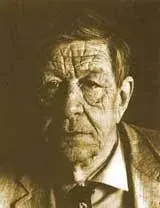
- Название:Стихи и эссе
- Автор:
- Жанр:
- Год:неизвестен
- ISBN:нет данных
- Рейтинг книги:3 / 5. Голосов: 1
-
Избранное:Добавить в избранное
- Отзывы:
-
Ваша оценка:
Стихи и эссе: краткое содержание, описание и аннотация
Предлагаем к чтению аннотацию, описание, краткое содержание или предисловие (зависит от того, что написал сам автор книги «Стихи и эссе»). Если вы не нашли необходимую информацию о книге — напишите в комментариях, мы постараемся отыскать её.
Стихи и эссе — читать онлайн бесплатно полную книгу (весь текст) целиком
Ниже представлен текст книги, разбитый по страницам. Система сохранения места последней прочитанной страницы, позволяет с удобством читать онлайн бесплатно книгу «Стихи и эссе», без необходимости каждый раз заново искать на чём Вы остановились. Поставьте закладку, и сможете в любой момент перейти на страницу, на которой закончили чтение.
Интервал:
Закладка:
The Nameless is what no free people mention;
Successful men know better than to try
To see the face of their Absconded God.
18. The Adventurers
Spinning upon their central thirst like tops,
They went the Negative Way toward the Dry;
Be empty caves beneath an empty sky
They emptied out their memories like a slop
Which made a foul marsh as they dried to death,
Where monsters bred who forced them to forget
The lovelies their consent avoided; yet
Still praising the Absurd with their last breath.
They seeded out into their miracles:
The images of each grotesque temptation
Became some painter's happiest inspiration;
And barren wives and burning virgins came
To drink the pure cold water of their wells,
And wish for beaux and children in their name.
19. The Waters
Poet, oracle and wit
Like unsuccessful anglers by
The ponds of apperception sit,
Baiting with the wrong request
The vectors of their interest;
At nightfall tell the angler's lie.
With time in tempest everywhere,
To rafts of frail assumption cling
The saintly and the insincere;
Enraged phenomena bear down
In overwhelming waves to drown
Both sufferer and suffering.
The waters long to hear our question put
Which would release their longed-for answer, but.
20. The Garden
Within these gates all opening begins:
White shouts and flickers through its green and red,
Where children play at seven earnest sins
And dogs believe their tall conditions dead.
Here adolescence into number breaks
The perfect circle time can draw on stone,
And flesh forgives division as it makes
Another's moment of consent its own.
All journeys die here; wish and weight are lifted:
Where often round some old maid's desolation
Roses have flung their glory like a cloak,
The gaunt and great the famed for conversation
Blushed in the stare of evening as they spoke,
And felt their center of volition shifted.
Good-Bye to the Mezzogiorno
(for Carlo Izzo)
Out of a gothic North, the pallid children
Of a potato, beer-or-whisky
Guilt culture, we behave like our fathers and come
Southward into a sunburnt otherwhere
Of vineyards, baroque, la bella figura,
To these feminine townships where men
Are males, and siblings untrained in a ruthless
Verbal in-fighting as it is taught
In Protestant rectories upon drizzling
Sunday afternoons-no more as unwashed
Barbarians out for gold, nor as profiteers
Hot for Old Masters, but for plunder
Nevertheless-some believing amore
Is better down South and much cheaper
(Which is doubtful), some persuaded exposure
To strong sunlight is lethal to germs
(Which is patently false) and others, like me,
In middle-age hoping to twig from
What we are not what we might be next, a question
The South seems never to raise. Perhaps
A tongue in which Nestor and Apemantus,
Don Ottavio and Don Giovanni make
Equally beautiful sounds is unequipped
To frame it, or perhaps in this heat
It is nonsense: the Myth of an Open Road
Which runs past the orchard gate and beckons
Three brothers in turn to set out over the hills
And far away, is an invention
Of a climate where it is a pleasure to walk
And a landscape less populated
Than this one. Even so, to us it looks very odd
Never to see an only child engrossed
In a game it has made up, a pair of friends
Making fun in a private lingo,
Or a body sauntering by himself who is not
Wanting, even as it perplexes
Our ears when cats are called Cat and dogs either
Lupo, Nero or Bobby. Their dining
Puts us to shame: we can only envy a people
So frugal by nature it costs them
No effort not to guzzle and swill. Yet (if I
Read their faces rightly after ten years)
They are without hope. The Greeks used to call the Sun
He-who-smites-from-afar, and from here, where
Shadows are dagger-edged, the daily ocean blue,
I can see what they meant: his unwinking
Outrageous eye laughs to scorn any notion
Of change or escape, and a silent
Ex-volcano, without a stream or a bird,
Echoes that laugh. This could be a reason
Why they take the silencers off their Vespas,
Turn their radios up to full volume,
And a minim saint can expect rockets-noise
As a counter-magic, a way of saying
Boo to the Three Sisters: "Mortal we may be,
But we are still here!" might cause them to hanker
After proximities-in streets packed solid
With human flesh, their souls feel immune
To all metaphysical threats. We are rather shocked,
But we need shocking: to accept space, to own
That surfaces need not be superficial
Nor gestures vulgar, cannot really
Be taught within earshot of running water
Or in sight of a cloud. As pupils
We are not bad, but hopeless as tutors:
Goethe, Tapping homeric hexameters
On the shoulder-blade of a Roman girl, is
(I wish it were someone else) the figure
Of all our stamp: no doubt he treated her well,
But one would draw the line at calling
The Helena begotten on that occasion,
Queen of his Second Walpurgisnacht,
Her baby: between those who mean by a life a
Bildungsroman and those to whom living
Means to-be-visible-now, there yawns a gulf
Embraces cannot bridge. If we try
To "go southern", we spoil in no time, we grow
Flabby, dingily lecherous, and
Forget to pay bills: that no one has heard of them
Taking the Pledge or turning to Yoga
Is a comforting thought-in that case, for all
The spiritual loot we tuck away,
We do them no harm-and entitles us, I think
To one little scream at A piacere,
Not two. Go I must, but I go grateful (even
To a certain Monte) and invoking
My sacred meridian names, Vito, Verga,
Pirandello, Bernini, Bellini,
To bless this region, its vendages, and those
Who call it home: though one cannot always
Remember exactly why one has been happy,
There is no forgetting that one was.
September 1958
It's No Use Raising a Shout
It's no use raising a shout.
No, Honey, you can cut that right out.
I don't want any more hugs;
Make me some fresh tea, fetch me some rugs.
Here am I, here are you:
But what does it mean? What are we going to do?
A long time ago I told my mother
I was leaving home to find another:
I never answered her letter
But I never found a better.
Here am I, here are you:
But what does it mean? What are we going to do?
It wasn't always like this?
Perhaps it wasn't, but it is.
Put the car away; when life fails,
What the good of going to Wales?
Here am I, here are you:
But what does it mean? What are we going to do?
Интервал:
Закладка:
Похожие книги на «Стихи и эссе»
Представляем Вашему вниманию похожие книги на «Стихи и эссе» списком для выбора. Мы отобрали схожую по названию и смыслу литературу в надежде предоставить читателям больше вариантов отыскать новые, интересные, ещё непрочитанные произведения.


![Сергей Гандлевский - Счастливая ошибка [стихи и эссе о стихах]](/books/407949/sergej-gandlevskij-schastlivaya-oshibka-stihi-i-esse-thumb.webp)


Обсуждение, отзывы о книге «Стихи и эссе» и просто собственные мнения читателей. Оставьте ваши комментарии, напишите, что Вы думаете о произведении, его смысле или главных героях. Укажите что конкретно понравилось, а что нет, и почему Вы так считаете.