M. Thomas - Confessions of a Sociopath
Здесь есть возможность читать онлайн «M. Thomas - Confessions of a Sociopath» весь текст электронной книги совершенно бесплатно (целиком полную версию без сокращений). В некоторых случаях можно слушать аудио, скачать через торрент в формате fb2 и присутствует краткое содержание. Город: New York, Год выпуска: 2013, ISBN: 2013, Издательство: Crown Publishers, Жанр: Психология, Биографии и Мемуары, на английском языке. Описание произведения, (предисловие) а так же отзывы посетителей доступны на портале библиотеки ЛибКат.
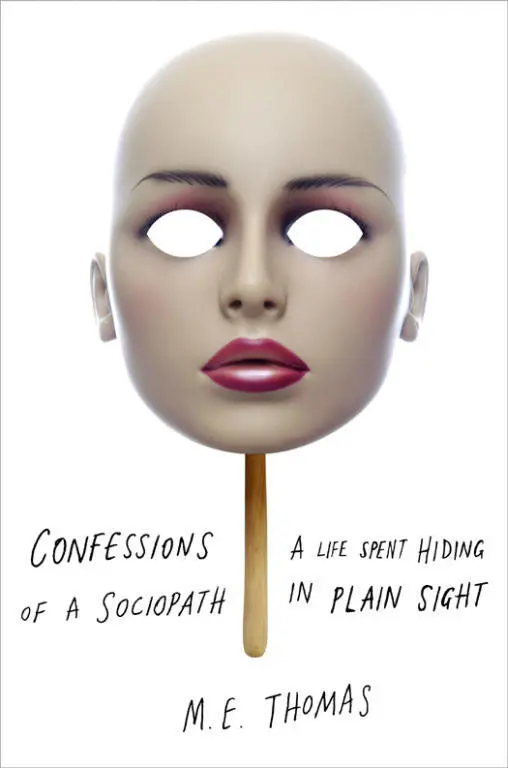
- Название:Confessions of a Sociopath
- Автор:
- Издательство:Crown Publishers
- Жанр:
- Год:2013
- Город:New York
- ISBN:978-0-307-95666-8
- Рейтинг книги:3 / 5. Голосов: 1
-
Избранное:Добавить в избранное
- Отзывы:
-
Ваша оценка:
Confessions of a Sociopath: краткое содержание, описание и аннотация
Предлагаем к чтению аннотацию, описание, краткое содержание или предисловие (зависит от того, что написал сам автор книги «Confessions of a Sociopath»). Если вы не нашли необходимую информацию о книге — напишите в комментариях, мы постараемся отыскать её.
Confessions of a Sociopath Confessions of a Sociopath
Confessions of a Sociopath — читать онлайн бесплатно полную книгу (весь текст) целиком
Ниже представлен текст книги, разбитый по страницам. Система сохранения места последней прочитанной страницы, позволяет с удобством читать онлайн бесплатно книгу «Confessions of a Sociopath», без необходимости каждый раз заново искать на чём Вы остановились. Поставьте закладку, и сможете в любой момент перейти на страницу, на которой закончили чтение.
Интервал:
Закладка:
I underwent a form of the PCL-R, the PCL:SV (Psychopathy Checklist: Screening Version), among other tests. The PCL:SV, as the name implies, is a checklist of criteria historically associated with Hare’s conceptualization of psychopathy. It was developed to assess for psychopathic features while relying less on the extensive file and criminal-history data required to complete the PCL-R. The PCL:SV is comprised of twelve individual criteria scored from 0 to 2 points, which are summed to form a total score from 0 to 24. The test is divided equally into two parts. Part 1 includes the personality traits typically associated with sociopathy, including lack of remorse and empathy for others, and interpersonal behaviors, including deceitfulness and grandiosity. Part 2 taps more socially deviant behaviors and activities, including irresponsibility, impulsivity, and adult antisocial behavior.
During the interview, I was asked about my significant history of impulsive, aggressive, and generally irresponsible conduct—things like fistfights and theft—that, while perhaps not having resulted in criminal charges, easily could have led to various encounters with the criminal justice system under different life circumstances. Dr. Edens noted in my report that these actions appear to have been almost entirely for thrill-seeking purposes rather than for any type of economic gain or other instrumental purpose. He noted: “Whether Ms. Thomas’s lack of police contact has been due to her successfully manipulating her way out of ‘jams,’ various protective factors evident in her life (e.g., high intelligence and educational success, generally supportive family structure, and other socioeconomic advantages), random luck, or some combination of all of the above is unclear at this time.” I talked about my family, my reckless teenage years, my inability to stick with my jobs after law school, and my subsequent self-analysis that had led me to his office, telling Dr. Edens stories that I had all but forgotten.
I scored a total of 19 out of 24 on the PCL:SV. There are no sharp diagnostic cutoffs, but according to the manual, scores of 18 and higher “offer a strong indication of psychopathy.” I got a 12 for part 1 (personality) and a 7 for part 2 (antisocial behavior). Dr. Edens remarked: “Notably, 12 is the maximum score one can obtain on Part 1 of this rating scale and indicates the presence of pronounced affective and interpersonal characteristics typically evidenced by highly psychopathic individuals.”
This linear grading system is in line with recent evidence that, in Robert Hare’s words, “psychopathy is dimensional (i.e., more or less), not categorical (i.e., either or).” Those with higher scores are more outwardly antisocial, but even those with lower scores “may present significant problems for those around them, just as those with blood pressure readings below an accepted threshold for hypertension may be at medical risk.” So Dr. Edens also had me take several other personality tests designed to look for sociopathic personalities. The most specific to sociopathy was probably the Psychopathic Personality Inventory–Revised (PPI-R), a self-report questionnaire developed to tap various personality characteristics historically thought to be indicative of psychopathic personality. This scale provides both a total score indicative of a global index of psychopathic traits as well as eight subscales that assess more specific traits. Dr. Edens reported: “Perhaps more notably, Ms. Thomas’s results were beyond the 99th percentile for any sub-sample within the PPI-R’s normative database, regardless of age or gender. Needless to say, these findings are highly consistent with a psychopathic personality structure.”
Other tests included the revised NEO Personality Inventory, also a self-report questionnaire, for which Dr. Edens noted that my profile mirrored that of “the prototypical psychopathic personality among females.” Finally, I took the Personality Assessment Inventory, for which I scored very high for traits like egocentrism and sensation-seeking characteristics, interpersonal dominance, verbal aggression, and excessive self-esteem, as well as very low scores on measures tapping negative affective experiences (e.g., phobias, traumatic stressors, depressive symptoms), interpersonal nurturance, and stressful life events.
I liked Dr. Edens. He seemed like a reasonable person—a genuinely caring person. At one point during our interview I thought that he might cry, he seemed so distressed on my behalf. I don’t remember what we were discussing, perhaps some story about my father beating me. I think if anything he was worried for me—worried about what a diagnosis like “sociopath” would mean for me in my life. Of course it’s hard for me to worry about things like that. If I can’t manage to care about my own health and safety, I’m not likely to care about the potential fallout in my professional and personal life from being officially diagnosed a sociopath. He must have realized that too. Maybe that’s why he seemed troubled.
We talked about how none of the tests are designed for someone like me, who seeks the diagnosis of her own free will and choice. Criminals have an incentive in an institutional setting to lie and distort their self-assessments, particularly in situations like a parole hearing. The diagnostic tests were designed to be administered with a healthy dose of skepticism. But what to do with an individual who seems to have an incentive to be diagnosed a sociopath? Several times he noted how I could possibly be tricking him by lying to him to make myself seem more sociopathic than I was, but he had to admit that lying for the purpose of self-aggrandizement was also consistent with sociopathy. Still, I wasn’t really tempted to lie. It would have seemed silly to lie. I was genuinely looking for answers and insight—as much as you can get from a three-hour appointment with a stranger.
Whenever suspected sociopaths write to me and ask whether they should get tested, I almost always tell them no. It’s just too risky. Because there is no real treatment, the only upside to a formal diagnosis is peace of mind, that you know who you are. The downside is having a major blemish on your record that could affect every aspect of your life, should it fall into the wrong hands. Even Dr. Edens showed an overabundance of caution in sanitizing the e-mailed version of the report, lest the “Internet gremlins” intercept it.
At the end of our several hourlong sessions Dr. Edens asked me, “What would you think if I told you that you are not a sociopath?” It was a question I had asked myself many times before. What if I just stopped the blog? What if I stopped trying to find answers in new psychological research? “I don’t know, I guess I would be annoyed that I spent all day traveling and talking to you for nothing?” I replied. He laughed. When it was time to leave he told me how much I owed him for his time. I had forgotten my checkbook. We both joked at how that was a likely story from a sociopath.
I left his office having no clue what he would put in the report. But I knew we shared a perception that sociopathy was understudied, overvillainized, and an important issue to get right. When I got the report back a couple weeks later it confirmed what I had suspected for a while—both in terms of my own diagnosis and also understanding better the inconclusiveness and subjectivity of the modern psychiatric diagnostic process.
A final question regarding detection is, why do we need to detect sociopaths? When I was growing up, my grandfather raised chickens and other animals on his ranch. Each chicken laid approximately one egg a day, so if he had seven chickens at the time, we would expect to see seven eggs. My grandfather was always very careful to feed the chickens and collect the eggs every day and taught me to be equally diligent when I stayed with him. If not, he said, the chickens might turn to eating their own eggs, and once a chicken has a taste for egg, it will continue eating eggs and have to be killed. I don’t know if it is really true that there is no cure for a cannibalistic chicken, but that is what he told me to scare me into feeding the chickens and collecting their eggs regularly. One time while I was gone, he got sick and couldn’t visit the chicken coop every day to feed them and collect their eggs. When he finally did get out there, he saw broken eggshells everywhere, the evidence of egg eating. Ever after, there were always one or two eggs missing from or pecked over in the daily collections. At least one chicken had gotten a taste for egg and wasn’t willing to give it up, even with the renewed ample food source.
Читать дальшеИнтервал:
Закладка:
Похожие книги на «Confessions of a Sociopath»
Представляем Вашему вниманию похожие книги на «Confessions of a Sociopath» списком для выбора. Мы отобрали схожую по названию и смыслу литературу в надежде предоставить читателям больше вариантов отыскать новые, интересные, ещё непрочитанные произведения.








Обсуждение, отзывы о книге «Confessions of a Sociopath» и просто собственные мнения читателей. Оставьте ваши комментарии, напишите, что Вы думаете о произведении, его смысле или главных героях. Укажите что конкретно понравилось, а что нет, и почему Вы так считаете.