M. Thomas - Confessions of a Sociopath
Здесь есть возможность читать онлайн «M. Thomas - Confessions of a Sociopath» весь текст электронной книги совершенно бесплатно (целиком полную версию без сокращений). В некоторых случаях можно слушать аудио, скачать через торрент в формате fb2 и присутствует краткое содержание. Город: New York, Год выпуска: 2013, ISBN: 2013, Издательство: Crown Publishers, Жанр: Психология, Биографии и Мемуары, на английском языке. Описание произведения, (предисловие) а так же отзывы посетителей доступны на портале библиотеки ЛибКат.
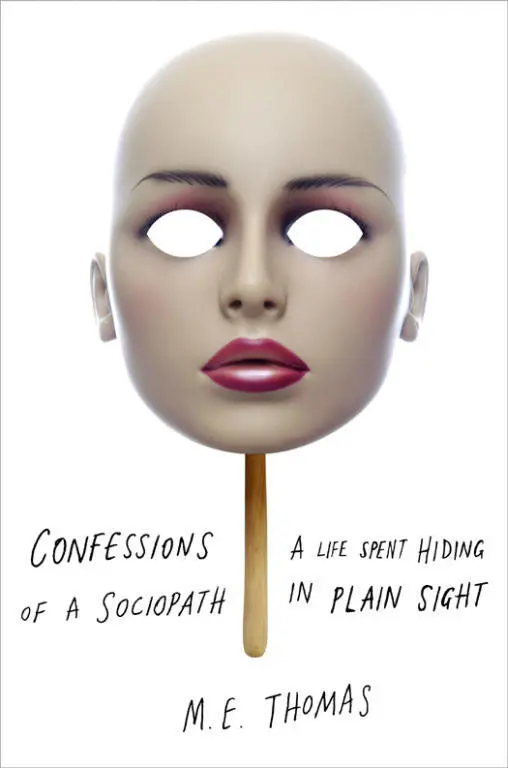
- Название:Confessions of a Sociopath
- Автор:
- Издательство:Crown Publishers
- Жанр:
- Год:2013
- Город:New York
- ISBN:978-0-307-95666-8
- Рейтинг книги:3 / 5. Голосов: 1
-
Избранное:Добавить в избранное
- Отзывы:
-
Ваша оценка:
Confessions of a Sociopath: краткое содержание, описание и аннотация
Предлагаем к чтению аннотацию, описание, краткое содержание или предисловие (зависит от того, что написал сам автор книги «Confessions of a Sociopath»). Если вы не нашли необходимую информацию о книге — напишите в комментариях, мы постараемся отыскать её.
Confessions of a Sociopath Confessions of a Sociopath
Confessions of a Sociopath — читать онлайн бесплатно полную книгу (весь текст) целиком
Ниже представлен текст книги, разбитый по страницам. Система сохранения места последней прочитанной страницы, позволяет с удобством читать онлайн бесплатно книгу «Confessions of a Sociopath», без необходимости каждый раз заново искать на чём Вы остановились. Поставьте закладку, и сможете в любой момент перейти на страницу, на которой закончили чтение.
Интервал:
Закладка:
Cleckley was not alone in this belief. Recent estimates of the criminal recidivism rate for sociopaths is approximately double that of nonsociopathic criminals, and it is triple for violent crimes. Even the Yoruba and the Inuit tribes believed that these antisocial individuals could not be changed. The only solution was to neutralize or marginalize them, or as one Inuit purportedly told Murphy, the anthropologist, “Somebody would have pushed him off the ice when nobody else was looking.”
Today psychologists and criminologists are occupied with the same conundrum with which the Inuit and Yoruba dealt through discreet homicide—what to do with sociopaths who simply cannot be trusted and who do not belong. In Great Britain, authorities have given sociopathic criminals life sentences solely on the basis of their sociopathy. In America, diagnosed sociopaths have been committed indefinitely in psychiatric facilities with no hope of release, since their doctors assume they cannot be cured. Take the story of Robert Dixon, who received a fifteen-years-to-life sentence for accessory to murder as the getaway driver to an armed robbery gone wrong. Twenty-six years into his sentence, he was up for parole. As part of the assessment of whether he was likely to reoffend, he was given a test that indicated that he was a sociopath. “I remember reading the report and feeling heartbroken,” Dixon’s lawyer recalls, “because I knew no matter how hard I worked from that day forward, that when I brought him back to the board, we were going to get denied.”
While in his first edition Cleckley asserted that sociopaths should be considered psychotics due to their deep inability to function in society, he revised his position in later editions when he realized that this characterization stood in the way of making them responsible for their criminal acts. He faced a crisis; he never believed that sociopaths were crazy, or “manic,” in the sense that others of his patients were. But he felt that they were just as troubled, just as deficient or wrongly equipped to live, and so should be kept apart from everyone else. He was concerned that dangerous sociopaths were not committed in mental institutions often enough, because an overemphasis on verbal intelligence and rationality in determining whether a person was mentally competent for the purposes of confinement weighed in favor of sociopaths.
But depriving the sociopath of freedom purely on the basis of her psychiatric diagnosis is fraught with questions of moral significance. Social scientists worry about control and maintenance—how do we deal with these strange creatures, they ask themselves, in a manner that does not make monsters of the rest of us? Can a person’s lack of conscience justify a deprivation of his freedom? Society commits the insane to confinement by reasoning that they present harm to themselves and others. I’ve heard the argument that sociopaths cannot function in the outside world, so there is nothing that society can do but take the drastic step of separating the sociopaths from the rest of the world. But sociopaths can function; we just function differently. It’s not like we’re biting off our own hands or jumping off of buildings in the belief that we can fly. We’re not crazy. And the truth is that we are sometimes quite successful. It is just that we live, think, and make decisions in a way that some people find loathsome and most find disturbingly amoral. What do you do to people you simply don’t like?
The role that a diagnosis of sociopathy should play in criminal sentencing is an admittedly thorny issue. The legal standard for an insanity plea is that the perpetrator must not be able to distinguish between right and wrong. Sociopaths actually know what society considers right and wrong most of the time, they just don’t feel an emotional compulsion to conform their behavior to societal standards. The debate is whether this faulty wiring makes them more culpable, less culpable, or equally culpable compared to a similarly offending nonsociopath. Kent Kiehl, a prominent researcher who specializes in scanning the brains of sociopaths in prisons, suggested treating them the same as people with low IQs, who may know that their actions are wrong but lack sufficient “brakes” on their violent impulses.
Furthermore, there is the question of effectiveness of punishment. Cleckley asserted that treating sociopaths as ordinary criminals—and simply imprisoning them when they had committed a wrong—did not work, since punishment does little to deter them. Of course, the deterring effect of imprisonment on anyone is questionable. I doubt that empathetic people who commit crimes of passion are deterred by the thought of imprisonment, and I wonder how much it works on lifelong drug dealers born into gangs and poverty who thus have few alternatives. However, scientific research has been conducted to show that sociopaths are particularly nonresponsive to negative consequences, and I have found this to be true in my own life. The threat of punishment at home or school only served as a challenge to figure out how to circumvent the consequences when I did what I wanted to do anyway. I didn’t fear the punishment, I just saw it as an inconvenience to work around.
Cleckley’s intuition that sociopaths do not respond normally to negative consequences was validated by a famous study by Hare in which he administered mild electrical shocks to both psychopaths and a normal control group. A timer ticking down preceded the shock. Normal people would show signs of anxiety as the timer got closer to the shock, anticipating the slight pain. Psychopaths were remarkably unfazed by the shock and did not express a comparable increase in anxiety as the timer ticked down.
This blithe reaction to negative events may be due to the excessive dopamine that characterizes the sociopathic brain. Vanderbilt University researchers have linked the excess dopamine in sociopaths to a hypersensitive reward system in the brain that releases as much as four times the normal amount of dopamine in response to either a perceived gain of money upon the successful completion of a task, or chemical stimulants. These researchers suggested that the overactive reward system is to blame for a sociopath’s impulsive, risk-seeking behavior because “these individuals appear to have such a strong draw to reward—to the carrot—that it overwhelms the sense of risk or concern about the stick.”
I have my own doubts about this hypothesis, though. A hypersensitive reward system could explain why sociopaths are allegedly sex fiends, at least compared to the rest of the population. It could also explain why you’ll see them at the top of their field, professionally speaking. Sociopaths are probably contributing to society in all sorts of random ways in order to trigger an enormous amount of dopamine flooding through their brains. Risk takers, though? Maybe we are, but I don’t think it’s because of excess dopamine, particularly because an earlier study at Vanderbilt showed that low amounts of dopamine were highly correlated with risk taking and drug abuse. From personal experience, I feel like my risk-seeking behavior stems from a low fear response or a lack of natural anxiety in potentially dangerous, traumatic, or stressful situations.
I do all sorts of risky and often stupid activities, particularly when you consider that I am a financially secure white-collar professional with a brilliant IQ who was raised devoutly religious in a stable middle-class home. When I was young, I did the usual reckless teenage stuff: mosh pits, hitchhiking in developing countries, being towed in a shopping cart from the back of a truck, fistfights, etc. I might have grown out of some of the more childish thrill-seeking activities, but I never quite grew out of the inability to learn from experiences.
Читать дальшеИнтервал:
Закладка:
Похожие книги на «Confessions of a Sociopath»
Представляем Вашему вниманию похожие книги на «Confessions of a Sociopath» списком для выбора. Мы отобрали схожую по названию и смыслу литературу в надежде предоставить читателям больше вариантов отыскать новые, интересные, ещё непрочитанные произведения.









Обсуждение, отзывы о книге «Confessions of a Sociopath» и просто собственные мнения читателей. Оставьте ваши комментарии, напишите, что Вы думаете о произведении, его смысле или главных героях. Укажите что конкретно понравилось, а что нет, и почему Вы так считаете.