Томас Гоббс - Leviathan
Здесь есть возможность читать онлайн «Томас Гоббс - Leviathan» — ознакомительный отрывок электронной книги совершенно бесплатно, а после прочтения отрывка купить полную версию. В некоторых случаях можно слушать аудио, скачать через торрент в формате fb2 и присутствует краткое содержание. Год выпуска: 2014, Издательство: epubBooks Classics, Жанр: Философия, Политика, Религия, на английском языке. Описание произведения, (предисловие) а так же отзывы посетителей доступны на портале библиотеки ЛибКат.
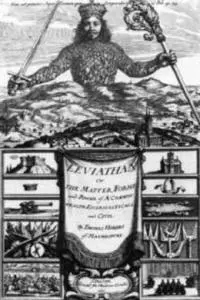
- Название:Leviathan
- Автор:
- Издательство:epubBooks Classics
- Жанр:
- Год:2014
- ISBN:нет данных
- Рейтинг книги:4 / 5. Голосов: 1
-
Избранное:Добавить в избранное
- Отзывы:
-
Ваша оценка:
Leviathan: краткое содержание, описание и аннотация
Предлагаем к чтению аннотацию, описание, краткое содержание или предисловие (зависит от того, что написал сам автор книги «Leviathan»). Если вы не нашли необходимую информацию о книге — напишите в комментариях, мы постараемся отыскать её.
Leviathan — читать онлайн ознакомительный отрывок
Ниже представлен текст книги, разбитый по страницам. Система сохранения места последней прочитанной страницы, позволяет с удобством читать онлайн бесплатно книгу «Leviathan», без необходимости каждый раз заново искать на чём Вы остановились. Поставьте закладку, и сможете в любой момент перейти на страницу, на которой закончили чтение.
Интервал:
Закладка:
If a man by the terrour of present death, be compelled to doe a fact against the Law, he is totally Excused; because no Law can oblige a man to abandon his own preservation. And supposing such a Law were obligatory; yet a man would reason thus, "If I doe it not, I die presently; if I doe it, I die afterwards; therefore by doing it, there is time of life gained;" Nature therefore compells him to the fact.
When a man is destitute of food, or other thing necessary for his life, and cannot preserve himselfe any other way, but by some fact against the Law; as if in a great famine he take the food by force, or stealth, which he cannot obtaine for mony nor charity; or in defence of his life, snatch away another mans Sword, he is totally Excused, for the reason next before alledged.
Excuses Against The Author
Again, Facts done against the Law, by the authority of another, are by that authority Excused against the Author; because no man ought to accuse his own fact in another, that is but his instrument: but it is not Excused against a third person thereby injured; because in the violation of the law, bothe the Author, and Actor are Criminalls. From hence it followeth that when that Man, or Assembly, that hath the Soveraign Power, commandeth a man to do that which is contrary to a former Law, the doing of it is totally Excused: For he ought not to condemn it himselfe, because he is the Author; and what cannot justly be condemned by the Soveraign, cannot justly be punished by any other. Besides, when the Soveraign commandeth any thing to be done against his own former Law, the Command, as to that particular fact, is an abrogation of the Law.
If that Man, or Assembly, that hath the Soveraign Power, disclaime any Right essentiall to the Soveraignty, whereby there accrueth to the Subject, any liberty inconsistent with the Soveraign Power, that is to say, with the very being of a Common–wealth, if the Subject shall refuse to obey the Command in any thing, contrary to the liberty granted, this is neverthelesse a Sinne, and contrary to the duty of the Subject: for he ought to take notice of what is inconsistent with the Soveraignty, because it was erected by his own consent, and for his own defence; and that such liberty as is inconsistent with it, was granted through ignorance of the evill consequence thereof. But if he not onely disobey, but also resist a publique Minister in the execution of it, then it is a Crime; because he might have been righted, (without any breach of the Peace,) upon complaint.
The Degrees of Crime are taken on divers Scales, and measured, First, by the malignity of the Source, or Cause: Secondly, by the contagion of the Example: Thirdly, by the mischiefe of the Effect; and Fourthly, by the concurrence of Times, Places, and Persons.
Presumption Of Power, Aggravateth
The same Fact done against the Law, if it proceed from Presumption of strength, riches, or friends to resist those that are to execute the Law, is a greater Crime, than if it proceed from hope of not being discovered, or of escape by flight: For Presumption of impunity by force, is a Root, from whence springeth, at all times, and upon all temptations, a contempt of all Lawes; whereas in the later case, the apprehension of danger, that makes a man fly, renders him more obedient for the future. A Crime which we know to be so, is greater than the same Crime proceeding from a false perswasion that it is lawfull: For he that committeth it against his own conscience, presumeth on his force, or other power, which encourages him to commit the same again: but he that doth it by errour, after the errour shewn him, is conformable to the Law.
Evill Teachers, Extenuate
Hee, whose errour proceeds from the authority of a Teacher, or an Interpreter of the Law publiquely authorised, is not so faulty, as he whose errour proceedeth from a peremptory pursute of his own principles, and reasoning: For what is taught by one that teacheth by publique Authority, the Common–wealth teacheth, and hath a resemblance of Law, till the same Authority controuleth it; and in all Crimes that contain not in them a denyall of the Soveraign Power, nor are against an evident Law, Excuseth totally: whereas he that groundeth his actions, on his private Judgement, ought according to the rectitude, or errour thereof, to stand, or fall.
Examples Of Impunity, Extenuate
The same Fact, if it have been constantly punished in other men, as a greater Crime, than if there have been may precedent Examples of impunity. For those Examples, are so many hopes of Impunity given by the Soveraign himselfe: And because he which furnishes a man with such a hope, and presumption of mercy, as encourageth him to offend, hath his part in the offence; he cannot reasonably charge the offender with the whole.
Praemeditation, Aggravateth
A Crime arising from a sudden Passion, is not so great, as when the same ariseth from long meditation: For in the former case there is a place for Extenuation, in the common infirmity of humane nature: but he that doth it with praemeditation, has used circumspection, and cast his eye, on the Law, on the punishment, and on the consequence thereof to humane society; all which in committing the Crime, hee hath contemned, and postposed to his own appetite. But there is no suddennesse of Passion sufficient for a totall Excuse: For all the time between the first knowing of the Law, and the Commission of the Fact, shall be taken for a time of deliberation; because he ought by meditation of the Law, to rectifie the irregularity of his Passions.
Where the Law is publiquely, and with assiduity, before all the people read, and interpreted; a fact done against it, is a greater Crime, than where men are left without such instruction, to enquire of it with difficulty, uncertainty, and interruption of their Callings, and be informed by private men: for in this case, part of the fault is discharged upon common infirmity; but in the former there is apparent negligence, which is not without some contempt of the Soveraign Power.
Tacite Approbation Of The Soveraign, Extenuates
Those facts which the Law expresly condemneth, but the Law–maker by other manifest signes of his will tacitly approveth, are lesse Crimes, than the same facts, condemned both by the Law, and Lawmaker. For seeing the will of the Law–maker is a Law, there appear in this case two contradictory Lawes; which would totally Excuse, if men were bound to take notice of the Soveraigns approbation, by other arguments, than are expressed by his command. But because there are punishments consequent, not onely to the transgression of his Law, but also to the observing of it, he is in part a cause of the transgression, and therefore cannot reasonably impute the whole Crime to the Delinquent. For example, the Law condemneth Duells; the punishment is made capitall: On the contrary part, he that refuseth Duell, is subject to contempt and scorne, without remedy; and sometimes by the Soveraign himselfe thought unworthy to have any charge, or preferment in Warre: If thereupon he accept Duell, considering all men lawfully endeavour to obtain the good opinion of them that have the Soveraign Power, he ought not in reason to be rigorously punished; seeing part of the fault may be discharged on the punisher; which I say, not as wishing liberty of private revenges, or any other kind of disobedience; but a care in Governours, not to countenance any thing obliquely, which directly they forbid. The examples of Princes, to those that see them, are, and ever have been, more potent to govern their actions, than the Lawes themselves. And though it be our duty to do, not what they do, but what they say; yet will that duty never be performed, till it please God to give men an extraordinary, and supernaturall grace to follow that Precept.
Comparison Of Crimes From Their Effects
Again, if we compare Crimes by the mischiefe of their Effects, First, the same fact, when it redounds to the dammage of many, is greater, than when it redounds to the hurt of few. And therefore, when a fact hurteth, not onely in the present, but also, (by example) in the future, it is a greater Crime, than if it hurt onely in the present: for the former, is a fertile Crime, and multiplyes to the hurt of many; the later is barren. To maintain doctrines contrary to the Religion established in the Common–wealth, is a greater fault, in an authorised Preacher, than in a private person: So also is it, to live prophanely, incontinently, or do any irreligious act whatsoever. Likewise in a Professor of the Law, to maintain any point, on do any act, that tendeth to the weakning of the Soveraign Power, as a greater Crime, than in another man: Also in a man that hath such reputation for wisedome, as that his counsells are followed, or his actions imitated by many, his fact against the Law, is a greater Crime, than the same fact in another: For such men not onely commit Crime, but teach it for Law to all other men. And generally all Crimes are the greater, by the scandall they give; that is to say, by becoming stumbling–blocks to the weak, that look not so much upon the way they go in, as upon the light that other men carry before them.
Читать дальшеИнтервал:
Закладка:
Похожие книги на «Leviathan»
Представляем Вашему вниманию похожие книги на «Leviathan» списком для выбора. Мы отобрали схожую по названию и смыслу литературу в надежде предоставить читателям больше вариантов отыскать новые, интересные, ещё непрочитанные произведения.




Обсуждение, отзывы о книге «Leviathan» и просто собственные мнения читателей. Оставьте ваши комментарии, напишите, что Вы думаете о произведении, его смысле или главных героях. Укажите что конкретно понравилось, а что нет, и почему Вы так считаете.