Томас Гоббс - Leviathan
Здесь есть возможность читать онлайн «Томас Гоббс - Leviathan» — ознакомительный отрывок электронной книги совершенно бесплатно, а после прочтения отрывка купить полную версию. В некоторых случаях можно слушать аудио, скачать через торрент в формате fb2 и присутствует краткое содержание. Год выпуска: 2014, Издательство: epubBooks Classics, Жанр: Философия, Политика, Религия, на английском языке. Описание произведения, (предисловие) а так же отзывы посетителей доступны на портале библиотеки ЛибКат.
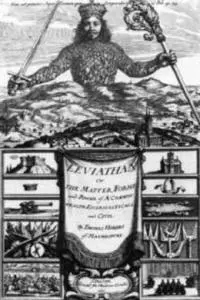
- Название:Leviathan
- Автор:
- Издательство:epubBooks Classics
- Жанр:
- Год:2014
- ISBN:нет данных
- Рейтинг книги:4 / 5. Голосов: 1
-
Избранное:Добавить в избранное
- Отзывы:
-
Ваша оценка:
Leviathan: краткое содержание, описание и аннотация
Предлагаем к чтению аннотацию, описание, краткое содержание или предисловие (зависит от того, что написал сам автор книги «Leviathan»). Если вы не нашли необходимую информацию о книге — напишите в комментариях, мы постараемся отыскать её.
Leviathan — читать онлайн ознакомительный отрывок
Ниже представлен текст книги, разбитый по страницам. Система сохранения места последней прочитанной страницы, позволяет с удобством читать онлайн бесплатно книгу «Leviathan», без необходимости каждый раз заново искать на чём Вы остановились. Поставьте закладку, и сможете в любой момент перейти на страницу, на которой закончили чтение.
Интервал:
Закладка:
But to prove that Christians are not to tolerate Infidell, or Haereticall Kings, he alledgeth a place in Deut. 17. where God forbiddeth the Jews, when they shall set a King over themselves, to choose a stranger; And from thence inferreth, that it is unlawfull for a Christian, to choose a King, that is not a Christian. And 'tis true, that he that is a Christian, that is, hee that hath already obliged himself to receive our Saviour when he shall come, for his King, shal tempt God too much in choosing for King in this world, one that hee knoweth will endeavour, both by terrour, and perswasion to make him violate his faith. But, it is (saith hee) the same danger, to choose one that is not a Christian, for King, and not to depose him, when hee is chosen. To this I say, the question is not of the danger of not deposing; but of the Justice of deposing him. To choose him, may in some cases bee unjust; but to depose him, when he is chosen, is in no case Just. For it is alwaies violation of faith, and consequently against the Law of Nature, which is the eternal Law of God. Nor doe wee read, that any such Doctrine was accounted Christian in the time of the Apostles; nor in the time of the Romane Emperours, till the Popes had the Civill Soveraignty of Rome. But to this he hath replyed, that the Christians of old, deposed not Nero, nor Diocletian, nor Julian, nor Valens an Arrian, for this cause onely, that they wanted Temporall forces. Perhaps so. But did our Saviour, who for calling for, might have had twelve Legions of immortall, invulnerable Angels to assist him, want forces to depose Caesar, or at least Pilate, that unjustly, without finding fault in him, delivered him to the Jews to bee crucified? Or if the Apostles wanted Temporall forces to depose Nero, was it therefore necessary for them in their Epistles to the new made Christians, to teach them, (as they did) to obey the Powers constituted over them, (whereof Nero in that time was one,) and that they ought to obey them, not for fear of their wrath, but for conscience sake? Shall we say they did not onely obey, but also teach what they meant not, for want of strength? It is not therefore for want of strength, but for conscience sake, that Christians are to tolerate their Heathen Princes, or Princes (for I cannot call any one whose Doctrine is the Publique Doctrine, an Haeretique) that authorize the teaching of an Errour. And whereas for the Temporall Power of the Pope, he alledgeth further, that St. Paul (1 Cor. 6.) appointed Judges under the Heathen Princes of those times, such as were not ordained by those Princes; it is not true. For St. Paul does but advise them, to take some of their Brethren to compound their differences, as Arbitrators, rather than to goe to law one with another before the Heathen Judges; which is a wholsome Precept, and full of Charity, fit to bee practised also in the Best Christian Common–wealths. And for the danger that may arise to Religion, by the Subjects tolerating of an Heathen, or an Erring Prince, it is a point, of which a Subject is no competent Judge; or if hee bee, the Popes Temporall Subjects may judge also of the Popes Doctrine. For every Christian Prince, as I have formerly proved, is no lesse Supreme Pastor of his own Subjects, than the Pope of his.
The fourth Argument, is taken from the Baptisme of Kings; wherein, that they may be made Christians they submit their Scepters to Christ; and promise to keep, and defend the Christian Faith. This is true; for Christian Kings are no more but Christs Subjects: but they may, for all that, bee the Popes Fellowes; for they are Supreme Pastors of their own Subjects; and the Pope is no more but King, and Pastor, even in Rome it selfe.
The fifth Argument, is drawn from the words spoken by our Saviour, Feed My Sheep; by which was give all Power necessary for a Pastor; as the Power to chase away Wolves, such as are Haeretiques; the Power to shut up Rammes, if they be mad, or push at the other Sheep with their Hornes, such as are Evill (though Christian) Kings; and Power to give the Flock convenient food: From whence hee inferreth, that St. Peter had these three Powers given him by Christ. To which I answer, that the last of these Powers, is no more than the Power, or rather Command to Teach. For the first, which is to chase away Wolves, that is, Haeretiques, the place hee quoteth is (Matth. 7.15.) "Beware of false Prophets which come to you in Sheeps clothing, but inwardly are ravening Wolves." But neither are Haeretiques false Prophets, or at all Prophets: nor (admitting Haeretiques for the Wolves there meant,) were the Apostles commanded to kill them, or if they were Kings, to depose them; but to beware of, fly, and avoid them: nor was it to St. Peter, nor to any of the Apostles, but to the multitude of the Jews that followed him into the mountain, men for the most part not yet converted, that hee gave this Counsell, to Beware of false Prophets: which therefore if it conferre a Power of chasing away Kings, was given, not onely to private men; but to men that were not at all Christians. And as to the Power of Separating, and Shutting up of furious Rammes, (by which hee meaneth Christian Kings that refuse to submit themselves to the Roman Pastor,) our Saviour refused to take upon him that Power in this world himself, but advised to let the Corn and Tares grow up together till the day of Judgment: much lesse did hee give it to St. Peter, or can S. Peter give it to the Popes. St. Peter, and all other Pastors, are bidden to esteem those Christians that disobey the Church, that is, (that disobey the Christian Soveraigne) as Heathen men, and as Publicans. Seeing then men challenge to the Pope no authority over Heathen Princes, they ought to challenge none over those that are to bee esteemed as Heathen.
But from the Power to Teach onely, hee inferreth also a Coercive Power in the Pope, over Kings. The Pastor (saith he) must give his flock convenient food: Therefore the Pope may, and ought to compell Kings to doe their duty. Out of which it followeth, that the Pope, as Pastor of Christian men, is King of Kings: which all Christian Kings ought indeed either to Confesse, or else they ought to take upon themselves the Supreme Pastorall Charge, every one in his own Dominion.
His sixth, and last Argument, is from Examples. To which I answer, first, that Examples prove nothing; Secondly, that the Examples he alledgeth make not so much as a probability of Right. The fact of Jehoiada, in Killing Athaliah (2 Kings 11.) was either by the Authority of King Joash, or it was a horrible Crime in the High Priest, which (ever after the election of King Saul) was a mere Subject. The fact of St. Ambrose, in Excommunicating Theodosius the Emperour, (if it were true hee did so,) was a Capitall Crime. And for the Popes, Gregory 1. Greg. 2. Zachary, and Leo 3. their Judgments are void, as given in their own Cause; and the Acts done by them conformably to this Doctrine, are the greatest Crimes (especially that of Zachary) that are incident to Humane Nature. And thus much of Power Ecclesiasticall; wherein I had been more briefe, forbearing to examine these Arguments of Bellarmine, if they had been his, as a Private man, and not as the Champion of the Papacy, against all other Christian Princes, and States.
Chapter XLIII.
Of What is Necessary for a Mans Reception Into the Kingdome of Heaven.
The Difficulty Of Obeying God And Man Both At Once
The most frequent praetext of Sedition, and Civill Warre, in Christian Common–wealths hath a long time proceeded from a difficulty, not yet sufficiently resolved, of obeying at once, both God, and Man, then when their Commandements are one contrary to the other. It is manifest enough, that when a man receiveth two contrary Commands, and knows that one of them is Gods, he ought to obey that, and not the other, though it be the command even of his lawfull Soveraign (whether a Monarch, or a Soveraign Assembly,) or the command of his Father. The difficulty therefore consisteth in this, that men when they are commanded in the name of God, know not in divers Cases, whether the command be from God, or whether he that commandeth, doe but abuse Gods name for some private ends of his own. For as there ware in the Church of the Jews, many false Prophets, that sought reputation with the people, by feigned Dreams, and Visions; so there have been in all times in the Church of Christ, false Teachers, that seek reputation with the people, by phantasticall and false Doctrines; and by such reputation (as is the nature of Ambition,) to govern them for their private benefit.
Читать дальшеИнтервал:
Закладка:
Похожие книги на «Leviathan»
Представляем Вашему вниманию похожие книги на «Leviathan» списком для выбора. Мы отобрали схожую по названию и смыслу литературу в надежде предоставить читателям больше вариантов отыскать новые, интересные, ещё непрочитанные произведения.






Обсуждение, отзывы о книге «Leviathan» и просто собственные мнения читателей. Оставьте ваши комментарии, напишите, что Вы думаете о произведении, его смысле или главных героях. Укажите что конкретно понравилось, а что нет, и почему Вы так считаете.