Томас Гоббс - Leviathan
Здесь есть возможность читать онлайн «Томас Гоббс - Leviathan» — ознакомительный отрывок электронной книги совершенно бесплатно, а после прочтения отрывка купить полную версию. В некоторых случаях можно слушать аудио, скачать через торрент в формате fb2 и присутствует краткое содержание. Год выпуска: 2014, Издательство: epubBooks Classics, Жанр: Философия, Политика, Религия, на английском языке. Описание произведения, (предисловие) а так же отзывы посетителей доступны на портале библиотеки ЛибКат.
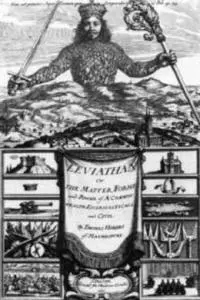
- Название:Leviathan
- Автор:
- Издательство:epubBooks Classics
- Жанр:
- Год:2014
- ISBN:нет данных
- Рейтинг книги:4 / 5. Голосов: 1
-
Избранное:Добавить в избранное
- Отзывы:
-
Ваша оценка:
Leviathan: краткое содержание, описание и аннотация
Предлагаем к чтению аннотацию, описание, краткое содержание или предисловие (зависит от того, что написал сам автор книги «Leviathan»). Если вы не нашли необходимую информацию о книге — напишите в комментариях, мы постараемся отыскать её.
Leviathan — читать онлайн ознакомительный отрывок
Ниже представлен текст книги, разбитый по страницам. Система сохранения места последней прочитанной страницы, позволяет с удобством читать онлайн бесплатно книгу «Leviathan», без необходимости каждый раз заново искать на чём Вы остановились. Поставьте закладку, и сможете в любой момент перейти на страницу, на которой закончили чтение.
Интервал:
Закладка:
And How Chosen What
That the first Deacons were chosen, not by the Apostles, but by a Congregation of the Disciples; that is, of Christian men of all sorts, is manifest out of Acts 6. where we read that the Twelve, after the number of Disciples was multiplyed, called them together, and having told them, that it was not fit that the Apostles should leave the Word of God, and serve tables, said unto them (verse 3.) "Brethren looke you out among you seven men of honest report, full of the Holy Ghost, and of Wisdome, whom we may appoint over this businesse." Here it is manifest, that though the Apostles declared them elected; yet the Congregation chose them; which also, (verse the fift) is more expressely said, where it is written, that "the saying pleased the multitude, and they chose seven, etc."
Of Ecclesiasticall Revenue, Under The Law Of Moses
Under the Old Testament, the Tribe of Levi were onely capable of the Priesthood, and other inferiour Offices of the Church. The land was divided amongst the other Tribes (Levi excepted,) which by the subdivision of the Tribe of Joseph, into Ephraim and Manasses, were still twelve. To the Tribe of Levi were assigned certain Cities for their habitation, with the suburbs for their cattell: but for their portion, they were to have the tenth of the fruits of the land of their Brethren. Again, the Priests for their maintenance had the tenth of that tenth, together with part of the oblations, and sacrifices. For God had said to Aaron (Numb. 18. 20.) "Thou shalt have no inheritance in their land, neither shalt thou have any part amongst them, I am thy part, and thine inheritance amongst the Children of Israel." For God being then King, and having constituted the Tribe of Levi to be his Publique Ministers, he allowed them for their maintenance, the Publique revenue, that is to say, the part that God had reserved to himself; which were Tythes, and Offerings: and that it is which is meant, where God saith, I am thine inheritance. And therefore to the Levites might not unfitly be attributed the name of Clergy from Kleros, which signifieth Lot, or Inheritance; not that they were heirs of the Kingdome of God, more than other; but that Gods inheritance, was their maintenance. Now seeing in this time God himself was their King, and Moses, Aaron, and the succeeding High Priests were his Lieutenants; it is manifest, that the Right of Tythes, and Offerings was constituted by the Civill Power.
After their rejection of God in the demand of a King, they enjoyed still the same revenue; but the Right thereof was derived from that, that the Kings did never take it from them: for the Publique Revenue was at the disposing of him that was the Publique Person; and that (till the Captivity) was the King. And again, after the return from the Captivity, they paid their Tythes as before to the Priest. Hitherto therefore Church Livings were determined by the Civill Soveraign.
In Our Saviours Time, And After
Of the maintenance of our Saviour, and his Apostles, we read onely they had a Purse, (which was carried by Judas Iscariot;) and, that of the Apostles, such as were Fisher–men, did sometimes use their trade; and that when our Saviour sent the Twelve Apostles to Preach, he forbad them "to carry Gold, and Silver, and Brasse in their purses, for that the workman is worthy of his hire:" (Mat. 10. 9,10.) By which it is probable, their ordinary maintenance was not unsuitable to their employment; for their employment was (ver. 8.) "freely to give, because they had freely received;" and their maintenance was the Free Gift of those that beleeved the good tyding they carryed about of the coming of the Messiah their Saviour. To which we may adde, that which was contributed out of gratitude, by such as our Saviour had healed of diseases; of which are mentioned "Certain women (Luke 8. 2,3.) which had been healed of evill spirits and infirmities; Mary Magdalen, out of whom went seven Devills; and Joanna the wife of Chuza, Herods Steward; and Susanna, and many others, which ministred unto him of their substance.
After our Saviours Ascension, the Christians of every City lived in Common, (Acts 4. 34.) upon the mony which was made of the sale of their lands and possessions, and laid down at the feet of the Apostles, of good will, not of duty; for "whilest the Land remained (saith S. Peter to Ananias Acts 5.4.) was it not thine? and after it was sold, was it not in thy power?" which sheweth he needed not to have saved his land, nor his money by lying, as not being bound to contribute any thing at all, unlesse he had pleased. And as in the time of the Apostles, so also all the time downward, till after Constantine the Great, we shall find, that the maintenance of the Bishops, and Pastors of the Christian Church, was nothing but the voluntary contribution of them that had embraced their Doctrine. There was yet no mention of Tythes: but such was in the time of Constantine, and his Sons, the affection of Christians to their Pastors, as Ammianus Marcellinus saith (describing the sedition of Damasus and Ursinicus about the Bishopricke,) that it was worth their contention, in that the Bishops of those times by the liberality of their flock, and especially of Matrons, lived splendidly, were carryed in Coaches, and sumptuous in their fare and apparell.
The Ministers Of The Gospel Lived On The Benevolence Of Their Flocks But here may some ask, whether the Pastor were then bound to live upon voluntary contribution, as upon almes, "For who (saith S. Paul 1 Cor. 9. 7.) goeth to war at his own charges? or who feedeth a flock, and eatheth not of the milke of the flock?" And again, (1 Cor. 9. 13.) "Doe ye not know that they which minister about holy things, live of the things of the Temple; and they which wait at the Altar, partake with the Altar;" that is to say, have part of that which is offered at the Altar for their maintenance? And then he concludeth, "Even so hath the Lord appointed, that they which preach the Gospel should live of the Gospel. From which place may be inferred indeed, that the Pastors of the Church ought to be maintained by their flocks; but not that the Pastors were to determine, either the quantity, or the kind of their own allowance, and be (as it were) their own Carvers. Their allowance must needs therefore be determined, either by the gratitude, and liberality of every particular man of their flock, or by the whole Congregation. By the whole Congregation it could not be, because their Acts were then no Laws: Therefore the maintenance of Pastors, before Emperours and Civill Soveraigns had made Laws to settle it, was nothing but Benevolence. They that served at the Altar lived on what was offered. In what court should they sue for it, who had no Tribunalls? Or if they had Arbitrators amongst themselves, who should execute their Judgments, when they had no power to arme their Officers? It remaineth therefore, that there could be no certaine maintenance assigned to any Pastors of the Church, but by the whole Congregation; and then onely, when their Decrees should have the force (not onely of Canons, but also) of Laws; which Laws could not be made, but by Emperours, Kings, or other Civill Soveraignes. The Right of Tythes in Moses Law, could not be applyed to the then Ministers of the Gospell; because Moses and the High Priests were the Civill Soveraigns of the people under God, whose Kingdom amongst the Jews was present; whereas the Kingdome of God by Christ is yet to come.
Hitherto hath been shewn what the Pastors of the Church are; what are the points of their Commission (as that they were to Preach, to Teach, to Baptize, to be Presidents in their severall Congregations;) what is Ecclesiasticall Censure, viz. Excommunication, that is to say, in those places where Christianity was forbidden by the Civill Laws, a putting of themselves out of the company of the Excommunicate, and where Christianity was by the Civill Law commanded, a putting the Excommunicate out of the Congregations of Christians; who elected the Pastors and Ministers of the Church, (that it was, the Congregation); who consecrated and blessed them, (that it was the Pastor); what was their due revenue, (that it was none but their own possessions, and their own labour, and the voluntary contributions of devout and gratefull Christians). We are to consider now, what Office those persons have, who being Civill Soveraignes, have embraced also the Christian Faith.
Читать дальшеИнтервал:
Закладка:
Похожие книги на «Leviathan»
Представляем Вашему вниманию похожие книги на «Leviathan» списком для выбора. Мы отобрали схожую по названию и смыслу литературу в надежде предоставить читателям больше вариантов отыскать новые, интересные, ещё непрочитанные произведения.






Обсуждение, отзывы о книге «Leviathan» и просто собственные мнения читателей. Оставьте ваши комментарии, напишите, что Вы думаете о произведении, его смысле или главных героях. Укажите что конкретно понравилось, а что нет, и почему Вы так считаете.