Томас Гоббс - Leviathan
Здесь есть возможность читать онлайн «Томас Гоббс - Leviathan» — ознакомительный отрывок электронной книги совершенно бесплатно, а после прочтения отрывка купить полную версию. В некоторых случаях можно слушать аудио, скачать через торрент в формате fb2 и присутствует краткое содержание. Год выпуска: 2014, Издательство: epubBooks Classics, Жанр: Философия, Политика, Религия, на английском языке. Описание произведения, (предисловие) а так же отзывы посетителей доступны на портале библиотеки ЛибКат.
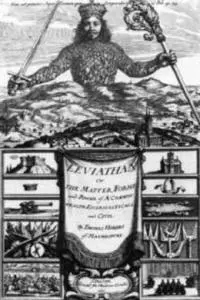
- Название:Leviathan
- Автор:
- Издательство:epubBooks Classics
- Жанр:
- Год:2014
- ISBN:нет данных
- Рейтинг книги:4 / 5. Голосов: 1
-
Избранное:Добавить в избранное
- Отзывы:
-
Ваша оценка:
Leviathan: краткое содержание, описание и аннотация
Предлагаем к чтению аннотацию, описание, краткое содержание или предисловие (зависит от того, что написал сам автор книги «Leviathan»). Если вы не нашли необходимую информацию о книге — напишите в комментариях, мы постараемся отыскать её.
Leviathan — читать онлайн ознакомительный отрывок
Ниже представлен текст книги, разбитый по страницам. Система сохранения места последней прочитанной страницы, позволяет с удобством читать онлайн бесплатно книгу «Leviathan», без необходимости каждый раз заново искать на чём Вы остановились. Поставьте закладку, и сможете в любой момент перейти на страницу, на которой закончили чтение.
Интервал:
Закладка:
Besides these Magisteriall employments in the Church, namely Apostles, Bishops, Elders, Pastors, and Doctors, whose calling was to proclaim Christ to the Jews, and Infidels, and to direct, and teach those that beleeved we read in the New Testament of no other. For by the names of Evangelists and Prophets, is not signified any Office, but severall Gifts, by which severall men were profitable to the Church: as Evangelists, by writing the life and acts of our Saviour; such as were S. Matthew and S. John Apostles, and S. Marke and S. Luke Disciples, and whosoever else wrote of that subject, (as S. Thomas, and S. Barnabas are said to have done, though the Church have not received the Books that have gone under their names:) and as Prophets, by the gift of interpreting the Old Testament; and sometimes by declaring their speciall Revelations to the Church. For neither these gifts, nor the gifts of Languages, nor the gift of Casting out Devils, or of Curing other diseases, nor any thing else did make an Officer in the Church, save onely the due calling and election to the charge of Teaching.
Ordination Of Teachers
As the Apostles, Matthias, Paul, and Barnabas, were not made by our Saviour himself, but were elected by the Church, that is, by the Assembly of Christians; namely, Matthias by the Church of Jerusalem, and Paul, and Barnabas by the Church of Antioch; so were also the Presbyters, and Pastors in other Cities, elected by the Churches of those Cities. For proof whereof, let us consider, first, how S. Paul proceeded in the Ordination of Presbyters, in the Cities where he had converted men to the Christian Faith, immediately after he and Barnabas had received their Apostleship. We read (Acts 14.23.) that "they ordained Elders in every Church;" which at first sight may be taken for an Argument, that they themselves chose, and gave them their authority: But if we consider the Originall text, it will be manifest, that they were authorized, and chosen by the Assembly of the Christians of each City. For the words there are, "cheirotonesantes autoispresbuterous kat ekklesian," that is, "When they had Ordained them Elders by the Holding up of Hands in every Congregation." Now it is well enough known, that in all those Cities, the manner of choosing Magistrates, and Officers, was by plurality of suffrages; and (because the ordinary way of distinguishing the Affirmative Votes from the Negatives, was by Holding up of Hands) to ordain an Officer in any of the Cities, was no more but to bring the people together, to elect them by plurality of Votes, whether it were by plurality of elevated hands, or by plurality of voices, or plurality of balls, or beans, or small stones, of which every man cast in one, into a vessell marked for the Affirmative, or Negative; for divers Cities had divers customes in that point. It was therefore the Assembly that elected their own Elders: the Apostles were onely Presidents of the Assembly to call them together for such Election, and to pronounce them Elected, and to give them the benediction, which now is called Consecration. And for this cause they that were Presidents of the Assemblies, as (in the absence of the Apostles) the Elders were, were called proestotes, and in Latin Antistities; which words signifie the Principall Person of the Assembly, whose office was to number the Votes, and to declare thereby who was chosen; and where the Votes were equall, to decide the matter in question, by adding his own; which is the Office of a President in Councell. And (because all the Churches had their Presbyters ordained in the same manner,) where the word is Constitute, (as Titus 1.5.) "ina katasteses kata polin presbuterous," "For this cause left I thee in Crete, that thou shouldest constitute Elders in every City," we are to understand the same thing; namely, that hee should call the faithfull together, and ordain them Presbyters by plurality of suffrages. It had been a strange thing, if in a Town, where men perhaps had never seen any Magistrate otherwise chosen then by an Assembly, those of the Town becomming Christians, should so much as have thought on any other way of Election of their Teachers, and Guides, that is to say, of their Presbyters, (otherwise called Bishops,) then this of plurality of suffrages, intimated by S. Paul (Acts 14.23.) in the word Cheirotonesantes: Nor was there ever any choosing of Bishops, (before the Emperors found it necessary to regulate them in order to the keeping of the peace amongst them,) but by the Assemblies of the Christians in every severall Town.
The same is also confirmed by the continuall practise even to this day, in the Election of the Bishops of Rome. For if the Bishop of any place, had the right of choosing another, to the succession of the Pastorall Office, in any City, at such time as he went from thence, to plant the same in another place; much more had he had the Right, to appoint his successour in that place, in which he last resided and dyed: And we find not, that ever any Bishop of Rome appointed his successor. For they were a long time chosen by the People, as we may see by the sedition raised about the Election, between Damascus, and Ursinicus; which Ammianus Marcellinus saith was so great, that Juventius the Praefect, unable to keep the peace between them, was forced to goe out of the City; and that there were above an hundred men found dead upon that occasion in the Church it self. And though they afterwards were chosen, first, by the whole Clergy of Rome, and afterwards by the Cardinalls; yet never any was appointed to the succession by his predecessor. If therefore they pretended no right to appoint their successors, I think I may reasonably conclude, they had no right to appoint the new power; which none could take from the Church to bestow on them, but such as had a lawfull authority, not onely to Teach, but to Command the Church; which none could doe, but the Civill Soveraign.
Ministers Of The Church What
The word Minister in the Originall Diakonos signifieth one that voluntarily doth the businesse of another man; and differeth from a Servant onely in this, that Servants are obliged by their condition, to what is commanded them; whereas Ministers are obliged onely by their undertaking, and bound therefore to no more than that they have undertaken: So that both they that teach the Word of God, and they that administer the secular affairs of the Church, are both Ministers, but they are Ministers of different Persons. For the Pastors of the Church, called (Acts 6.4.) "The Ministers of the Word," are Ministers of Christ, whose Word it is: But the Ministery of a Deacon, which is called (verse 2. of the same Chapter) "Serving of Tables," is a service done to the Church, or Congregation: So that neither any one man, nor the whole Church, could ever of their Pastor say, he was their Minister; but of a Deacon, whether the charge he undertook were to serve tables, or distribute maintenance to the Christians, when they lived in each City on a common stock, or upon collections, as in the first times, or to take a care of the House of Prayer, or of the Revenue, or other worldly businesse of the Church, the whole Congregation might properly call him their Minister.
For their employment, as Deacons, was to serve the Congregation; though upon occasion they omitted not to preach the Gospel, and maintain the Doctrine of Christ, every one according to his gifts, as S. Steven did; and both to Preach, and Baptize, as Philip did: For that Philip, which (Act. 8. 5.) Preached the Gospel at Samaria, and (verse 38.) Baptized the Eunuch, was Philip the Deacon, not Philip the Apostle. For it is manifest (verse 1.) that when Philip preached in Samaria, the Apostles were at Jerusalem, and (verse 14.) "When they heard that Samaria had received the Word of God, sent Peter and John to them;" by imposition of whose hands, they that were Baptized (verse 15.) received (which before by the Baptisme of Philip they had not received) the Holy Ghost. For it was necessary for the conferring of the Holy Ghost, that their Baptisme should be administred, or confirmed by a Minister of the Word, not by a Minister of the Church. And therefore to confirm the Baptisme of those that Philip the Deacon had Baptized, the Apostles sent out of their own number from Jerusalem to Samaria, Peter, and John; who conferred on them that before were but Baptized, those graces that were signs of the Holy Spirit, which at that time did accompany all true Beleevers; which what they were may be understood by that which S. Marke saith (chap. 16.17.) "These signs follow them that beleeve in my Name; they shall cast out Devills; they shall speak with new tongues; They shall take up Serpents, and if they drink any deadly thing, it shall not hurt them; They shall lay hands on the sick, and they shall recover." This to doe, was it that Philip could not give; but the Apostles could, and (as appears by this place) effectually did to every man that truly beleeved, and was by a Minister of Christ himself Baptized: which power either Christs Ministers in this age cannot conferre, or else there are very few true Beleevers, or Christ hath very few Ministers.
Читать дальшеИнтервал:
Закладка:
Похожие книги на «Leviathan»
Представляем Вашему вниманию похожие книги на «Leviathan» списком для выбора. Мы отобрали схожую по названию и смыслу литературу в надежде предоставить читателям больше вариантов отыскать новые, интересные, ещё непрочитанные произведения.







Обсуждение, отзывы о книге «Leviathan» и просто собственные мнения читателей. Оставьте ваши комментарии, напишите, что Вы думаете о произведении, его смысле или главных героях. Укажите что конкретно понравилось, а что нет, и почему Вы так считаете.