Judith McNaught - Remember When
Здесь есть возможность читать онлайн «Judith McNaught - Remember When» весь текст электронной книги совершенно бесплатно (целиком полную версию без сокращений). В некоторых случаях можно слушать аудио, скачать через торрент в формате fb2 и присутствует краткое содержание. Год выпуска: 1997, ISBN: 1997, Издательство: Simon & Schuster Ltd, Жанр: Современные любовные романы, на английском языке. Описание произведения, (предисловие) а так же отзывы посетителей доступны на портале библиотеки ЛибКат.
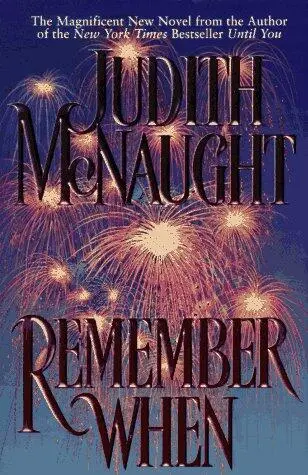
- Название:Remember When
- Автор:
- Издательство:Simon & Schuster Ltd
- Жанр:
- Год:1997
- ISBN:0-7434-6728-0
- Рейтинг книги:5 / 5. Голосов: 1
-
Избранное:Добавить в избранное
- Отзывы:
-
Ваша оценка:
Remember When: краткое содержание, описание и аннотация
Предлагаем к чтению аннотацию, описание, краткое содержание или предисловие (зависит от того, что написал сам автор книги «Remember When»). Если вы не нашли необходимую информацию о книге — напишите в комментариях, мы постараемся отыскать её.
magazine. Recently jilted by her fiancé for an Italian heiress an insult delivered via a sleazy tabloid—Diana was now very publicly unengaged, and surrounded by humiliating rumors. So why was billionaire Cole Harrison closing in on her with two crystal flutes and a bottle of champagne?
The former stableboy had received an ultimatum from his uncle: Cole must bring home a wife—soon—or lose his share of a booming multinational business. Coolly analytical and arrestingly attractive, Cole knew what he wanted in a bride, and Diana Foster—rich, beautiful, and principled—fit the role perfectly. But while a long, slow kiss sealed the bargain that solved both their dilemmas, neither imagined the extraordinary journey that would begin on that unforgettable night...
Remember When — читать онлайн бесплатно полную книгу (весь текст) целиком
Ниже представлен текст книги, разбитый по страницам. Система сохранения места последней прочитанной страницы, позволяет с удобством читать онлайн бесплатно книгу «Remember When», без необходимости каждый раз заново искать на чём Вы остановились. Поставьте закладку, и сможете в любой момент перейти на страницу, на которой закончили чтение.
Интервал:
Закладка:
The air was unstable, the flight was incredibly rough, and air traffic control advised them to go around a massive storm front over Arizona. Their new course took them an hour out of the way, which necessitated an unscheduled fuel stop in El Paso, where unusually heavy air traffic resulted in another hour's delay. Two hours behind schedule, Cole's pilots now began their final approach to Ridgewood Field, and Cole tried for the sixth time to reach Cal so that his uncle could pick him up at the airport. For the sixth time, he got a recording that the phone was out of order.
Since phone service in Cal's area was frustratingly undependable, and since Cal frequently struck back at the phone company by deducting one thirtieth of his monthly charges for each day his phone was unreliable, Cole assumed the phone company had retaliated as it usually did—by cutting off his service.
When he got off the plane, the heat and humidity seemed to plaster around him like plastic wrap, and Cole resigned himself to renting a car at the minuscule airport and driving out to the ranch.
Ridgewood was forty-five miles north of Kingdom City, which, in turn, was forty miles east of Cal's ranch. Built thirty years before and situated in the middle of nowhere, Ridgewood Field was primarily used by drilling companies who flew in special equipment for repairing the oil and gas wells that dotted the landscape. Most of the other planes that jolted down its washboard runway belonged to Texan Airlines, which flew in twice weekly with special air freight and an occasional passenger on board.
In addition to one concrete runway that was in bad repair, Ridgewood Field offered air travelers a white metal building that served as a terminal. Inside the terminal, which was not air-conditioned, amenities were limited to two rest rooms, one coffee counter, and one battered metal desk where stranded passengers could attempt to rent one of Ridgewood Field Car Rental's two available cars from a cheerful heavyset woman who was also the waitress and whose name tag identified her as "Roberta."
Roberta wiped her hands on her apron and took a rental agreement out of the desk while she politely inquired as to Cole's choice of rental cars. "Do you want the black one with the bad muffler, or the black one with the bad tires?"
Cole stifled an irate retort and scribbled his name on the rental agreement. "I'll take the one with the bad muffler."
Roberta nodded approvingly. "The air conditioning works in that one, so you won't swelter while you're getting where you're going. Good choice."
It had seemed so to Cole, too, at the time, but not now. When Cal returned to the living room and started pressing his point even harder, Cole began to wish he'd taken the other car and had a nice blowout on the way here to delay him.
"I'll make you a deal," Cal announced as he lowered himself into the chair across from Cole's. "You bring me a wife who's fit and willing to bear your children, and I'll sign those shares over to you on your first wedding anniversary. Otherwise, I'm going to leave all my worldly goods to Travis's kids. That's my deal; take it or leave it."
In stony silence, Cole returned his stare and began to slowly tap a rolled-up magazine he'd been reading on his knee. At thirty-six, he controlled a multinational corporation, 125,000 employees, and an estimated twelve billion dollars. Everything in his business and personal life was under his complete control, everything except this one seventy-five-year-old man, who was now actually threatening to leave half of Cole's company to Travis, who wasn't capable of running a small subsidiary of it without Cole's constant supervision. Cole didn't actually believe that his uncle would betray him by giving away half the corporation that Cole had slaved to build, but he didn't like the sound of his uncle's threat. He had just convinced himself that Cal was bluffing when he belatedly noticed that the fireplace mantel, which had always held a half-dozen framed family photographs, was now filled to overflowing with another dozen photographs—and all of them were of Travis's family.
"Well?" Cal said, abandoning his anger and leaning forward in his eagerness. "What do you think of the terms of my deal?"
"I think," Cole snapped, "that your terms are not only ridiculous, they're crazy."
"Are you saying that marriage is 'crazy'?" Cal demanded, his expression turning ominous again. "Why, the whole damned country is falling apart because of your generation and its lack of respect for good old 'crazy' notions like marriage and children and responsibility!"
When Cole refused to be lured into that debate, Cal gestured toward the large scarred coffee table, which was cluttered, like every other table in the room, with dozens of magazines that Letty, his housekeeper, fought a losing battle to keep orderly. "If you don't believe me, just look at what's in those magazines. Here," he stated, snatching up a copy of Reader's Digest from the pile on the end table beside his chair. Reader's Digest was a particular favorite of his. "Look at this!" He waved the small magazine with its blue cover and bright yellow print toward Cole; then he tipped his head back, in order to read through the lower part of his bifocals, and recited the titles of some of the articles: " 'Cheating in Our Schools—A National Scandal.' According to that article," he said, glaring at Cole as if it were his fault, "eight out often high school students say they cheat. It says in that article that moral standards are so low that many high school children no longer know the difference between right and wrong!"
"I don't see what that has to do with the topic at hand."
"Don't you, now?" Calvin retorted, closing the cover and tipping his head slightly back, peering again at the writing on the cover of the magazine. "Then maybe this article is more to the point. Do you know what it's called?"
The answer being obvious, Cole simply stared at him in resigned expectation.
"The article is called 'What Women Don't Know About Today's Men.'" Tossing the magazine on the table in disgust, he glared at Cole. "What I want to know is what is the matter with you young people that suddenly men don't understand women and women don't understand men, and none of you understand the need to get married and stay married and raise good, god-fearing children?"
Cole continued to tap the magazine on his knee while his anger continued to mount. "As I think I've mentioned to you in the past when you've brought all this up, you are hardly in a position to lecture anyone on the merits of marriage and children, since you've never had a wife or a child!"
"To my everlasting regret," Calvin countered, undeterred as he shoved some magazines aside and pulled out a recent copy of a tabloid. "Now, just look at this," he said, pointing a bony finger at the front page and holding it in front of Cole's face.
Cole glanced at the tabloid, and his expression turned derisive. "The Enquirer?" he said. "You're subscribing to the Enquirer?"
"Letty likes to read it, but that isn't the point. The point is that your generation has lost its collective mind! Just look at the way you young people do things. Look at this beautiful young woman. She's famous and she's a 'Houston socialite,' which means she's rich."
"So what?" Cole said, his angry gaze fastened on his uncle's face and not the newspaper.
"So, her fiancé—this Dan Penworth—just dumped her for an eighteen-year-old Italian girl who's lyin' on a beach with him, half-naked." When Cole continued to ignore the tabloid, Cal let it drop to his side, but he wasn't ready to drop his argument. "He dumped her without telling her, while the poor thing was planning her wedding."
"Is there a point to all this?" Cole demanded.
Читать дальшеИнтервал:
Закладка:
Похожие книги на «Remember When»
Представляем Вашему вниманию похожие книги на «Remember When» списком для выбора. Мы отобрали схожую по названию и смыслу литературу в надежде предоставить читателям больше вариантов отыскать новые, интересные, ещё непрочитанные произведения.










Обсуждение, отзывы о книге «Remember When» и просто собственные мнения читателей. Оставьте ваши комментарии, напишите, что Вы думаете о произведении, его смысле или главных героях. Укажите что конкретно понравилось, а что нет, и почему Вы так считаете.