Paul Thurrott - Windows 8 Secrets
Здесь есть возможность читать онлайн «Paul Thurrott - Windows 8 Secrets» — ознакомительный отрывок электронной книги совершенно бесплатно, а после прочтения отрывка купить полную версию. В некоторых случаях можно слушать аудио, скачать через торрент в формате fb2 и присутствует краткое содержание. Город: Indianapolis, IN, Год выпуска: 2012, ISBN: 2012, Издательство: John Wiley & Sons, Inc., Жанр: Программы, на английском языке. Описание произведения, (предисловие) а так же отзывы посетителей доступны на портале библиотеки ЛибКат.
- Название:Windows 8 Secrets
- Автор:
- Издательство:John Wiley & Sons, Inc.
- Жанр:
- Год:2012
- Город:Indianapolis, IN
- ISBN:978-1-118-20413-9
- Рейтинг книги:5 / 5. Голосов: 1
-
Избранное:Добавить в избранное
- Отзывы:
-
Ваша оценка:
Windows 8 Secrets: краткое содержание, описание и аннотация
Предлагаем к чтению аннотацию, описание, краткое содержание или предисловие (зависит от того, что написал сам автор книги «Windows 8 Secrets»). Если вы не нашли необходимую информацию о книге — напишите в комментариях, мы постараемся отыскать её.
Amazon.com Review
Q & A with the authors of From the Back Cover Microsoft is introducing a major new release of its Windows operating system, Windows 8, and what better way for you to learn all the ins and outs than from two internationally recognized Windows experts and Microsoft insiders, authors Paul Thurrott and Rafael Rivera? They cut through the hype to get at useful information you’ll not find anywhere else, including what role this new OS plays in a mobile and tablet world.
Regardless of your level of knowledge, you’ll discover little-known facts about how things work, what’s new and different, and how you can modify Windows 8 to meet what you need.
Windows 8 Secrets
• • • • • • • • • • • • • • • Windows 8 Secrets Should consumers adopt Windows 8 or Windows RT? Windows RT offers both advantages and disadvantages compared to Windows 8, and which you choose will depend on your needs. The biggest issue with Windows RT, of course, is the lack of desktop application compatibility: Though it comes with most Windows 8 desktop utilities and a version of Microsoft Office, Windows RT is not compatible with any third party or Microsoft desktop Windows applications that are already included. That said, Windows RT should offer much better battery life and amazingly thin and light form factors when compared to similar PCs and devices designed around a traditional PC microprocessor.
What’s best way to upgrade from Windows 7 to Windows 8? Upgrade or clean install? Is an upgrade safe? Generally speaking, you will actually see better results with an upgrade with this version of Windows, which is different than our experience with previous versions. To be safe, backup everything first, perform the upgrade, and if it doesn’t go well, you can always do a clean install afterwards.
One thing to watch during an upgrade, however, is Internet Explorer: If you have configured a different browser as your default browser in Windows 7 and then upgrade to Windows 8, you will actually lose the ability to run the Metro-style version of Internet Explorer 10. You can fix this by configuring IE as your default browser after the fact.
Does Windows 8 really run faster and better than Windows 7 on the same hardware? Yes. But in real world usage, you won’t notice much of a difference in usage. That said, Windows 8 boots, resumes from sleep, and performs other power management functions much, much faster than does Windows 7. You can also use Push Button Reset to refresh or reset a Windows 8 PC in just minutes.
Will all of my Windows 7 apps and drivers work with Windows 8? For the most part, yes. Microsoft claims that if it works with Windows 7, it should work with Windows 8. And in our experience, that has definitely been the case. Even the now-ancient game “Halo: Combat Evolved,” from 2003 installs and runs just fine. That said, you may need to uninstall some applications if you’re upgrading from Windows 7 to Windows 8, and then reinstall them after the fact. And of course there will always be some exceptions.
What are the most important keyboard combinations we should memorize? If you remember just one keyboard shortcut, it should be WINKEY + C, which enables the Charms and access to several key system functions, including Search, Share, Start, Devices, and Settings. Some other useful keyboard shortcuts include WINKEY + D (to navigate directly to the desktop), WINKEY + I (for Settings), and WINKEY + L for lock. And let’s not forget our favorite keyboard combination: WINKEY + X, which displays a power user menu of sorts containing lots of useful shortcuts.
In their introduction, the authors of this book say that “with Windows 8, suddenly, everything is different.” And they are right—with a completely new interface presenting users with a completely new experience, Windows 8 and its device-based cousin Windows RT are arguably the biggest change in Windows ever. But bestselling authors Paul Thurrott and Rafael Rivera have you covered with Windows 8 Secrets, a completely new, written-from-scratch guide to the ins and outs of this new Windows experience. Covering topics both large and small, ranging from how the new immersive experiences and familiar Windows desktop interface coexist to the subtle differences in interacting with Windows 8 via touch, keyboard, or mouse, this book digs in to reveal helpful and advanced insight in all major Windows areas: application management, data backup and security, networking, and much more.
The Insider’s Guide to:
• • • • • • • • • The Secrets series reveals:
• • • • • [Contain tables. Best viewed with CoolReader.]
Windows 8 Secrets — читать онлайн ознакомительный отрывок
Ниже представлен текст книги, разбитый по страницам. Система сохранения места последней прочитанной страницы, позволяет с удобством читать онлайн бесплатно книгу «Windows 8 Secrets», без необходимости каждый раз заново искать на чём Вы остановились. Поставьте закладку, и сможете в любой момент перейти на страницу, на которой закончили чтение.
Интервал:
Закладка:
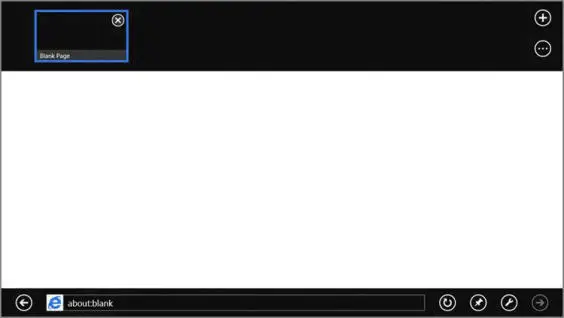
Let’s see what that means. In Figure 7-1, you can see the Metro version of Internet Explorer, with its normally hidden application user interface (or chrome ) displayed for context. This version of IE offers a full-screen, touch-friendly, immersive user experience.
Figure 7-1:The Metro-style version of Internet Explorer 10
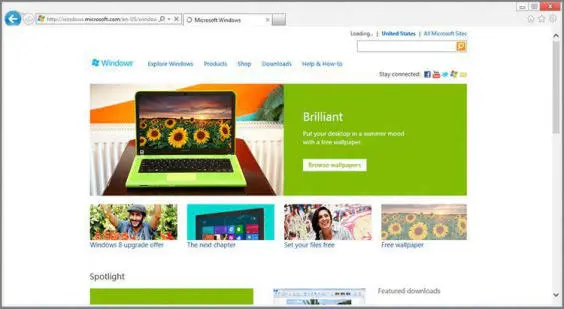
In Figure 7-2, meanwhile, you see the desktop version of Internet Explorer 10. This looks and works much like previous IE versions and is tailored for the traditional desktop environment. It offers a richer feature set, with full support for add-ons and browser extensions.
These two solutions are separate but also connected. That is, the Metro-style app and the desktop application are indeed two different executables, or programs. But they utilize the same rendering engine under the hood, share numerous features and data, and, most confusingly, interact with each other, and with other browsers and the underlying OS, in brand-new ways.
Figure 7-2:The desktop version of Internet Explorer 10
While we tend to use the term app to describe Metro-style solutions, and application for desktop solutions, this is just for convenience. Effectively speaking, both types of solutions are applications. (And, as it turns out, both are apps too!)
Microsoft describes these dual Internet Explorer applications as two different experiences, or skins, with one underlying browser engine. But that’s a bit of a stretch. In reality, Internet Explorer 10 acts as two distinct applications, and that becomes more evident when you configure Windows to use a different default browser (like Google Chrome).
As a result, it’s perhaps a bit fairer to say that Windows 8 offers two very different browser experiences, though each do share some underpinnings. Which one you use will depend very much on how you use Windows 8.
That is, if you find yourself using the Metro user experience a lot, perhaps because you’re using a touch-based device like a tablet, you’ll probably want to stick with Internet Explorer for Metro. But if you are using a more traditional mouse- and keyboard-based system, perhaps a desktop PC or laptop, the desktop version of Internet Explorer will be what you’re looking for.
Or maybe things aren’t so black and white. As it turns out, our devices, just like the OS they run, are changing. And as you read this, you could be using a tablet that docks and connects to a larger display and a keyboard and mouse, and other peripherals, while you’re sitting at a desk. Or perhaps you’ll opt for a hybrid laptop or Ultrabook that can work as both a traditional PC, with keyboard and mouse, or, with the flip of a screen, can be used like a tablet.
IE 10 Metro and IE 10 desktop also share many useful security features, such as SmartScreen and InPrivate Browsing.
With such devices, your usage will vary not by the device type—since these new kinds of PCs are so versatile—but rather by the situation. They can change on the fly, in fact, and you can move between the different Internet Explorer applications as your usage changes. And because these two applications share browsing history, typed addresses, settings, and more, moving back and forth is fairly seamless.
IE 10 Metro and IE 10 desktop also share many (but not all) underpinning technologies, including hardware acceleration of web-based text, graphics, video, and audio, and compiled JavaScript—you know, if you’re a web geek.
Another thing to consider, though this may be hard to believe: You may just end up liking Internet Explorer 10 Metro, and grow to prefer using it, even if you work mostly in the desktop environment. It can be said that the Metro version of Internet Explorer 10, with its chrome-free user interface and full-screen browsing experience, is like a gateway drug for the rest of Metro. It may, in fact, help convince you to ditch that aging desktop or laptop and head toward a more modern device with touch capabilities.
Either way, Internet Explorer 10 does offers what Microsoft loves to describe as a “no compromises” web browsing experience that works very well with both touch-screen devices and desktop-based machines, and also offers a way to move back and forth between them. Both experiences are available anywhere, from a powerful multi-display desktop all the way down to a svelte, 7-inch tablet.
But don’t decide now. In the coming sections, we’ll thoroughly examine the new Metro-style version of Internet Explorer. (IE 10 for the desktop hasn’t changed much at all, from a user experience standpoint, since IE 9.) And then you can decide for yourself.
Internet Explorer 10 for Metro
IE 10 Metro may be add-on free, but it does include an integrated version of Adobe Flash so it will work with many (but not all) popular Flash-based websites, including those for videos and games.
Internet Explorer 10 for Metro is a touch-friendly, Metro-style web browser that works pretty well with mouse and keyboard too. It offers an add-on free experience that is faster and safer but dispenses with some useful functionality you may expect if you’ve used previous IE versions.
Like other Metro-style apps, IE 10 Metro is immersive, or tailored for a touch-first device experience. That means no visual distractions—thanks to its lack of chrome—and the ability to use simple gestures to navigate the web and pan and zoom across individual web pages.
IE 10 Metro also changes the web in some crucial ways. On-screen controls like check boxes and radio buttons are styled differently so that they’re touch-friendly. It’s very similar to the experience offered by the Windows Phone version of Internet Explorer, in fact.
Some common browser activities are handled quite a bit differently in this version of Internet Explorer. For example, search and sharing occur from the system-wide contracts that are available from the Charms bar. And the Metro Devices interface is used to print, play video on other screens, and interact with other devices.
Chapter 3describes Charms, contracts, and other common Metro features.
Some things, of course, are the same as with the desktop version of IE. Aside from the basic feature set, including features like InPrivate Browsing and Tracking Protection, you’ll find that many keyboard shortcuts from desktop IE continue to work in the Metro version of the browser. And if you find a page that won’t work in IE Metro—perhaps because of its lack of add-on support—you can easily open that page in the desktop version of Internet Explorer and get back to work.
The IE Metro User Experience
Figure 7-3:The Internet Explorer 10 live tile

The Metro version of Internet Explorer 10 should be available via its live tile on the Windows 8 Start screen, as shown in Figure 7-3.
Yes, that says should. Sadly, depending on how you acquired Windows 8—perhaps by upgrading an existing PC or from a PC maker who has modified the default settings—you may see a tile for the desktop version of Internet Explorer instead, as shown in Figure 7-4 . Or, you may see a tile for a competing web browser.
Figure 7-4:See this tile instead? That’s the IE 10 desktop tile.
Читать дальшеИнтервал:
Закладка:
Похожие книги на «Windows 8 Secrets»
Представляем Вашему вниманию похожие книги на «Windows 8 Secrets» списком для выбора. Мы отобрали схожую по названию и смыслу литературу в надежде предоставить читателям больше вариантов отыскать новые, интересные, ещё непрочитанные произведения.









Обсуждение, отзывы о книге «Windows 8 Secrets» и просто собственные мнения читателей. Оставьте ваши комментарии, напишите, что Вы думаете о произведении, его смысле или главных героях. Укажите что конкретно понравилось, а что нет, и почему Вы так считаете.