Leslie Hartley - The Complete Short Stories of L.P. Hartley
Здесь есть возможность читать онлайн «Leslie Hartley - The Complete Short Stories of L.P. Hartley» весь текст электронной книги совершенно бесплатно (целиком полную версию без сокращений). В некоторых случаях можно слушать аудио, скачать через торрент в формате fb2 и присутствует краткое содержание. Город: New York, Год выпуска: 1986, ISBN: 1986, Издательство: Beaufort Books Publishers, Жанр: Ужасы и Мистика, Классическая проза, на английском языке. Описание произведения, (предисловие) а так же отзывы посетителей доступны на портале библиотеки ЛибКат.
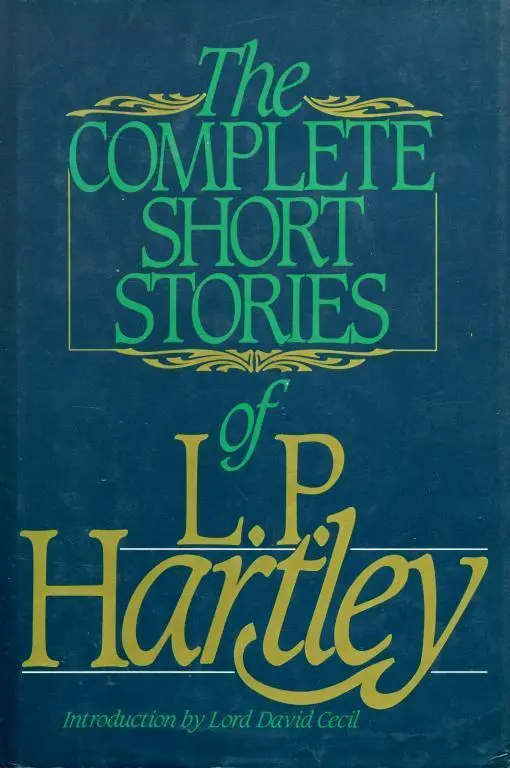
- Название:The Complete Short Stories of L.P. Hartley
- Автор:
- Издательство:Beaufort Books Publishers
- Жанр:
- Год:1986
- Город:New York
- ISBN:0-8253-0353-2
- Рейтинг книги:3 / 5. Голосов: 1
-
Избранное:Добавить в избранное
- Отзывы:
-
Ваша оценка:
The Complete Short Stories of L.P. Hartley: краткое содержание, описание и аннотация
Предлагаем к чтению аннотацию, описание, краткое содержание или предисловие (зависит от того, что написал сам автор книги «The Complete Short Stories of L.P. Hartley»). Если вы не нашли необходимую информацию о книге — напишите в комментариях, мы постараемся отыскать её.
,
,
, and
are in this edition, as is the flawless novella
.
Leslie Poles Hartley was born in 1895 and died in 1972. Of his eighteen novels, the best known are
,
,
,
,
,
,
,
, and
.
, when filmed, was an international success, and the film version of
won the principal award at the 1973 Cannes festival.
The Complete Short Stories of L.P. Hartley — читать онлайн бесплатно полную книгу (весь текст) целиком
Ниже представлен текст книги, разбитый по страницам. Система сохранения места последней прочитанной страницы, позволяет с удобством читать онлайн бесплатно книгу «The Complete Short Stories of L.P. Hartley», без необходимости каждый раз заново искать на чём Вы остановились. Поставьте закладку, и сможете в любой момент перейти на страницу, на которой закончили чтение.
Интервал:
Закладка:
However unconventional it was to beard a stranger in his bedroom, she felt she really must find out. Conscientiousness was part of her nature. Over-conscientiousness was the cause, together with guilt, of many of her neurotic fears.
Putting on her dressing-gown she went back into the passage. It was again in darkness, but she knew where the switch was.
What should she say to him? How should she explain herself? ‘I am sorry to burst in like this, Count, but I heard a noise, and I wondered if you were quite well? Forgive me, I hope I haven’t woken you up.’ (This would be rather disingenuous, for the only deterrent to an inveterate snorer is to wake him up.) ‘Oh, you are all right? There’s nothing I can do for you? I am so glad, goodnight Count Olmütz, goodnight.’
She rehearsed these words, or something like them, under the bright unshadowed bulb in the passage; she made that movement of bodily tension known as ‘pulling oneself together’ that one often makes before doing something one dislikes. And then she stretched her hand out to push open the door which had been ajar; but it wasn’t, it was locked, and no amount of rattling the handle (as if one wanted to break into a lavatory) would open it.
She could have sworn the door had been open, yawning, agape, the last time she crossed the passage; but how often had she crossed it? Fatigue and fear confused her memory; moreover, they confused as such things will her idea of what to do next, or what to do at all. But the stertorous sound, rising and falling as if a body was arguing with itself, came through the locked door plainer than ever.
Back in her bedroom she tried to reason it out. What should she do? Was it any business of hers if her next-door neighbour suffered from bronchial catarrh? Many people, many men at any rate, subside into wheezings when they lie down in bed. It was a sign of age—perhaps Count Olmütz wasn’t very young? There was a bell in her room—there were two in fact—close by her bed, one of which said ‘Up’ and the other ‘Down’. ‘Up’ would be the one to ring: presumably the household staff would be ‘up’ and not ‘down’. But would they be ‘up’, in another sense of the word, at one o’clock in the morning, and would anyone answer if she did ring? And if some flustered housemaid—supposing there was one—appeared, what would Mildred say? ‘The gentleman next door is snoring rather loudly. Can you do anything about it?’
It would be too silly.
‘Leave it till the morning, leave it till the morning.’ She had done her best, and if Count Olmütz chose to lock his door, it was no concern of hers. Perhaps he had decided to lock it against her, as she had once thought of locking it against him.
She got into bed, but insomnia is a relentless watchdog and would not let her sleep. The sounds were growing fainter—the donkey’s bray seemed to be petering out, when suddenly it took a new tone—a combination of gurgle, gasp, and choke, which made her jump out of bed.
It was then that she saw—and wondered how she could ever have forgotten—the door of partition, the door that divided her room from his.
She switched on her bedside lamp. She had her electric torch with her and she switched it on too. ‘More light!’ as Goethe said. The key turned in the lock, but was the door locked on the other side too? No, it wasn’t; whatever his motives for secrecy, Count Olmütz had forgotten to lock the door on his side.
‘I mustn’t startle him,’ she thought, putting her small hand over the torch’s beam; so it was only gradually that she saw, piecemeal, what she afterwards thought she saw—the arm hanging limply down from the bed, the hand trailing the floor, the averted head and the familiar shadow on the wall behind—but with this difference that the gash, or gape, between nose and throat was wider than the fish’s gape that she had seen before.
There was no sound. The silence was absolute, until she pierced it with a scream. For the head—the nearly severed head—was not the head of Count Olmütz, whoever he was; it was the head of a man she knew quite well, and whom Joanna knew quite well, in former days. There were all sorts of stories about him, some of which she knew; but she had not heard or thought of him, still less seen him, for a long, long time: not until tonight in fact.
But was it him? Could she be sure, she asked herself as with hands trembling with haste she began to pack her suitcase. A distorted face, with a gash under it, need it be somebody she knew? Recognition isn’t an easy problem; on an identification parade could she have picked out a man, with his head thrown back and something blackish trickling down him, as somebody she knew?
No; but she dared not go back to confirm it or deny it.
She seized a sheet of writing-paper from the table at the foot of her bed.
‘Darling, I have had to go. A sudden indisposition, ’flu I think, but I don’t want to be ill on you, especially as I know you are going abroad next week. Lovely visit.’ She hesitated a moment. ‘Make my apologies to Count Olmütz.’
Like many women, she travelled light and packed quickly: then looked round to see if she had left anything behind. ‘Why, I’m still in my pyjamas!’ The discovery made her laugh hysterically. She slipped them off, put on her travelling attire, took a glance at herself in the mirror to see if she was properly arrayed for a long drive in the small hours.
Yes, she would pass; but was there anything she had left behind? The torch, the torch! She must have dropped it in her flight from ‘the Count’s’ bedroom and she would need it to find her way through the dark passages, into the hall, out through the front door, on to the drive—left, right? right, left?—to the garage yard.
She couldn’t go through these complicated manoeuvres without the torch, feeble as its ray was, and she must have dropped it out of reach behind the door of partition.
Sometimes clutching her suitcase, sometimes letting it drop on to the floor, she debated her next move, until dawn—like a picture frame—peeped behind the edges of the window curtains.
‘Oh, damn it,’ she said, and unlocked the dividing door.
There was a switch on his side as there was on hers, a device convenient no doubt for clandestine couples. Her fingers found it at once and light broke out, almost exploded from the central chandelier. What would it show? She only wanted to see one thing—her little torch. There it lay, almost at her feet.
She grabbed it, but in spite of herself she couldn’t help looking round the room, dreading what she might see. But she saw nothing: nothing to alarm her, only an ordinary bed with the sheet turned back, so bravely, oh! not a crease, not a stain on it, still less a man under it.
‘What a fool I am,’ she thought, retreating to her room, but not forgetting to re-lock the intervening door or the door into the passage. The house was well supplied with keys. Just as, after a thunderstorm, one feels the weather will be settled for ever, she unpacked again, took out her pyjamas, made the necessary adjustments to her face, and slept peacefully.
The maid who brought her breakfast brought a note with it.
‘Dearest Mildred, Do forgive me, but I can’t say goodbye for I have to go away early—such a bore. Please ask for anything you want. Love, Joanna.’
Mildred called the maid back.
‘You don’t happen to know where Mrs. Bostock has gone?’
‘No, Madam, she doesn’t always tell us. I haven’t seen her—she just left this note. Shall I draw the curtains, Madam?’
‘Yes, please.’
How brave one is by daylight! Finishing her toast and marmalade, thinking how absurd even for someone who professed to be psychic, had been her visions of the night, she got out of bed, didn’t bother to put on her dressing-gown, and unlocked the communicating door.
Читать дальшеИнтервал:
Закладка:
Похожие книги на «The Complete Short Stories of L.P. Hartley»
Представляем Вашему вниманию похожие книги на «The Complete Short Stories of L.P. Hartley» списком для выбора. Мы отобрали схожую по названию и смыслу литературу в надежде предоставить читателям больше вариантов отыскать новые, интересные, ещё непрочитанные произведения.








Обсуждение, отзывы о книге «The Complete Short Stories of L.P. Hartley» и просто собственные мнения читателей. Оставьте ваши комментарии, напишите, что Вы думаете о произведении, его смысле или главных героях. Укажите что конкретно понравилось, а что нет, и почему Вы так считаете.