Hannah Ross - The Last Outpost - An Antarctic Dystopia
Здесь есть возможность читать онлайн «Hannah Ross - The Last Outpost - An Antarctic Dystopia» весь текст электронной книги совершенно бесплатно (целиком полную версию без сокращений). В некоторых случаях можно слушать аудио, скачать через торрент в формате fb2 и присутствует краткое содержание. Год выпуска: 2018, ISBN: 2018, Жанр: sf_postapocalyptic, на английском языке. Описание произведения, (предисловие) а так же отзывы посетителей доступны на портале библиотеки ЛибКат.
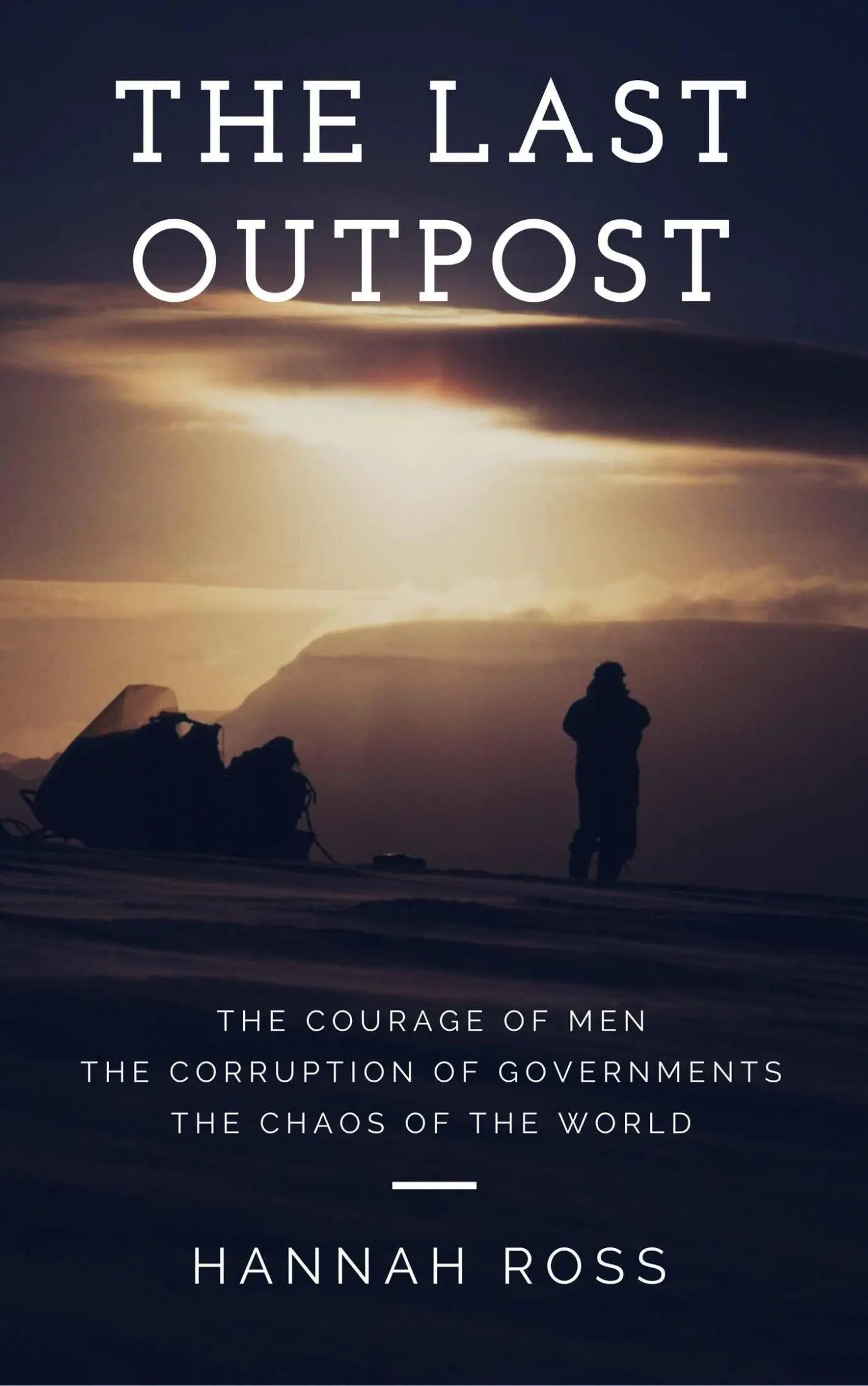
- Название:The Last Outpost: An Antarctic Dystopia
- Автор:
- Жанр:
- Год:2018
- ISBN:978-1-984-39791-1
- Рейтинг книги:4 / 5. Голосов: 1
-
Избранное:Добавить в избранное
- Отзывы:
-
Ваша оценка:
The Last Outpost: An Antarctic Dystopia: краткое содержание, описание и аннотация
Предлагаем к чтению аннотацию, описание, краткое содержание или предисловие (зависит от того, что написал сам автор книги «The Last Outpost: An Antarctic Dystopia»). Если вы не нашли необходимую информацию о книге — напишите в комментариях, мы постараемся отыскать её.
Scott is fascinated by the unique culture of the Anai, visiting them and learning from them as much as he can. In the meantime, the world becomes more and more unstable as global war is about to break out. Just before darkness sets over Antarctica, warfare tears the world apart, and the research station finds itself completely isolated for the long and sunless winter.
In the loneliness of the winter, Scott remains facing difficult questions all alone: who are the Anai, and how did they come to Antarctica? How much truth is there in their legends about giant ancient reptiles frozen in ice, waiting to come back to life? How is McMurdo going to hold on until the communications and supply lines are restored? And where are the limits one is not allowed to cross, not even in the name of survival?
The Last Outpost: An Antarctic Dystopia — читать онлайн бесплатно полную книгу (весь текст) целиком
Ниже представлен текст книги, разбитый по страницам. Система сохранения места последней прочитанной страницы, позволяет с удобством читать онлайн бесплатно книгу «The Last Outpost: An Antarctic Dystopia», без необходимости каждый раз заново искать на чём Вы остановились. Поставьте закладку, и сможете в любой момент перейти на страницу, на которой закончили чтение.
Интервал:
Закладка:
“I’m glad to hear such a good account of you at McMurdo. I won’t go into details, but it appears that people who matter are happy with the way you are running things. I called old Jim McLaughlin and thanked him for recommending you for the position. I don’t need to have any strings attached, that much is clear… if it weren’t for our common friends. You know whom I mean. Do let me know how they are doing, but be careful with what you say.”
Scott understood. All the information about the Anai was highly classified, and though he couldn’t imagine a situation in which his email might be hacked, it was better to be safe than sorry. So he wrote about the Geyser Valley, Ki Tahan, Ri Omrek, and their other Anai friends, in expressions as ambiguous as he could find.
Being busy with his new duties, for some days Scott failed to notice the black cloud that hovered over Jerry Gordon. Jerry’s meals at the galley were short and silent, and his conversation conducted mostly in grunts and shrugs these days, giving the impression that one was trying to talk to an ill-tempered troll. Finally, Scott decided to stop by the greenhouse.
It was afternoon, and Jerry was busy staking some climbing tomato plants. Upon seeing Scott, he straightened, shook some sterile potting medium from his hands, walked to his little fridge and took out two beers.
“Nice of you to drop by, big boss,” he said.
“You know I don’t like to be called that,” Scott said, wrinkling his nose, and uncapped one of the beers. It was low-alcohol, which assuaged his pang of guilt — not that he was anywhere close to Lindholm and his Aquavit habit.
“Whatever. I know you’re busy. Things at McMurdo run in such a way that you begin preparing for next winter as soon as the sun rises for the first time that year.”
That much was true. Though there was still a comparatively long stretch of the summer season left, Scott didn’t delude himself, and knew that winter preparations cannot and should not slack off for even one day. The machine had to keep running. Just that morning, he spent an hour at the water purification facility, an admirable complex supplying all of McMurdo’s drinking, cooking and bathroom water, figuring out with the local team how much fuel they would need until the station closes its gates for winter, how much during the winter season, and whether any more energy-efficient way might be worked out.
“What’s up, Jerry? It’s like there’s something hanging over you these past few days.”
Jerry sighed, uncapped his beer and took a long and grateful sip. “It’s my younger brother, Matt. He was enlisted and will be deployed soon. He never served in the army, but you know how it goes — they’re enlisting all men under thirty. And Matt is in pretty good shape, too. Could give the old one-two to most of the guys around here.”
Scott nodded in understanding. “I hope your brother doesn’t end up anywhere dangerous,” he offered, but he knew such good wishes had little basis in reality.
“I feel goddamn guilty,” Jerry said, setting down his beer bottle.
“Guilty? You? Why is that?”
“Didn’t I tell you? I did serve in the army, so I would be enlisted before Matt. And they don’t grab two men of the same family… at least for now. If I were home, I would be deployed instead of Matt. Being part of the Antarctic Program, though, keeps me safely holed up here at McMurdo.” Somehow, the slurred tone of Jerry’s words hinted that he had enjoyed another beer or two earlier that day, and perhaps something stronger.
“Don’t be an idiot, Gordon. This isn’t your fault.”
“That’s what my old Mom said. I know she’s taking it tough, though. She has a weak heart.” Jerry picked a fresh juicy tomato, wiped it on his sleeve and bit into it. “Seriously good haul this time,” he said. “You want me to mix us a nice fresh Bloody Mary? I could juice a couple of tomatoes in a minute, and don’t tell anyone, but I have a bottle of Finlandia stashed at the back of the fridge.”
“I think beer is enough for now,” Scott said. “We still have almost half a work day to pull through.”
“Whatever you do, Buck, old man,” Jerry said with an air of great wisdom, “make sure McMurdo has a nice stash of liquor for the winter, or there will be riots. People will want to decompress.”
“It seems to me you are decompressed enough as it is. Pull yourself together, Jerry.”
Jerry drained the last of his beer. “I’m scared, Buck. I’m just goddamn scared. It seems to me the party is just starting, you know what I mean?”
Scott couldn’t very well pretend not to know. He voiced his innermost thought, which has begged to escape for the last couple of days. “I wish Brianna agreed to come here for the winter,” he said, staring gloomily into the jungle of vibrant green beans and passionfruit vines.
Chapter 9
Though Scott wouldn’t explicitly say so even to himself, his feverish activity of the next days had as much to do with his desire to free himself up to go and visit the Anai again, as with his legitimate wish to put everything in proper order by the end of his first summer season in the position of General Overseer.
How to conduct this trip was something he went back and forth on for several days. The research team was going to Camp AN-85, and they would go into the Anai Valley to take some samples of the local plants and bacteria, and observe the birds and mammals. As fascinating as Scott found all this, his only real interest lay in the village and its people. The anthropologist of the team struck him as cold and technical, incapable of the fascination and wonder the Anai deserved. He wanted to be by himself, separately from the team, and he also recalled Ri Omrek’s talking of a possible hunting trip. Much like the resident workers of McMurdo, the Anai people utilized every moment of sunlight and growth to prepare for the long and frozen season when there would be none. They were strengthening their buildings, gathering supplies, drying, curing and storing food and skins, and taking in their crops.
Thanks to the geysers, the Anai Valley was many degrees warmer than any other part of Antarctica, even in the dead of winter, but it was dark all the same. Grasses and crops stopped growing, animals and birds went into long hibernation periods, and no hunting or fishing could take place. People were kept confined to the village, and often to their very homes, depending entirely on their supplies of food and lighting oil. Despite the warmth of the valley, temperatures would sometimes drop rapidly and the village would be snowed in. The snow would then turn to sleet, slush, mud and ice, swelling the river and its little rivulets, and getting outside to feed animals in the outbuildings, or throw away contents of chamber pots, inevitably involved in dragging one’s feet through deep, sticky mud.
As before, the AN-85 researchers frowned upon Scott joining them, but proceeded with their business as usual, resolving to ignore him and only reminding him once about safety and secrecy regulations. While they hunted for revolutionary specimens of the invertebrate department, Scott went on in the direction of the village, where he was received with pleasure, and with more trusting warmth than before. Egan, Ki Tahan’s little boy, ran to him with sparkling eyes and uttered excited phrases in Anai, and his mother walked over and smiled. She had been busy with outdoor chores, and displayed her muddy hands to Scott in a gesture that explained she could not grasp his arm in the customary greeting.
“You come, Scott. We glad. You join my brother and other men for hunt?”
“Yes, if they take me,” Scott said, but without excessive enthusiasm. The village attracted him more than the bay, and he would have been content to stay and observe the Anai utensils, watch how Ki Tahan makes her clay pots and works on her loom and weaving-frame, and learn more of the Anai intricate writing system.
Читать дальшеИнтервал:
Закладка:
Похожие книги на «The Last Outpost: An Antarctic Dystopia»
Представляем Вашему вниманию похожие книги на «The Last Outpost: An Antarctic Dystopia» списком для выбора. Мы отобрали схожую по названию и смыслу литературу в надежде предоставить читателям больше вариантов отыскать новые, интересные, ещё непрочитанные произведения.







Обсуждение, отзывы о книге «The Last Outpost: An Antarctic Dystopia» и просто собственные мнения читателей. Оставьте ваши комментарии, напишите, что Вы думаете о произведении, его смысле или главных героях. Укажите что конкретно понравилось, а что нет, и почему Вы так считаете.