K Parker - Pattern
Здесь есть возможность читать онлайн «K Parker - Pattern» весь текст электронной книги совершенно бесплатно (целиком полную версию без сокращений). В некоторых случаях можно слушать аудио, скачать через торрент в формате fb2 и присутствует краткое содержание. Жанр: Фэнтези, на английском языке. Описание произведения, (предисловие) а так же отзывы посетителей доступны на портале библиотеки ЛибКат.
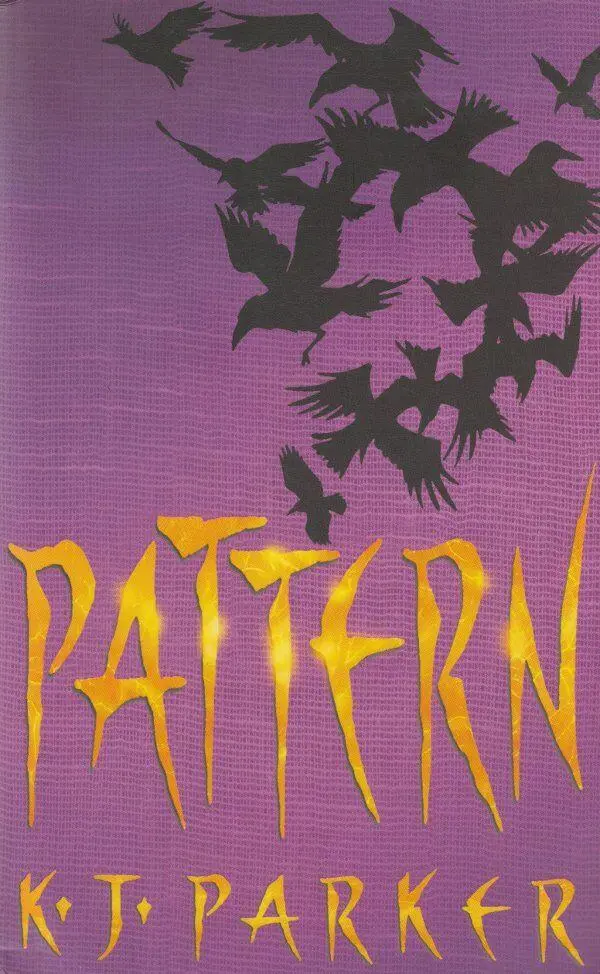
- Название:Pattern
- Автор:
- Жанр:
- Год:неизвестен
- ISBN:нет данных
- Рейтинг книги:3 / 5. Голосов: 1
-
Избранное:Добавить в избранное
- Отзывы:
-
Ваша оценка:
Pattern: краткое содержание, описание и аннотация
Предлагаем к чтению аннотацию, описание, краткое содержание или предисловие (зависит от того, что написал сам автор книги «Pattern»). Если вы не нашли необходимую информацию о книге — напишите в комментариях, мы постараемся отыскать её.
Pattern — читать онлайн бесплатно полную книгу (весь текст) целиком
Ниже представлен текст книги, разбитый по страницам. Система сохранения места последней прочитанной страницы, позволяет с удобством читать онлайн бесплатно книгу «Pattern», без необходимости каждый раз заново искать на чём Вы остановились. Поставьте закладку, и сможете в любой момент перейти на страницу, на которой закончили чтение.
Интервал:
Закладка:
Poldarn relaxed a little, because the way Eyvind had said it made it clear that he wasn't prepared to do it. 'I'm sorry,' Poldarn said, 'it wasn't done on purpose. I was saving my house, it didn't occur to me that something like that would happen. I don't understand all your ways here, or I'd have known better.'
The anger in Eyvind's face swelled and halted, as the fire-stream had done when Poldarn had tapped it. 'I realise that,' he said, 'otherwise I'd have killed you and your people too. Obviously you didn't know, or you couldn't have done it. At least,' he added, 'a normal person couldn't have done it, not one of us. You I don't know about, maybe you'd be capable of something like that even if you did know, but I suppose I've got to give you the benefit of the doubt. We don't do things like that here, you see, we don't kill each other or beat each other up or order each other about. We couldn't, even if we wanted to. Maybe an outsider, someone who doesn't belong anywhere and just wanders about, like your friend Boarci, but not a normal person. We simply couldn't-our minds wouldn't let us.'
It occurred to Poldarn, in the abstract, that that was curious but probably true. Maybe it explained why they were so ruthless and brutal when they went raiding across the sea, because there was no outlet at home for all the violence and evil inside them, inside everybody. He could see where that made sense, if it was true.
'All right,' he said. 'So what are you going to do?'
Eyvind straightened up and looked away. 'Quite simple,' he said. 'You took away my house, so I'm going to take yours. I'll have this house, my uncle will have Haldersness, and you can have our place. That's fair, isn't it? I'm not stealing anything, it's a straightforward exchange. The only thing is, you don't have a choice, because you didn't give me one.'
It seemed like a ridiculous anticlimax, after the fear and the shock; a simple property transaction, an exchange of freeholds, no big deal at all somewhere else, where people chose where they lived and didn't automatically know every morning what they were going to do that day. 'I agree,' Poldarn said. 'It seems entirely fair. If only you'd come to me and suggested it-'
He'd said the wrong thing, of course; he knew it wasn't a sensible thing to say before the words were out of his mouth. For a moment, he thought Eyvind might be angry enough to attack him, but apparently not.
'Sure,' Eyvind said. 'We could've sat outside on the porch and talked it over, maybe haggled a little bit until we were both of the same mind, and then we'd have shaken hands on the trade and it'd all have been very pleasant and satisfactory, and you wouldn't have been punished. You'd have stood up in the hall that evening and told everybody what you'd agreed, and they'd never have known that you'd done anything wrong, burnt down my house, ruined my life. Well, that won't do, because everybody's got to know what you did, they've got to understand that you don't have any say in the matter, just for once you're the one who's being told what to do. I mean, you're quick enough to give orders, which is a shameful and disgusting way to behave towards your own people, so it's only fair you should be made to take orders. So this is what I decided to do, it was this or kill all your people, the ones I've got penned up back in my uncle's barn-your wife, people like that. Or had you forgotten about them? You and your memory.'
Eyvind was right; Poldarn had forgotten, or it hadn't occurred to him to wonder how Eyvind knew what he'd done. For the first time, he was genuinely frightened.
'You wouldn't have done that,' Poldarn said.
Eyvind scowled angrily. 'No, of course not,' he said. 'Not unless you refused to obey me, and you slipped past me and tried to make a fight of it. I'm insulted that you should think I could. This is the right way to do it, because now all your people can see me humiliating you, they can see you having to do as you're told, and how many of them do you think will stay with you after that? Well,' he added, spinning round to face the Ciartanstead household, 'what do you say about that? It goes without saying, any of you who want to stay here with me or go back to Haldersness, you're more than welcome. I know what I'd do.'
Nobody said anything; but it was one of those times when words weren't needed. Poldarn could see there and then who was going to stay and who'd be going with him, and there'd be precious few of the latter. In a way it was reassuring; because up till then, it had all struck him as too lenient, nothing that'd constitute the punishment Eyvind seemed set on inflicting on him, and so he'd been wondering what else Eyvind might have in mind that he hadn't seen fit to mention. But taking his people from him, he could see how that would be a fitting punishment as far as these people (his people) were concerned. Of course, Eyvind couldn't possibly hope to understand how Poldarn felt about the people of his household: that they bewildered him, made him feel uncomfortable, helpless and alone in a crowd of unfathomable strangers. It was almost funny.
Poldarn wondered if there was anything he could say to expedite such a mutually agreeable settlement; but anything he did say would most likely prove to be counter-productive.
As for the house; well, it was a nice enough house, but it would never be home, he'd never think of it as his, and the people who lived there would only ever be strangers who stared at him when he asked them perfectly reasonable questions, and wouldn't let him do anything. What he wanted most of all, he realised, was to be on his own again-well, to be with Elja, because she was different, she was his, and maybe his friend Boarci, who everybody else seemed to dislike so much for no apparent reason. Curious, that his idea of a happy life should be everybody else's notion of extreme punishment. It didn't seem right, somehow.
'Anyway,' Eyvind said, with an effort, 'that's how it's going to be. You can take a change of clothes but that's all, and if you ever come anywhere on this farm again, I'll kill you on sight, without saying a word. Do you understand?'
'Yes,' Poldarn said. 'I understand.'
'Good.' Eyvind breathed out; his whole body seemed to relax, shrink a little. Clearly he felt let down, frustrated, presumably because Poldarn didn't seem to be suffering at all, in spite of the fact that Eyvind had done everything he could do against him. That must be terrible, Poldarn thought, to do your very best to hurt your worst enemy, and see no sign of pain. It just goes to show, he told himself, I've got nothing at all in common with these people, after all. They can't even understand me enough to hurt me. That was disturbing too, in a way.
The departure from Ciartanstead was a comedy from start to finish. The spare cart had, of course, gone east with Hart the provider of salt beef, and the best cart turned out to have a bent rear axle, the result of a hidden pothole in the cart track down to Haldersness. Asburn (who was going with Poldarn) resolutely declined to straighten it, on the grounds that he didn't work for people who broke into other people's houses and threatened them with violence.
That was all very well, but the alternative was a long and miserable walk, so Poldarn volunteered to do the job. But Eyvind wouldn't let him, since blacksmithing was an honourable trade reserved for heads of households, and Poldarn no longer qualified. Someone suggested that in that case Eyvind had better do the work himself, since he was now the lord of Haldersness and Ciartanstead. Eyvind pointed out that he, being a younger son of the brother of the head of his house, who only stood to inherit because his cousin and elder brother had been killed in the last raid, had never learned the craft, and didn't know spit about hot metal. That left the trap, which would carry two people in comfort, three in discomfort and four in acute pain. Eyvind, who was rapidly losing patience with the whole business, declared that Poldarn and his party could take the trap, or they could walk, it was up to them. Someone else proposed a compromise: since there'd be no luggage to speak of, two (or three) of Poldarn's group could go in the trap, and the rest could ride. Eyvind objected most strongly to that, since his ideas of abject humiliation didn't include the loan of valuable riding horses. Someone else put forward the proposal that Poldarn's party (excluding the two, or three, who could fit in the trap) should be loaned something to ride on, but only something humiliating, such as donkeys or mules. That would be difficult, someone else said, because there weren't any at Ciartanstead; on the other hand, there were three elderly ploughhorses. After a mild tantrum, Eyvind agreed to that, but insisted that the horses would have to be returned. Poldarn replied that that would be fine by him, since he knew the three animals in question, they were no good for work any more and he'd be only too pleased not to be lumbered with them. That sent Eyvind into another rage, at the end of which he withdrew the offer of the trap; Poldarn and anybody misguided enough to go with him would have to walk, and that was his last word on the subject. At this point, the men assigned to escort duty objected that they were damned if they were going to walk all the way round the mountain just to satisfy Eyvind's lust for vengeance; and even if Eyvind issued them with horses, it'd still be a waste of time and a pain in the backside, since they'd have to ride at foot-walking pace, and the trip would take twice as long. They had other work they ought to be getting on with, they said, work that was rather more important than Eyvind's grand revenge.
Читать дальшеИнтервал:
Закладка:
Похожие книги на «Pattern»
Представляем Вашему вниманию похожие книги на «Pattern» списком для выбора. Мы отобрали схожую по названию и смыслу литературу в надежде предоставить читателям больше вариантов отыскать новые, интересные, ещё непрочитанные произведения.






Обсуждение, отзывы о книге «Pattern» и просто собственные мнения читателей. Оставьте ваши комментарии, напишите, что Вы думаете о произведении, его смысле или главных героях. Укажите что конкретно понравилось, а что нет, и почему Вы так считаете.