K Parker - Pattern
Здесь есть возможность читать онлайн «K Parker - Pattern» весь текст электронной книги совершенно бесплатно (целиком полную версию без сокращений). В некоторых случаях можно слушать аудио, скачать через торрент в формате fb2 и присутствует краткое содержание. Жанр: Фэнтези, на английском языке. Описание произведения, (предисловие) а так же отзывы посетителей доступны на портале библиотеки ЛибКат.
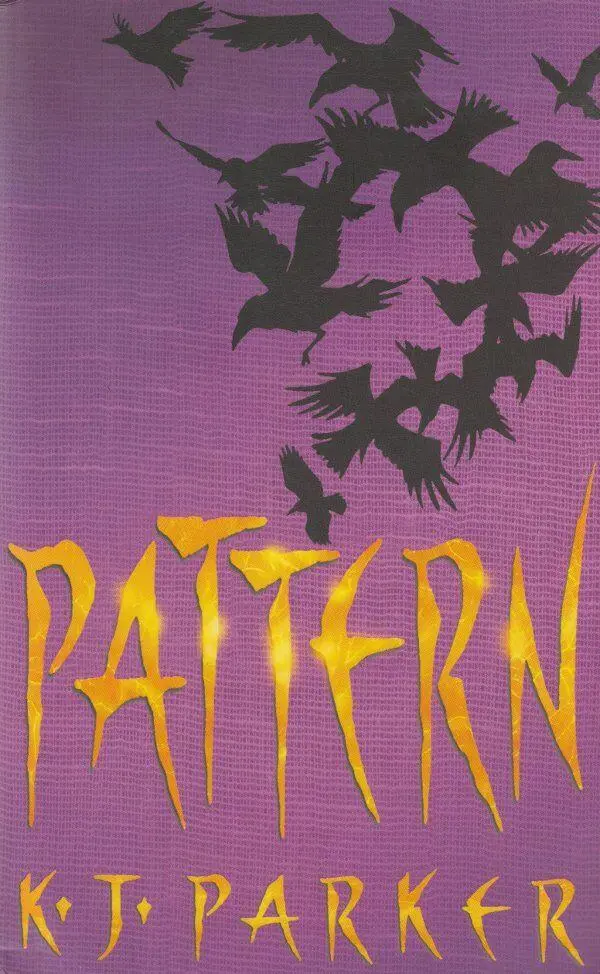
- Название:Pattern
- Автор:
- Жанр:
- Год:неизвестен
- ISBN:нет данных
- Рейтинг книги:3 / 5. Голосов: 1
-
Избранное:Добавить в избранное
- Отзывы:
-
Ваша оценка:
Pattern: краткое содержание, описание и аннотация
Предлагаем к чтению аннотацию, описание, краткое содержание или предисловие (зависит от того, что написал сам автор книги «Pattern»). Если вы не нашли необходимую информацию о книге — напишите в комментариях, мы постараемся отыскать её.
Pattern — читать онлайн бесплатно полную книгу (весь текст) целиком
Ниже представлен текст книги, разбитый по страницам. Система сохранения места последней прочитанной страницы, позволяет с удобством читать онлайн бесплатно книгу «Pattern», без необходимости каждый раз заново искать на чём Вы остановились. Поставьте закладку, и сможете в любой момент перейти на страницу, на которой закончили чтение.
Интервал:
Закладка:
Back at Ciartanstead, the advent of the beef barrels was greeted with the closest thing to enthusiasm that Poldarn could remember having seen since he'd first landed on the island. People actually smiled at him, and even Rannwey made a point of saying that he'd made a good bargain. In fact, he got the impression that the beef coup had done more to raise him in the estimation of his household than taming the volcano. He could understand why they should see it that way; after all, they'd been making do with porridge and leeks for a very long time, and at least his latest exploit hadn't cost any lives. That was one trend he'd be delighted to see continued.
Needless to say, after the first gluttonous beef feast, the barrels were spirited away to a secret hiding place known only to Rannwey and her most trusted lieutenants, from which their contents emerged slowly and in very small quantities. But that was all to the good, Poldarn decided, because he wanted some to be left for when Elja got home; she was an enthusiastic carnivore, and the porridge-and-leek regime had affected her more than most. Indeed, that might have been at the back of his mind when he squirrelled away the extra barrel he'd extorted out of Hart as payment for the use of the hay cart.
Poldarn tried to figure out how long it would be before Elja could be expected back; but the days passed, refuting his calculations, and he had to make a conscious effort not to worry. Left to himself, he'd have taken a spare horse and gone out to meet her, but he got the impression that that wouldn't be proper. There weren't enough horses or places in carts for the whole party, and giving someone special treatment simply because she happened to be someone's wife was sure to be against the rules. To take his mind off her absence, he decided to throw himself heart and soul into his work; then, when he couldn't find any to do, he went back to aimless mooching and threw himself heart and soul into that, instead. Ten days dragged by; he did nothing all day and slept badly at night, chafing at his own company like an old married couple who discover, in the leisured evening of their lives, that they never really liked each other very much.
On the eleventh night, after lying on his back staring at the still unrectified mistake in the rafters (it was too dark to see it, but he knew it was there) he drifted into sleep and found himself in command of a wing of cavalry, drawing up outside a lonely farmhouse in the first dull glow of morning. He slid from the saddle, handed his reins to a trooper, and walked quickly up to the main door. There he paused, waiting for his men to take their pre-arranged positions: two to each shuttered window, two on the back door, six scrambling up onto the low roof, in case anybody tried to break out through the thatch and escape that way. He was impressed at his own thoroughness, though he had an uneasy feeling that it was born of a series of embarrassing failures resulting from carelessness and inattention to detail. When everyone was in position and ready-they'd been quick about it, knowing what they had to do without needing to be told-he stepped back from the door and gave it the hardest kick he could manage. The grey oak panels flexed but didn't give way. He was ready for that-the two men standing next to him stepped up and laid into the door with long-handled felling axes that smashed and splintered as much as they cut. He heard noises inside, shouting and scuffling, the sound of benches being dragged across a planked floor. His axemen quickened their strokes, striking alternately like well-trained hammermen in a smithy, concentrating on the middle panels where the bar ran across on the inside. A few heartbeats later they'd cleared away the panels and their axe blades were chewing on the bar itself; it was straight-grained seasoned oak, but they went about the job in the approved fashion, each cut slanting in diagonally opposite its predecessor and clearing out its chips. In no time at all the bar cracked downwards, denting on the axes and then falling away. 'Right,' he said, and kicked the lower panels of the door again. This time it budged, only to come up against a blockage; benches, probably, or tables, thrust against it on the inside. He was ready for that, too. His reserve, half a dozen men plus the axemen and himself, slammed their shoulders against the side of the door and pushed, forcing the blockage back until the crack between door and frame was just wide enough for a man to wriggle through. He stepped back, and one of the axemen went ahead. He vanished into the house, but immediately they heard a grunt, and the sound of a dead weight slumping against the door. The rest of them shoved again, until the door flew open and they stumbled into the house. He saw a spearhead darting out at him like a snake's tongue; he didn't have time to react, but fortunately as he fell forward the spear passed over his bent neck. Now he could see the man behind it, just enough of him to constitute a target for a backhanded rising cut with the backsabre. His stroke connected with the spearman's wrist and sliced deep into the bone; he gave the blade a sharp twist to free it, and followed up with the point into the spearman's ribs. There too he encountered bone, but the smooth curve of the sword-point rode over it and into a gap. The dead man's own weight as he slumped pulled him off the swords blade.
By now they were inside. The only light was the sullen red glow of the embers in the long hearth, but it was enough to show him the situation. Four sleepy-looking men were backing away from him, hiding behind halberds and bardisches. One look at them told him they weren't going to fight. Behind them was a short, white-haired man in a long nightshirt; it was patched at the knees, he noticed, and the collar and cuffs were frayed. The man was holding a sword with an etched blade and was standing in front of a piece of gilded furniture, but almost immediately he dropped the weapon on the floor, flinging it away as if it was still hot from the forge.
'Let them go,' the man said. It took him a moment to realise the man was talking about the four halberdiers. 'They're just conscripts, they haven't done anything.'
He nodded, and the four guards knelt down, carefully laying their weapons on the floor. He snapped his fingers, and his men went forward and pushed them down flat on the floor. When it was obvious they weren't capable of posing a threat, he walked past them and grabbed the old man by the hair on the back of his neck, jerking him off balance so that he slipped and fell onto his hands and knees.
'Get up,' he said.
The man obeyed, moving stiffly and painfully-arthritis, he guessed, bad enough to make him shake a little. Quite suddenly the man's name floated up from the bottom of his memory. He was called General Allectus.
Not that that signified; he wasn't going to start a conversation, he was there to arrest the traitor and bring him back to General Cronan's camp, near the village of Cric. He tightened his grip on the old man's hair and bundled him out roughly.
'Do you want us to set fire to the house?' one of his men asked.
He shook his head. 'We haven't got time to waste on that,' he said. 'Besides, there's no need. I don't know whose house this is, but I don't think he's ever done me any harm.'
The soldier shrugged. 'What about these?' he asked, meaning the four halberdiers.
'Them?' He frowned. 'They're rebels. Kill them.'
He didn't wait to see if his order was obeyed. A soldier helped him sling General Allectus over the back of the spare horse; he took the leading rein himself, looping it twice around his wrist to make sure. All in all, he thought, a pretty neat operation: the old bastard ought to be grateful, since I'm clearing up his mess. He won't be, but who gives a damn?
Apparently the soldiers had decided to burn the house down after all. He charitably assumed that they had a good reason for disobeying a direct order; there wasn't time to ask them what it was. With the red glow of dawn and burning thatch behind him, he spurred his horse into a canter.
Читать дальшеИнтервал:
Закладка:
Похожие книги на «Pattern»
Представляем Вашему вниманию похожие книги на «Pattern» списком для выбора. Мы отобрали схожую по названию и смыслу литературу в надежде предоставить читателям больше вариантов отыскать новые, интересные, ещё непрочитанные произведения.









Обсуждение, отзывы о книге «Pattern» и просто собственные мнения читателей. Оставьте ваши комментарии, напишите, что Вы думаете о произведении, его смысле или главных героях. Укажите что конкретно понравилось, а что нет, и почему Вы так считаете.