Дэн Симмонс - The Fall of Hyperion
Здесь есть возможность читать онлайн «Р”СЌРЅ РЎРёРјРјРѕРЅСЃ - The Fall of Hyperion» весь текст электронной книги совершенно бесплатно (целиком полную версию без сокращений). В некоторых случаях можно слушать аудио, скачать через торрент в формате fb2 и присутствует краткое содержание. Город: London, Год выпуска: 2006, ISBN: 2006, Издательство: Orion Publishing Group, Жанр: Эпическая фантастика, Космическая фантастика, на английском языке. Описание произведения, (предисловие) а так же отзывы посетителей доступны на портале библиотеки ЛибКат.
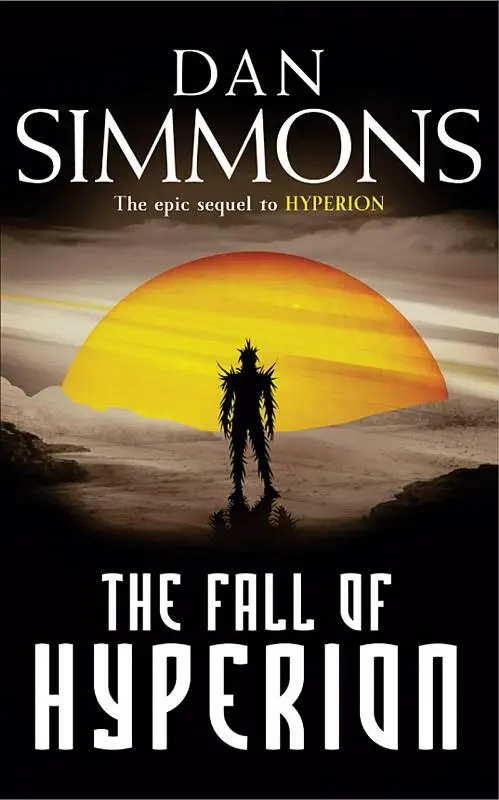
- Название:The Fall of Hyperion
- Автор:
- Издательство:Orion Publishing Group
- Жанр:
- Год:2006
- Город:London
- ISBN:9780575076389
- Рейтинг книги:5 / 5. Голосов: 1
-
Избранное:Добавить в избранное
- Отзывы:
-
Ваша оценка:
The Fall of Hyperion: краткое содержание, описание и аннотация
Предлагаем к чтению аннотацию, описание, краткое содержание или предисловие (зависит от того, что написал сам автор книги «The Fall of Hyperion»). Если вы не нашли необходимую информацию о книге — напишите в комментариях, мы постараемся отыскать её.
The Fall of Hyperion — читать онлайн бесплатно полную книгу (весь текст) целиком
Ниже представлен текст книги, разбитый по страницам. Система сохранения места последней прочитанной страницы, позволяет с удобством читать онлайн бесплатно книгу «The Fall of Hyperion», без необходимости каждый раз заново искать на чём Вы остановились. Поставьте закладку, и сможете в любой момент перейти на страницу, на которой закончили чтение.
Интервал:
Закладка:
But it was the larger sculpture taking shape on the northwest face of the mountain which caught Brawne’s attention. Even with modern cutting equipment borrowed from FORCE, the work was slow, and the great aquiline nose, heavy brow, broad mouth, and sad, intelligent eyes were just becoming recognizable. Many of the Hegemony refugees left on Hyperion had objected to Meina Gladstone’s likeness being added to the mountain, but Rithmet Corber III, great-grandson of the sculptor who had created Sad King Billy’s face there—and incidentally the man who now owned the mountain—had said, as diplomatically as possible, “Fuck you” and gone on with the work. Another year, perhaps two, and it would be finished.
Brawne sighed, rubbed her distended stomach—an affectation she had always hated in pregnant women but one she now found impossible to avoid—and walked clumsily to a deck chair on the observation deck. If she was this huge at seven months, what would she be like at full term? Brawne glanced up at the distended curve of the dirigible’s great gas envelope above her and winced.
The airship voyage, with good tail winds, took only twenty hours.
Brawne dozed part of the way but spent most of the time watching the familiar landscape unfold below.
They passed the Karia Locks in midmorning, and Brawne smiled and patted the package she had brought for the Consul. By late afternoon, they were approaching the river port of Naiad, and from three thousand feet Brawne looked down on an old passenger barge being pulled upriver by mantas leaving their V-shaped wake. She wondered if that could be the Benares.
They flew over Edge as dinner was being served in the upper lounge and began the crossing of the Sea of Grass just as sunset lighted the great steppe with color and a million grasses rippled to the same breeze that lofted the airship along. Brawne took her coffee to her favorite chair on the mezzanine, opened a window wide, and watched the Sea of Grass unfold like the sensuous felt of a billiard table as the light failed. Just before the lamps were lit on the mezzanine deck, she was rewarded with the sight of a windwagon plying its way from north to south, lanterns swinging fore and aft. Brawne leaned forward and could clearly hear the rumble of the big wheel and the snap of canvas on the jib sail as the wagon have hard over to take a new tack.
The bed was ready in her sleeping compartment when Brawne went up to slip into her robe, but after reading a few poems she found herself back on the observation deck until dawn, dozing in her favorite chair and breathing in the fresh smell of grass from below.
They moored in Pilgrim’s Rest long enough to take on fresh food and water, renew ballast, and change crews, but Brawne did not go down to walk around. She could see the worklights around the tramway station, and when the voyage resumed at last, the airship seemed to follow the string of cable towers into the Bridle Range.
It was still quite dark as they crossed the mountains, and a steward came along to seal the long windows as the compartments were pressurized, but Brawne could still catch glimpses of the tramcars passing from peak to peak between the clouds below, and icefields that glinted in the starlight.
They passed over Keep Chronos just after dawn, and the stones of the castle emitted little sense of warmth even in the roseate light. Then the high desert appeared, the City of Poets glowed white off the port side, and the dirigible descended toward the mooring tower set on the east end of the new spaceport there.
Brawne had not expected anyone to be there to meet her. Everyone who knew her thought that she was flying up with Theo Lane in his skimmer later in the afternoon. But Brawne had thought the airship voyage the proper way to travel alone with her thoughts. And she had been right.
But even before the mooring cable was pulled tight and the ramp lowered, Brawne saw the familiar face of the Consul in the small crowd.
Next to him was Martin Silenus, frowning and squinting at the unfamiliar morning light.
“Damn that Stan,” muttered Brawne, remembering that the microwave links were up now and new comsats in orbit.
The Consul met her with a hug. Martin Silenus yawned, shook her hand, and said, “Couldn’t find a more inconvenient time to arrive, eh?”
There was a party in the evening. It was more than the Consul leaving the next morning—most of the FORCE fleet still remaining was heading back, and a sizable portion of the Ouster Swarm was going with them. A dozen dropships littered the small field near the Consul’s spaceship as Ousters paid their last visit to the Time Tombs and FORCE officers stopped by Kassad’s tomb a final time.
The Poets’ City itself now had almost a thousand full-time residents, many of them artists and poets, although Silenus said that most were poseurs. They had twice tried to elect Martin Silenus mayor; he had declined twice and soundly cursed his would-be constituency. But the old poet continued to run things, supervising the restorations, adjudicating disputes, dispensing housing and arranging for supply flights from Jacktown and points south. The Poets’ City was no longer the Dead City.
Martin Silenus said the collective IQ had been higher when the place was deserted.
The banquet was held in the rebuilt dining pavilion, and the great dome echoed to laughter as Martin Silenus read ribald poems and other artists performed skits. Besides the Consul and Silenus, Brawne’s round table boasted half a dozen Ouster guests, including Freeman Ghenga and Coredwell Minmun, as well as Rithmet Corber III, dressed in stitched pelts and a tall cone of a cap. Theo Lane arrived late, with apologies, shared the most recent Jacktown jokes with the audience, and came over to the table to join them for dessert. Lane had been mentioned recently as the people’s choice for Jacktown’s mayor in the Fourthmonth elections soon to be held—both indigenie and Ouster seemed to like his style—and so far Theo had shown no signs of declining if the honor were offered him.
After much wine at the banquet, the Consul quietly invited a few of them up to the ship for music and more wine. They went, Brawne and Martin and Theo, and sat high on the ship’s balcony while the Consul very soberly and feelingly played Gershwin and Studeri and Brahms and Luser and Beatles, and then Gershwin again, finally ending with Rachmaninoff’s heart-stoppingly beautiful Piano Concerto No. 2 in C Minor.
Then they sat in the low light, looked out over the city and valley, drank a bit more wine, and talked late into the night.
“What do you expect to find in the Web?” Theo asked the Consul. “Anarchy? Mob rule? Reversion to Stone Age life?”
“All of that and more, probably,” smiled the Consul. He swirled the brandy in his glass. “Seriously, there were enough squirts before the fatline went dead to let us know that despite some real problems, most of the old worlds of the Web will do all right.”
Theo Lane sat nursing the same glass of wine he had brought up from the dining pavilion. “Why do you think the fatline went dead?”
Martin Silenus snorted. “God got tired of us scribbling graffiti on his outhouse walls.”
They talked of old friends, wondering how Father Duré was doing.
They had heard about his new job on one of the last fatline intercepts.
They remembered Lenar Hoyt.
“Do you think he’ll automatically become Pope when Duré passes away?” asked the Consul.
“I doubt it,” said Theo. “But at least he’ll get a chance to live again if that extra cruciform Duré carries on his chest still works.”
“I wonder if he’ll come looking for his balalaika,” said Silenus, strumming the instrument. In the low light, Brawne thought, the old poet still looked like a satyr.
Читать дальшеИнтервал:
Закладка:
Похожие книги на «The Fall of Hyperion»
Представляем Вашему вниманию похожие книги на «The Fall of Hyperion» списком для выбора. Мы отобрали схожую по названию и смыслу литературу в надежде предоставить читателям больше вариантов отыскать новые, интересные, ещё непрочитанные произведения.





Обсуждение, отзывы о книге «The Fall of Hyperion» и просто собственные мнения читателей. Оставьте ваши комментарии, напишите, что Вы думаете о произведении, его смысле или главных героях. Укажите что конкретно понравилось, а что нет, и почему Вы так считаете.