Jeffrey Lewis - The 2020 Commission Report on the North Korean Nuclear Attacks Against the United States
Здесь есть возможность читать онлайн «Jeffrey Lewis - The 2020 Commission Report on the North Korean Nuclear Attacks Against the United States» весь текст электронной книги совершенно бесплатно (целиком полную версию без сокращений). В некоторых случаях можно слушать аудио, скачать через торрент в формате fb2 и присутствует краткое содержание. Город: New York, Год выпуска: 2018, ISBN: 2018, Издательство: Mariner Books, Жанр: Фантастика и фэнтези, Триллер, на английском языке. Описание произведения, (предисловие) а так же отзывы посетителей доступны на портале библиотеки ЛибКат.
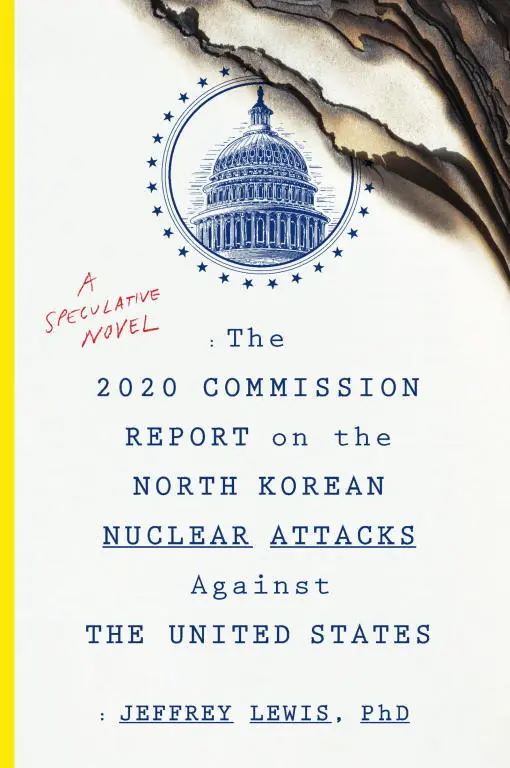
- Название:The 2020 Commission Report on the North Korean Nuclear Attacks Against the United States
- Автор:
- Издательство:Mariner Books
- Жанр:
- Год:2018
- Город:New York
- ISBN:9-781-328-57391-9
- Рейтинг книги:4 / 5. Голосов: 1
-
Избранное:Добавить в избранное
- Отзывы:
-
Ваша оценка:
The 2020 Commission Report on the North Korean Nuclear Attacks Against the United States: краткое содержание, описание и аннотация
Предлагаем к чтению аннотацию, описание, краткое содержание или предисловие (зависит от того, что написал сам автор книги «The 2020 Commission Report on the North Korean Nuclear Attacks Against the United States»). Если вы не нашли необходимую информацию о книге — напишите в комментариях, мы постараемся отыскать её.
The 2020 Commission Report on the North Korean Nuclear Attacks Against the United States — читать онлайн бесплатно полную книгу (весь текст) целиком
Ниже представлен текст книги, разбитый по страницам. Система сохранения места последней прочитанной страницы, позволяет с удобством читать онлайн бесплатно книгу «The 2020 Commission Report on the North Korean Nuclear Attacks Against the United States», без необходимости каждый раз заново искать на чём Вы остановились. Поставьте закладку, и сможете в любой момент перейти на страницу, на которой закончили чтение.
Интервал:
Закладка:
In the course of their late-night phone call, Haley and Lerner settled on a strategy to use the shootdown, and North Korea’s belligerent response, to drive a deep and permanent wedge between China and North Korea. And so Haley’s second call after Lerner was to the Chinese mission and its ambassador, Ma Zhaoxu.
If Haley’s political career had rewarded her for her obvious passion, Ma’s had taught him to keep his composure. Ma had first won notoriety as a college student in China when that country was slowly opening to the outside world. Improbably, he had been named best speaker in an international debate competition in 1985. In the 1980s, to Chinese people, who were generally unable to even travel outside the country, the sight of a slim Chinese student beating foreigners in debates was a source of real pride and brought him a kind of celebrity. (Ma still met people on the street in China who remembered him from the 1980s.) From there, Ma rose steadily through the ranks of the Chinese foreign ministry, eventually serving as its spokesperson. Where many of his predecessors had been prickly, Ma had a way of appearing completely unruffled, remaining calm in the face of hostile questions. When asked about Liu Xiaobo, the Nobel Prize–winning author imprisoned by the Chinese authorities, Ma calmly asserted that “there are no dissidents in China.” Ma was never defensive as the press spokesman. His appointment as ambassador to the UN was intended to signal China’s confidence in its suddenly very important place in the world.
Ambassador Haley’s effort to make the shootdown a turning point in relations between Beijing and Pyongyang fell flat. She implored Ma to think about the schoolchildren on Flight BX 411, but he was unruffled. Ma merely noted that the loss of life was regrettable, but that there had been many regrettable aviation accidents over the years. Haley even tried a veiled threat, warning that this was the sort of event that might very well prompt a military response from the United States. Ma said that this, too, would be regrettable—one senseless tragedy begetting another. He remained utterly unmoved.
In retrospect, it seems unlikely that any Chinese diplomat—whether possessed of Ma’s talents or not—would have allowed himself to be drawn into colluding with the United States against his own foreign ministry. “I have no idea what Haley was thinking,” admitted a former State Department official. “She had to realize that Ma wasn’t going for a walk in the woods with her.” Instead, Ma suggested that Haley speak with the North Koreans directly, offering to host the meeting in his office.
Ma’s proposal appears to have caught Ambassador Haley by surprise. The United States did not have diplomatic relations with North Korea. Within North Korea, Sweden was the “protecting power” for US interests, serving as an embassy by proxy. In the United States, North Korea had a mission at the United Nations, a line of communication that diplomats sometimes called “the New York channel.” Now Ma was suggesting that Haley activate this channel.
Haley was unsure how to respond. She ended the call, telling Ma she would call back.
The ambassador and Lerner conferred again by phone about whether to take the meeting offered by Ma. Lerner was strongly against it: using the New York channel would reward North Korea for the shootdown, he argued, and holding the meeting at the Chinese offices would convey weakness on the part of the Americans. They decided that they needed to give the Chinese time to worry—for the possibility of a military response to set in. Some of Haley’s aides have said that her political ambitions clouded her judgment about what she might achieve. Haley and Lerner dispute this strenuously. Meeting with the North Koreans would, in their view, have sent the wrong signal.
Haley called Ma back at 2:42 AM and said that, without a formal apology from North Korea, no meeting would be possible. Ma said that he regretted her decision, and that he would miss her presence in the morning. This was when Haley became aware that the State Department had agreed to meet with North Korea’s representatives without informing her.
Although Haley did not know “where John [Sullivan] was or what time it was there,” the Ops Center did. At the same time that one watch officer at the communications hub had contacted Haley, another had reached Sullivan as he was traveling abroad. The officer had quickly informed the acting secretary of state about North Korea’s attack on BX 411.
Sullivan, after thinking about it for a few minutes, settled on an unusually aggressive step: he asked the Ops Center to call the North Korean ambassador in New York immediately.
While the State Department’s uncoordinated attempts to manage the emerging crisis have come under considerable criticism, we feel obliged to note that, by all accounts, the State Department Operations Center functioned efficiently through the night of March 20. This commendable performance is in keeping with the center’s record of fast and effective management of communications between diplomats. Several historical examples can help to contextualize the center’s performance on March 20 and throughout the turmoil that followed.
For instance, Hillary Clinton has often told a story—which she repeated for the benefit of this commission—about being patched through to a visiting ambassador during her tenure as secretary of state from 2009 to 2013. Only later would she learn that, at the time she had asked to be put in touch with him, the ambassador did not have his cell phone, his staff knew he was out to dinner but not where, and the hotel concierge did not know which of three restaurants he had recommended the ambassador had chosen, if any. The Ops Center called all three, texted a picture of the ambassador to each manager, and found him. The Ops Center tracked down the ambassador so quickly that Clinton wasn’t even aware there had been a problem. Similarly, at one point during her own service as secretary of state from 1997 to 2001, Madeleine Albright needed to reach a diplomat who was out of contact at a football game. The Ops Center arranged to have the scoreboard flash a message for him to find a pay phone.
Compared to these challenges, Sullivan’s order that the watch officer find Ja Song Nam, the North Korean ambassador, was a snap. Ja was asleep in bed. He had not been told about the emerging crisis. North Korea did not have an Ops Center.
Sullivan knew the State Department had used the New York channel before. He had watched it being used in 2017 to negotiate the release of Otto Warmbier, an American student whom North Korea had detained in North Korea on trumped-up charges. Warmbier had been terribly mistreated in North Korea: when North Korea returned him to the United States, he was in a coma and would die a few weeks later. (The Warmbier family subsequently emerged as favorites of Haley, who felt that the family’s grief and ongoing lawsuit helped illustrate the fundamentally evil nature of the North Korean regime.)
Sullivan’s intended use of the New York channel was less humanitarian than pragmatic. He saw the moment not simply as an opportunity to punish North Korea for killing innocent civilians, many of them children, but more importantly as a chance to further isolate the Kim regime. He was not the only senior State Department official with this hardheaded sensibility: during Tillerson’s tenure, one of his aides, Brian Hook, had written a memo suggesting that human rights were useful largely as a means to “pressure, compete with, and outmaneuver” US adversaries. While many of Tillerson’s aides had departed with Tillerson, Hook had stayed on, even traveling with Pompeo to Pyongyang. Now, in consultation with Hook, Sullivan came to see the shootdown of BX 411 less as a crime to be avenged than as an opportunity to pressure, compete with, and outmaneuver Kim Jong Un.
Читать дальшеИнтервал:
Закладка:
Похожие книги на «The 2020 Commission Report on the North Korean Nuclear Attacks Against the United States»
Представляем Вашему вниманию похожие книги на «The 2020 Commission Report on the North Korean Nuclear Attacks Against the United States» списком для выбора. Мы отобрали схожую по названию и смыслу литературу в надежде предоставить читателям больше вариантов отыскать новые, интересные, ещё непрочитанные произведения.





Обсуждение, отзывы о книге «The 2020 Commission Report on the North Korean Nuclear Attacks Against the United States» и просто собственные мнения читателей. Оставьте ваши комментарии, напишите, что Вы думаете о произведении, его смысле или главных героях. Укажите что конкретно понравилось, а что нет, и почему Вы так считаете.