Philip Dick - Ubik
Здесь есть возможность читать онлайн «Philip Dick - Ubik» весь текст электронной книги совершенно бесплатно (целиком полную версию без сокращений). В некоторых случаях можно слушать аудио, скачать через торрент в формате fb2 и присутствует краткое содержание. Жанр: Фантастика и фэнтези, на английском языке. Описание произведения, (предисловие) а так же отзывы посетителей доступны на портале библиотеки ЛибКат.
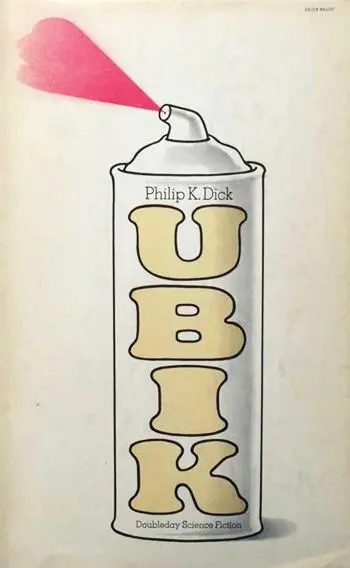
- Название:Ubik
- Автор:
- Жанр:
- Год:неизвестен
- ISBN:нет данных
- Рейтинг книги:3 / 5. Голосов: 1
-
Избранное:Добавить в избранное
- Отзывы:
-
Ваша оценка:
Ubik: краткое содержание, описание и аннотация
Предлагаем к чтению аннотацию, описание, краткое содержание или предисловие (зависит от того, что написал сам автор книги «Ubik»). Если вы не нашли необходимую информацию о книге — напишите в комментариях, мы постараемся отыскать её.
Philip K. Dick’s searing metaphysical comedy of death and salvation (the latter available in a convenient aerosol spray) is tour de force of paranoiac menace and unfettered slapstick, in which the departed give business advice, shop for their next incarnation, and run the continual risk of dying yet again.
Ubik — читать онлайн бесплатно полную книгу (весь текст) целиком
Ниже представлен текст книги, разбитый по страницам. Система сохранения места последней прочитанной страницы, позволяет с удобством читать онлайн бесплатно книгу «Ubik», без необходимости каждый раз заново искать на чём Вы остановились. Поставьте закладку, и сможете в любой момент перейти на страницу, на которой закончили чтение.
Интервал:
Закладка:
“I’m trying,” Joe said. “Not to cough.” He made it up two more steps and knew that he had almost reached the top. How long had he been on the stairs? he wondered. No way for him to tell.
He discovered then, with a shock, that he had become cold as well as exhausted. When had this happened? he asked himself. Sometime in the past; it had infiltrated so gradually that before now he had not noticed it. Oh, god, he said to himself and shivered frantically. His bones seemed almost to quake. Worse than on Luna, far worse. Worse, too, than the chill which had hung over his hotel room in Zurich. Those had been harbingers.
Metabolism, he reflected, is a burning process, an active furnace. When it ceases to function, life is over. They must be wrong about hell, he said to himself. Hell is cold; everything there is cold. The body means weight and heat; now weight is a force which I am succumbing to, and heat, my heat, is slipping away. And, unless I become reborn, it will never return. This is the destiny of the universe, so at least I won’t be alone.
But he felt alone. It’s overtaking me too soon, he realized. The proper time hasn’t come; something has hurried this up—some conniving thing has accelerated it, out of malice and curiosity: a polymorphic, perverse agency which likes to watch. An infantile, retarded entity which enjoys what’s happening. It has crushed me like a bent-legged insect, he said to himself. A simple bug which does nothing but hug the earth. Which can never fly or escape. Can only descend step by step into what is deranged and foul. Into the world of the tomb which a perverse entity surrounded by its own filth inhabits. The thing we call Pat.
“Do you have your key?” Pat asked. “To your room? Think how awful you’d feel to get up to the second floor and find you had lost your key and couldn’t get into your room.”
“I have it.” He groped in his pockets.
His coat ripped away, tattered and in shreds; it fell from him and, from its top pocket, the key slid. It fell two steps down, below him. Beyond reach.
Pat said briskly, “I’ll get it for you.” Darting by him she scooped up the key, held it to the light to examine it, then laid it at the top of the flight of stairs, on the railing. “Right up here,” she said, “where you can reach it when you’re through climbing. Your reward. The room, I think, is to the left, about four doors down the hall. You’ll have to move slowly, but it’ll be a lot easier once you’re off the stairs. Once you don’t have to climb.”
“I can see,” he said. “The key. And the top. I can see the top of the stairs.” With both arms grasping the bannister he dragged himself upward, ascended three steps in one agonizing expenditure of himself. He felt it deplete him; the weight on him grew, the cold grew, and the substantiality of himself waned. But—
He had reached the top.
“Goodby, Joe,” Pat said. She hovered over him, kneeling slightly so that he could see her face. “You don’t want Don Denny bursting in, do you? A doctor won’t be able to help you. So I’ll tell him that I got the hotel people to call a cab and that you’re on your way across town to a hospital. That way you won’t be bothered. You can be entirely by yourself. Do you agree?”
“Yes,” he said.
“Here’s the key.” She pushed the cold metal thing into his hand, closed his fingers about it. “Keep your chin up, as they say here in ’39. Don’t take any wooden nickels. They say that too.” She slipped away then, onto her feet; for an instant she stood there, scrutinizing him, and then she darted off down the hall to the elevator. He saw her press the button, wait; he saw the doors slide open, and then Pat disappeared.
Gripping the key, he rose lurchingly to a crouched position. He balanced himself against the far wall of the corridor, then turned to the left and began to walk step by step, still supporting himself by means of the wall. Darkness, he thought. It isn’t lit. He squeezed his eyes shut, opened them, blinked. Sweat from his face still blinded him, still stung; he could not tell if the corridor were genuinely dark or whether his power of sight was fading out.
By the time he reached the first door he had been reduced to crawling; he tilted his head up, sought for the number on the door. No, not this one. He crept on.
When he found the proper door he had to stand erect, propped up, to insert the key in the lock. The effort finished him. The key still in his hand, he fell; his head struck the door and he flopped back onto the dust-choked carpet, smelling the odor of age and wear and frigid death. I can’t get in the room, he realized. I can’t stand up any more.
But he had to. Out here he could be seen.
Gripping the knob with both hands he tugged himself onto his feet one more time. He rested his weight entirely against the door as he tremblingly poked the key in the direction of the knob and the lock; this way, once he had turned the key, the door would fall open and he would be inside. And then, he thought, if I can close the door after me and if I can get to the bed, it’ll be over.
The lock grated. The metal unit hauled itself back. The door opened and he pitched forward, arms extended. The floor rose toward him and he made out shapes in the carpet, swirls and designs and floral entities in red and gold, but worn into roughness and lusterlessness; the colors had dimmed, and as he struck the floor, feeling little if any pain, he thought, This is very old, this room. When this place was first built they probably did use an open iron cage for an elevator. So I saw the actual elevator, he said to himself, the authentic, original one.
He lay for a time, and then, as if called, summoned into motion, stirred. He lifted himself up onto his knees, placed his hands flat before him… My hands, he thought, good god. Parchment hands, yellow and knobby, like the ass of a cooked, dry turkey. Bristly skin, not like human skin; pin-feathers, as if I’ve devolved back millions of years to something that flies and coasts, using its skin as a sail.
Opening his eyes, he searched for the bed; he strove to identify it. The fat far window, admitting gray light through its web of curtains. A vanity table, ugly, with lank legs. Then the bed, with brass knobs capping its railed sides, bent and irregular, as if years of use had twisted the railings, warped the varnished wooden headboards. I want to get on it even so, he said to himself; he reached toward it, slid and dragged himself farther into the room.
And saw then a figure seated in an overstuffed chair, facing him. A spectator who had made no sound but who now stood up and came rapidly toward him.
Glen Runciter.
“I couldn’t help you climb the stairs,” Runciter said, his heavy face stern, “She would have seen me. Matter of fact, I was afraid she’d come all the way into the room with you, and then we’d be in trouble because she—” He broke off, bent and hoisted Joe up to his feet as if Joe had no weight left in him, no remaining material constituents. “We’ll talk about that later. Here.” He carried Joe under his arm, across the room—not to the bed but to the overstuffed chair in which he himself had been sitting. “Can you hold on a few seconds longer?” Runciter asked. “I want to shut and lock the door. In case she changes her mind.”
“Yes,” Joe said.
Runciter strode in three big steps to the door, slammed it and bolted it, came at once back to Joe. Opening a drawer of the vanity table, he hastily brought out a spray can with bright stripes, balloons and lettering glorifying its shiny surfaces. “Ubik,” Runciter said, he shook the can mightily, then stood before Joe, aiming it at him. “Don’t thank me for this,” he said, and sprayed prolongedly left and right; the air flickered and shimmered, as if bright particles of light had been released, as if the sun’s energy sparkled here in this worn-out elderly hotel room. “Feel better? It should work on you right away; you should already be getting a reaction.” He eyed Joe with anxiety.
Читать дальшеИнтервал:
Закладка:
Похожие книги на «Ubik»
Представляем Вашему вниманию похожие книги на «Ubik» списком для выбора. Мы отобрали схожую по названию и смыслу литературу в надежде предоставить читателям больше вариантов отыскать новые, интересные, ещё непрочитанные произведения.




Обсуждение, отзывы о книге «Ubik» и просто собственные мнения читателей. Оставьте ваши комментарии, напишите, что Вы думаете о произведении, его смысле или главных героях. Укажите что конкретно понравилось, а что нет, и почему Вы так считаете.