Robert Wilson - The Divide
Здесь есть возможность читать онлайн «Robert Wilson - The Divide» весь текст электронной книги совершенно бесплатно (целиком полную версию без сокращений). В некоторых случаях можно слушать аудио, скачать через торрент в формате fb2 и присутствует краткое содержание. Год выпуска: 1990, ISBN: 1990, Издательство: Doubleday, Жанр: Фантастика и фэнтези, на английском языке. Описание произведения, (предисловие) а так же отзывы посетителей доступны на портале библиотеки ЛибКат.
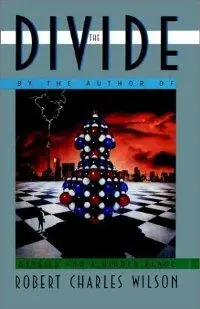
- Название:The Divide
- Автор:
- Издательство:Doubleday
- Жанр:
- Год:1990
- ISBN:978-0-385-24947-8
- Рейтинг книги:5 / 5. Голосов: 1
-
Избранное:Добавить в избранное
- Отзывы:
-
Ваша оценка:
The Divide: краткое содержание, описание и аннотация
Предлагаем к чтению аннотацию, описание, краткое содержание или предисловие (зависит от того, что написал сам автор книги «The Divide»). Если вы не нашли необходимую информацию о книге — напишите в комментариях, мы постараемся отыскать её.
The Divide — читать онлайн бесплатно полную книгу (весь текст) целиком
Ниже представлен текст книги, разбитый по страницам. Система сохранения места последней прочитанной страницы, позволяет с удобством читать онлайн бесплатно книгу «The Divide», без необходимости каждый раз заново искать на чём Вы остановились. Поставьте закладку, и сможете в любой момент перейти на страницу, на которой закончили чтение.
Интервал:
Закладка:
She stood up. She had envisioned this moment, played it over in her mind a dozen times during the trip from Toronto. She wanted to embrace him but decided she didn’t really know him well enough—it just seemed that way, after all the waiting.
She took his hands: a small, spontaneous gesture. “I’m glad you decided to call.”
He looked at her for a long time. He reached up to touch her cheek, and the expression on his face … Susan could not take the measure of it; but there might have been surprise, curiosity, maybe even gratitude.
She said, “Can I ask what it was—why you changed your mind?”
He took his hand away and held it up in front of her.
His hand was trembling. It was a pronounced, involuntary tremor; Susan was suddenly afraid, watching it. He was sick—he was admitting it now.
He said, “I found out that I don’t want to die.”
She called Dr. Kyriakides from a booth in the airport, confirming the meeting. “He hasn’t said it in so many words, but I think this is his way of telling us he needs us. That’s important, isn’t it?”
“Possibly,” Dr. Kyriakides said. He sounds worried, Susan thought; or worse—he sounds frightened.
“Hey,” she said, “the battle’s over, isn’t it? We’re almost home.”
“No,” Dr. Kyriakides said. “I think you’re mistaken. I think the battle has only just begun. I think we’re a very long way from home.”
PART 2
CONTROLLED EXPERIMENTS
12
Maxim Kyriakides paid the taxi driver and watched as the automobile sped away, leaving him alone in the gravel driveway of the house north of Toronto in which he would be spending the next few months.
The house was a whitewashed pseudo-Georgian structure, isolated from its neighbors by groves of trees. Maxim had never seen it before. It belonged to a colleague, a University of Toronto professor named Collingwood, who was a member of what they had called “The Network” many years ago. The house was to have gone up for sale a week ago, but Collingwood had offered it to Maxim when Maxim explained the problem he was facing.
The house was suitably large. Maxim walked up the driveway to the big portico, fished a key from his pocket and inserted it into the lock on the double doors. Open, they admitted a wash of December sunlight into the tiled foyer. The house was cold; the heat had been turned off for some days.
But the electricity had been restored yesterday. Maxim flicked a switch and the lights winked on. The entrance hall yielded to a kitchen, a living room, a library. These were furnished, though sparsely—valuables had been removed and there were blank, pale spaces where paintings had been taken from the walls.
Well, he thought, that was appropriate, too. We shall all be entering a new, unfamiliar space. All three of us … all four, counting the French-Canadian girl Susan had mentioned. No, even more than that. Five, he thought, if you allowed Benjamin as a separate entity.
Maxim ascended the staircase carefully. He was healthy enough to pass for ten or fifteen years younger than his age. He was large but not fat; he had always walked for pleasure, sometimes great distances, and he supposed that habit had helped preserve his health. Still, he was conscious of his age. At sixty-eight, stairs were a chore to be undertaken with some seriousness. He remembered his Uncle Constantine moving through the house in Macedonia at this same solemn, considered pace. Constantine had been a schoolteacher and a cynical Communist, a friend of the rebel Veloukhiotis. Maxim was then a teenager and already an ideologue; he had read Marx with great determination. Now … is it possible, he wondered, that as children we’re already learning how to be old? Had he been studying for infirmity under his uncle’s slow tutelage?
The second floor of the house on the outskirts of Toronto exuded a closed-in, musty atmosphere. He wanted to open a window but dared not; that would only make it more difficult to heat these rooms when the furnace kicked on again. He stood by a bedroom window and gazed through its double panes across a wooded ravine. The ravine was stark and bare, a swath of perhaps a hundred yards between the house and a housing project crowded up against a major highway. The ravine afforded at least a little privacy, and that was good. The house, he thought, was as close to stateliness as one could achieve in such a prefabricated landscape.
He paused to scold himself for this momentary class snobbery, to which he was not even entitled. Maxim, though no longer a Communist like poor dead Constantine, had once considered himself a socialist; certainly he had never been wealthy.
But the important thing, he thought, is that I can work here.
It was John who had insisted on staying in Toronto. Maxim had wanted him to fly to Chicago with Susan. But John believed he would be safer on this side of the border—which might even be true, though Maxim had no evidence to suggest it—and certainly he would be more comfortable, less disoriented, in a familiar setting. So Maxim had arranged a sudden sabbatical, ostensibly for reasons of health (no one inquired too closely—one of the advantages of seniority and tenure), and borrowed this house from his friend.
Everything was in place except for the people, and they would be arriving tomorrow. Susan, this young woman Amelie … and John, whom Maxim had not set eyes upon for many years.
Resting a moment in the darkened hallway, he silently framed the forbidden words: My son.
Not literally, of course. Maxim had never married, never produced any children. Even his most intimate friends—possibly excepting those in the so-called Network—took him for an elderly bachelor of the generic sort, married to his research and his teaching. And that was, in fact, largely true. But no one’s life is as simple as his friends believe.
In a real sense, Maxim thought, I created John. What else is fatherhood? This was, if anything, even more profound. A virgin fatherhood.
He thought, I could have raised him.
It was one of those thoughts that came to him periodically, unbidden and unwelcome. Ordinarily, he would have shunted it aside. It was not useful. But now, with the prospect of facing John once again, there was no avoiding it.
If they hadn’t taken him away —
If I hadn’t allowed them to take him away —
But, no. He was too old to regret his life. You do what you do. And then you do what you can.
He sat down in a chair in the entranceway to wait for the deliveries he had been told to expect: a few pharmaceuticals, a tape recorder, his notebooks. Bundled in a huge coat and away from the wind, he was warm enough—except for his feet. Warm enough, anyway, to drift toward sleep.
Drifting, he was briefly assailed by a dream-image of John standing before him, John grown unnaturally tall, pointing a finger of accusation and pronouncing the word “Liar!” The vision was disturbing and it startled him awake; he sat up blinking.
The afternoon light had dimmed. The house was dark.
He rubbed his face, sighing. Traitorous sleep. But he supposed there was some truth in his dream. He had implied to Susan that there was some treatment available for John; presumably she had passed this implication on. Poor trusting Susan, who believed in his miraculous powers. In fact there was nothing for John in this house but a warm bed in which to endure his crisis. And my notebook, Maxim thought. My obdurate curiosity, and my guilt.
Tests would be run, of course, and there was dopamine, which had relieved some symptoms in the animal studies. But there was nothing to forestall the ultimate resolution. Unwillingly, Maxim recalled his laboratory chimps, the animals prostrate and comatose or consumed by fever. In the initial tests—before John was born—the beasts had not been allowed to live long enough to exhibit symptoms; they were grotesques, capable of understanding a few words of written English and copying the alphabet from children’s books; they were destroyed as a potential embarrassment. But Dr. Kyriakides had allowed his second animals, his private experiment, to live to maturity—caged homunculi with enlarged skulls and wizened, cynical faces. He had watched them live out their truncated lives, scratching apple and orange onto yellow copypaper or probing their fur with the pencils, and dropping into recurrent fevers which he mistook at first for some form of malaria; then battering themselves against their cages and screeching, as if they had suffered some unendurable insight into their own condition—collapsing at last into a febrile unconsciousness.
Читать дальшеИнтервал:
Закладка:
Похожие книги на «The Divide»
Представляем Вашему вниманию похожие книги на «The Divide» списком для выбора. Мы отобрали схожую по названию и смыслу литературу в надежде предоставить читателям больше вариантов отыскать новые, интересные, ещё непрочитанные произведения.



Обсуждение, отзывы о книге «The Divide» и просто собственные мнения читателей. Оставьте ваши комментарии, напишите, что Вы думаете о произведении, его смысле или главных героях. Укажите что конкретно понравилось, а что нет, и почему Вы так считаете.