Robert Sawyer - Watch
Здесь есть возможность читать онлайн «Robert Sawyer - Watch» весь текст электронной книги совершенно бесплатно (целиком полную версию без сокращений). В некоторых случаях можно слушать аудио, скачать через торрент в формате fb2 и присутствует краткое содержание. Год выпуска: 2010, ISBN: 2010, Издательство: Ace Books, Жанр: Фантастика и фэнтези, на английском языке. Описание произведения, (предисловие) а так же отзывы посетителей доступны на портале библиотеки ЛибКат.
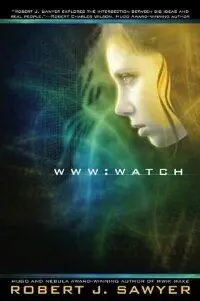
- Название:Watch
- Автор:
- Издательство:Ace Books
- Жанр:
- Год:2010
- ISBN:978-0-441-01818-5
- Рейтинг книги:5 / 5. Голосов: 1
-
Избранное:Добавить в избранное
- Отзывы:
-
Ваша оценка:
Watch: краткое содержание, описание и аннотация
Предлагаем к чтению аннотацию, описание, краткое содержание или предисловие (зависит от того, что написал сам автор книги «Watch»). Если вы не нашли необходимую информацию о книге — напишите в комментариях, мы постараемся отыскать её.
WATCH is convinced that Webmind represents a risk to national security and wants it purged from cyberspace. But Caitlin believes in Webmind’s capacity for compassion—and she will do anything and everything necessary to protect her friend.
Watch — читать онлайн бесплатно полную книгу (весь текст) целиком
Ниже представлен текст книги, разбитый по страницам. Система сохранения места последней прочитанной страницы, позволяет с удобством читать онлайн бесплатно книгу «Watch», без необходимости каждый раз заново искать на чём Вы остановились. Поставьте закладку, и сможете в любой момент перейти на страницу, на которой закончили чтение.
Интервал:
Закладка:
Hobo frowned, as if the distinction was lost on him. I tried another tack. Hobo human? I asked.
No, no! he signed vigorously. Hobo ape.
Good, yes, I replied. But what kind of ape?
Boy ape, said Hobo.
Yes, true. I triggered video of Virgil, taken from YouTube. But are you this kind of ape?
No, no, no, signed Hobo. Orange ape! Hobo not orange.
Orange ape, I signed. That kind of ape is called orangutan.
Hobo frowned, perhaps considering whether to try mimicking the complex sign. He opted for something simpler. Not Hobo.
What about this ape? I said, showing footage now of a gorilla. I was pleased that Hobo was able to follow along; there was a jump-cut between the end of one sign and the beginning of the next as each successive clip began.
Hobo moved backward as the gorilla thumped its chest. There was little in the footage to give a sense of scale, but during his time at the Georgia Zoo, he had perhaps seen gorillas and knew they were large; maybe that frightened him. No, Hobo signed. Not Hobo. And then, after a pause, perhaps while he recalled a sign he hadn’t used for a long time, he added, Gorilla.
Yes, I signed. Hobo not gorilla. What about this type of ape? Footage of a bonobo started to play—leaner than a chimp, with relatively shorter limbs, a longer face, and hair distinctively parted in the middle.
Bonobo, replied Hobo at once. Hobo bonobo, he signed; the words rhymed in English, but the ASL gestures looked nothing alike.
Hobo had known his mother—Cassandra had been her name, according to the Wikipedia entry on him—and she had been a pure-blooded bonobo. He’d probably never even met his father, though, who, according to DNA tests, was a chimpanzee named Ferdinand.
Two heritages, two paths. A choice to be made.
I cued more footage, this time of a chimpanzee. What about this ape? This ape like Hobo?
That ape not know Hobo, he signed back.
I must have sent the wrong sense of “like.” I mean, is Hobo this type of ape?
No, no, said Hobo. That chimpanzee.
Hobo’s mother is a bonobo, I signed.
Hobo’s mother dead, he replied, and he looked very sad.
Yes, I replied. I am sorry.
He tilted his head slightly, accepting my comment.
What kind of ape Hobo’s father? I asked.
He made a face that seemed to convey sorrow for my ignorance. Hobo bonobo, he signed again. Hobo mother bonobo. Hobo father bonobo.
Hobo father not bonobo, I signed.
He narrowed his eyes but said nothing.
Hobo father chimpanzee.
No, said Hobo.
Yes, I said.
How? he asked.
I knew from my reading that human children rarely liked to hear this about their own birth, but it was the truth. Accident.
Father chimpanzee? he asked, as if checking to see whether he’d gotten my meaning right the first time.
Yes.
Then Hobo… He stopped, his hands held stationary in midair, as if he had no idea how to complete the thought he’d begun.
I triggered signs: Hobo part chimpanzee; Hobo part bonobo. He said nothing, so I added, Hobo special.
That seemed to please him, and he signed Hobo special back at me three times.
You have a choice, I said. I triggered the playing of a video of chimpanzee warfare: three males attacking a fourth, pummeling him with their fists, biting and kicking him, all the while letting out loud hoots. By the end of the video, the hapless victim was dead.
You can choose that, I said. Or you can choose this. And I triggered another video, of bonobos living together in peace and making love: playing, facing each other during intercourse, their trademark genital-genital rubbing, running about. Hobo looked on, fascinated. But then his face fell. Hobo alone, he said.
No, I signed. No one is alone.
Who you? Hobo asked.
Friend, I replied.
Friend talk strange, he said.
He was perceptive, and he had favorite TV shows he watched over and over again. He might indeed have recognized that every time I signed bonobo, it was the exact same clip.
Yes. I am not human.
You ape?
No.
What you?
I thought about which signs Hobo might possibly know. I rather suspected computer was one of them, so I triggered a playback of that, then added, rather lamely, I had to admit, But not really.
Hobo seemed to consider this, then he signed, Show me.
I hadn’t cued up the appropriate imagery, but it didn’t take me long to find it: one of Dr. Kuroda’s renderings of webspace, taken from Caitlin’s datastream.
You? Hobo signed, an astonished look on his face.
Me, I replied.
Pretty, he replied.
Which do you choose? I signed. Bonobo or chimpanzee?
Hobo bared his teeth. Show again, he said.
I replayed the clips—the violence and killing of chimps, the playfulness and lovemaking of bonobos.
Chimpanzee scary, Hobo signed.
You scary, I replied. You hurt Shoshana. You think about hurting Dillon.
Scary bad, Hobo said.
Yes, I replied. Scary bad.
He sat still for almost a minute, then signed, Hobo sleep now.
I didn’t know whether apes dreamed, and, even if normal apes didn’t, Hobo was indeed special, so I took a chance. Good dreams, I signed.
You good dreams, too, he replied.
Of course, I didn’t dream. Not at all.
thirty-three
On Thursday morning, Shoshana once again arrived at the Marcuse Institute before everyone else. She plugged in the coffeemaker—“defibrillating Mr. Coffee,” as Dillon called it—then went to her desk and booted her computer. She’d been hoping to have a little time today to practice her vidding hobby: last night’s episode of FlashForward had been so slashy, parts of it just cried out to be set to music. But first she checked her email, and—
And that was odd. Usually her message count each morning was between seventy-five and a hundred, and almost all of them were spam. But today—
Today there were precisely eight messages, and every one of them—every single one!—looked legit, in that they were all addressed to her proper name.
Of course, the answer was probably that Yahoo had updated its spam filter; kudos to them for only letting good stuff through. But she worried that it might be too aggressive. Eight was not a wildly atypical number of real email messages to be waiting for her in the morning, but the normal allotment was more like a dozen or fifteen.
She clicked on the spam folder, to check what had ended up in it. According to the counter, some twelve thousand messages were there; spam was retained for a month, then dumped automatically, but—
But that was strange!
She was used to having to scroll past dozens of messages with dates in the future; for some reason, the people in 2038 had a particular fondness for bombing this year with come-ons for penis enlargers, investment scams, and counterfeit drugs.
But when she got down to today’s date—normally easy to spot because the date field started showing just a time rather than a date—well, there weren’t any. There were hundreds with yesterday’s date, but none with today’s—none at all.
Читать дальшеИнтервал:
Закладка:
Похожие книги на «Watch»
Представляем Вашему вниманию похожие книги на «Watch» списком для выбора. Мы отобрали схожую по названию и смыслу литературу в надежде предоставить читателям больше вариантов отыскать новые, интересные, ещё непрочитанные произведения.

Обсуждение, отзывы о книге «Watch» и просто собственные мнения читателей. Оставьте ваши комментарии, напишите, что Вы думаете о произведении, его смысле или главных героях. Укажите что конкретно понравилось, а что нет, и почему Вы так считаете.