Robert Sawyer - Watch
Здесь есть возможность читать онлайн «Robert Sawyer - Watch» весь текст электронной книги совершенно бесплатно (целиком полную версию без сокращений). В некоторых случаях можно слушать аудио, скачать через торрент в формате fb2 и присутствует краткое содержание. Год выпуска: 2010, ISBN: 2010, Издательство: Ace Books, Жанр: Фантастика и фэнтези, на английском языке. Описание произведения, (предисловие) а так же отзывы посетителей доступны на портале библиотеки ЛибКат.
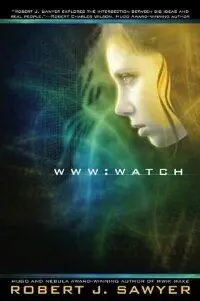
- Название:Watch
- Автор:
- Издательство:Ace Books
- Жанр:
- Год:2010
- ISBN:978-0-441-01818-5
- Рейтинг книги:5 / 5. Голосов: 1
-
Избранное:Добавить в избранное
- Отзывы:
-
Ваша оценка:
Watch: краткое содержание, описание и аннотация
Предлагаем к чтению аннотацию, описание, краткое содержание или предисловие (зависит от того, что написал сам автор книги «Watch»). Если вы не нашли необходимую информацию о книге — напишите в комментариях, мы постараемся отыскать её.
WATCH is convinced that Webmind represents a risk to national security and wants it purged from cyberspace. But Caitlin believes in Webmind’s capacity for compassion—and she will do anything and everything necessary to protect her friend.
Watch — читать онлайн бесплатно полную книгу (весь текст) целиком
Ниже представлен текст книги, разбитый по страницам. Система сохранения места последней прочитанной страницы, позволяет с удобством читать онлайн бесплатно книгу «Watch», без необходимости каждый раз заново искать на чём Вы остановились. Поставьте закладку, и сможете в любой момент перейти на страницу, на которой закончили чтение.
Интервал:
Закладка:
Sho was wearing her hair loosely about her shoulders; she didn’t want to explain. “Just thought it was time for a change,” she said.
“Looks nice,” he replied.
Well, that was commendable restraint. “Looks freakin’ hot,” is what Max had said. “Thanks.”
In Battle, Caesar had asked Virgil if they could choose their future, or if they were doomed to a violent end. Virgil had replied that violence was only one future—they could opt to change lanes, choose to head toward a different destiny. She decided, on the off-chance that Hobo was going to be good today, to buy some Hershey’s Kisses, his favorite treat of all.
She paid the clerk, headed out into the warm morning, and drove to the Marcuse Institute. Dr. Marcuse’s black Lincoln was nowhere to be seen; he and Werner had driven up to Los Angeles for the day to attend a conference there.
She entered the bungalow and used the closed-circuit video cameras to check on Hobo. He was walking along on all fours, just outside the gazebo. She thought about waiting for someone else to show up, but then figured what-the-heck. She put a couple of Kisses in a Ziploc bag, and headed outside. She did take one precaution: she put on her mirrored sunglasses; they let her look at Hobo without him knowing that he was being looked at.
As she walked across the lawn, she saw a large flock of birds flying south; it never really got cold here, but there was no doubt winter was coming.
Hobo must have seen her even before she got across the bridge. He made no move to charge at her—but neither did he run to the far side of the island.
She approached him, signing Hello, hello.
Hobo sat back on his haunches. Shoshana was, quite literally, waiting for a sign.
And, at last, she got one: it wasn’t much, just a side-to-side wave, a single word, the same word she’d just signed at him. After a moment, though, he turned and ran away. Shoshana sighed and headed up to the gazebo to check on the webcam hookup, and—
And the canvas on the easel was no longer blank.
She walked over to it, but she couldn’t make out what it was supposed to depict. For one thing, Hobo had turned the canvas to landscape orientation, but it wasn’t a painting of the landscape; surely if it were, he’d have made the top of the picture blue or black to represent the sky.
Hobo wasn’t the first ape to paint pictures. What was remarkable was that he did representational art— not abstracts, not random splashes of color. But this—
This was the most colorful painting Hobo had yet made, and, even though she couldn’t figure out what it was supposed to be, it was also the most complex.
There were circular blobs of various sizes scattered here and there on the canvas, and each of them had straight lines radiating from it. In the foreground, rising from the bottom of the frame to touch a large circle was a bright, thick orange line, and in the background there were many other, thinner lines of different colors.
Shoshana’s heart jumped as she heard a sound of metal clanging against metal: Hobo was opening the screen door to the gazebo. She turned to face him and tried not to look apprehensive; he was between her and the only exit.
She gestured at the canvas. What that?
Painting, Hobo signed.
Yes, yes, Shoshana replied. But of what?
He made a wide, toothy grin, but said nothing.
Did you talk to Virgil? she asked.
Virgil good ape! Hobo replied at once.
Yes, he is. Did you talk to him?
She looked again at the painting: colored lines linking to circles. What could it mean?
Hobo good ape, too! Hobo signed, and he held out his hand, gray-black fingers curving gently upward.
Yes, you are, Shoshana signed, frowning in puzzlement, and she opened the bag and gave him the Kisses.
“You did what?” Caitlin’s mom said in an incredulous tone. They were now back at the house, walking into the living room.
“I, um, had Webmind find embarrassing stuff about the CSIS agents, and told them about it.”
“Public stuff or private stuff?”
“Well, I…”
“Stuff from their emails?”
Caitlin looked away. “Yes.”
Her mother blew out air. “You know what that means? You revealed to them that Webmind can crack passwords.”
“Oh, shit—I mean, um…”
“No, ‘shit’ is definitely the right word. We’re in it deep. They were probably only guessing that there were security implications to all this before, but now they know for sure.”
“I’m sorry,” Caitlin said. “But—how did you know that Webmind could crack passwords?”
“You’re not the only one who has spent hours on end talking with him, you know.”
“So,” said Caitlin, stepping into the living room. “What should we do?”
“I’ve never liked secrecy, Caitlin. In fact…”
“Yes?”
“Well, it’s one of the reasons I married your father. You know, they say autistics lack social skills—but, most often what that means is simply that they don’t lie. If I were to ask your dad if these pants made me look fat, he’d say yes, without hesitation, if that’s what he really thought.” She paused. “There’s a buzzword that’s popular in government and business these days: transparency. But it really amounts to something my grandmother used to say: honesty is the best policy. A nascent super-intelligence has emerged on the Web, and maybe now the best thing to do is tell the world. Governments can’t try to contain it, or eliminate it, if the whole world is watching.”
Caitlin thought about what she’d said to Mrs. Zehetoffer, and nodded. But then she added, “Are you sure that’s best for Webmind?”
Her mother was suddenly silent. “Turn off your eyePod,” she said at last.
“What?”
“Turn it off.”
Caitlin frowned, but then it hit her. She wanted to talk to her without Webmind watching or listening; so much for transparency.
“Do as I say,” her mother said.
Caitlin dug the device out of her jeans’ left front pocket—it was a tight fit now that it had the little BlackBerry strapped to its back—and held down the eyePod’s one switch for the required number of seconds. Her vision fragmented and faded out.
The old skills immediately kicked in. She could tell by sound that her mother was moving in the room, and—
And she felt her mother’s hands land gently on each of Caitlin’s shoulders. “Sweetheart,” her mom said, “I don’t know what’s best for Webmind, but—”
“And you don’t care, do you?” Caitlin said.
“Actually, I do,” her mother replied. “But I care even more about you.” Her voice changed slightly, sounding now the way it did when she was smiling. “That darn evolution. But Federal agents came to see you today, and as long as they think Webmind is something they can just make disappear without a public fuss, Webmind is in danger. And as long as you’re one of the only people who knows about it, you’re in danger, too. We have to out it for its own good, and yours.”
“And my relationship to it?”
“No. No, no, no. You want any kind of normal life? That’s got to stay secret.”
“And what about Webmind? What if people react negatively to his existence?”
“Some will. But others will think he’s a wonderful thing. It’ll be safer in the long run if people know about him.”
“He deserves to decide for himself,” Caitlin said.
“He doesn’t know nearly enough about how the real world works. Oh, he knows facts, figures, but he doesn’t understand how our world operates.”
“Still,” said Caitlin.
Читать дальшеИнтервал:
Закладка:
Похожие книги на «Watch»
Представляем Вашему вниманию похожие книги на «Watch» списком для выбора. Мы отобрали схожую по названию и смыслу литературу в надежде предоставить читателям больше вариантов отыскать новые, интересные, ещё непрочитанные произведения.





Обсуждение, отзывы о книге «Watch» и просто собственные мнения читателей. Оставьте ваши комментарии, напишите, что Вы думаете о произведении, его смысле или главных героях. Укажите что конкретно понравилось, а что нет, и почему Вы так считаете.