Samuel Delany - Dhalgren
Здесь есть возможность читать онлайн «Samuel Delany - Dhalgren» весь текст электронной книги совершенно бесплатно (целиком полную версию без сокращений). В некоторых случаях можно слушать аудио, скачать через торрент в формате fb2 и присутствует краткое содержание. Город: USA, Год выпуска: 2002, ISBN: 2002, Издательство: Vintage Books, Жанр: Фантастика и фэнтези, на английском языке. Описание произведения, (предисловие) а так же отзывы посетителей доступны на портале библиотеки ЛибКат.
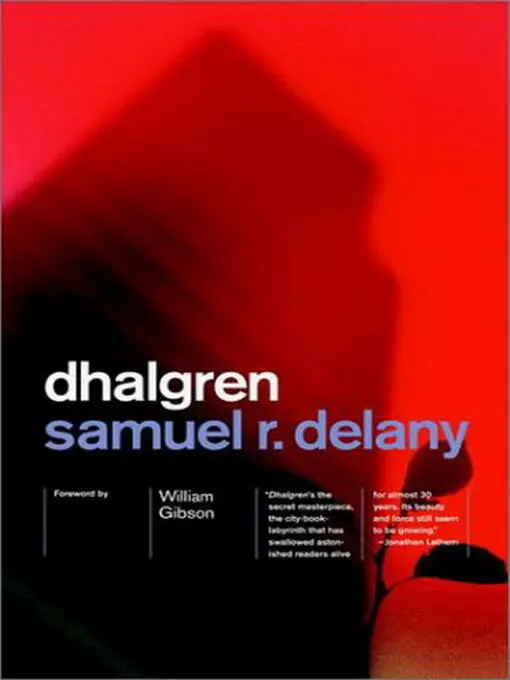
- Название:Dhalgren
- Автор:
- Издательство:Vintage Books
- Жанр:
- Год:2002
- Город:USA
- ISBN:0-375-70668-2
- Рейтинг книги:5 / 5. Голосов: 1
-
Избранное:Добавить в избранное
- Отзывы:
-
Ваша оценка:
Dhalgren: краткое содержание, описание и аннотация
Предлагаем к чтению аннотацию, описание, краткое содержание или предисловие (зависит от того, что написал сам автор книги «Dhalgren»). Если вы не нашли необходимую информацию о книге — напишите в комментариях, мы постараемся отыскать её.
has happened there… The population has fled. Madmen and criminals wander the streets. Strange portents appear in the cloud-covered sky. Into this disaster zone comes a young man — poet, lover, and adventurer — known only as the Kid. Tackling questions of race, gender, and sexuality,
is a literary marvel and groundbreaking work of American magical realism.
Text is full. The unclosed ending sentence can be read as leading into the unopened opening sentence, turning the novel into an enigmatic circle.
Dhalgren — читать онлайн бесплатно полную книгу (весь текст) целиком
Ниже представлен текст книги, разбитый по страницам. Система сохранения места последней прочитанной страницы, позволяет с удобством читать онлайн бесплатно книгу «Dhalgren», без необходимости каждый раз заново искать на чём Вы остановились. Поставьте закладку, и сможете в любой момент перейти на страницу, на которой закончили чтение.
Интервал:
Закладка:
"What did you think?" Kid heard the coldness in his own voice, and was astonished; listening to himself, he felt suddenly trapped.
"I didn't like them."
It's his smile, Kid thought and thought after that: No, you're just trying to tell yourself it's the smile you don't like. He said, He didn't like them, that's all. "What's wrong with them?"
Frank snorted a laugh and looked down at the rocks. "You really want to know?"
"Yeah," Kid said. "I want to know what you think."
"Well." Frank looked up. "The language is extremely artificial. There's no relation, or even tension, between it and any sort of real speech. Most of the poems are pompous and over-emotional — I'm sure you were sincere about every one of them. But sincerity by itself, without skill, usually just results in mawkishness. The lack of emotional focus makes subjects that could have been interesting into Grand Guignol melodrama. They end up coming off pretty banal. The method's cliche, and often, so is the diction. And they're dull." After a silence in which Kid tried to figure the varieties of unpleasantness he was experiencing, Frank continued: "Look, you once told me you'd only been writing poetry a couple of weeks. Didn't it ever strike you as a little improbable that you could just jump into it and the first batch you produced would be worth reading? I guess the thing that's really got me upset over the whole thing is all this business." He gestured at guests both sides of the bridge. "Tak once told me you were as old as he is — two years older than me! Kid, most of the people here think you're seventeen or eighteen! That, along with the poor man's Hell's Angel bit, and all the gossip about the various kinky things you get into — people are just here for the show. As far as most of them are concerned, Brass Orchids is like a performance by a talking dog. They find it so cunning that he speaks at all, they couldn't care less what he actually said."
"Un…" Kid had intended that to be an Oh. "And you—" which wasn't what he'd wanted to say either, but he went on because he had to make sure—"you think the poems aren't very good?"
Frank said: "I think they're very bad."
"Wow," Kid said, gravely. "And you think that's all the poems mean to any of the people here?"
"To most people—" Frank put his hand, stiff-armed, on the rail again—"poetry doesn't mean anything at all. From a couple of things you said to me at the bar, though — about what you read and what you felt — I suspect it does mean something to you. Which is why I keep bothering to put my foot in my mouth the way I've been."
"No," Kid said, "go on," thinking: But he hasn't stopped, has he?
Kid's shadow cut Frank's face and purple shirt down the middle.
"With all the variety that's part of current poetry—" Frank blinked his visible, squinting eye—"perhaps it's silly for me to be passing judgments like this. There are lots of kinds of poetry. And sure, some kinds I personally prefer to others. I'll be honest: the kind that yours is trying to be isn't a kind I find very interesting at its best. Which is maybe the reason I should have kept my mouth shut in the first place. Well, look, I'm not passing judgments. I'm just talking about my own reactions. I suppose what I'm trying to say is that, as far as I can tell — and I admit I'm biased — it seems pretty clear what you wanted to do in the poems. And pretty clear that you didn't come. close. I mean, that last one, in the clunky blank verse- now that may of may not be a good poem; I can't tell. It's unreadable." Frank's smile was wan. "But you have to admit, that's a stumbling block."
Kid grunted what he had intended as polite assent. It sounded more like he'd been elbowed in the liver. And that's not, he thought, what I want to sound like. "Maybe some time at Teddy's or someplace you could go over one or two of them with me and tell me what you think is—"
"No." Frank shook his hand, fingers straight, and his head, face a-scowl. "No, no. It isn't that kind of… Look, I can't tell you how to be a poet. I can just tell you what I think. That's all."
Kid grunted again.
"Don't take it as anything more than that."
Do you say thanks, now? Kid wondered. You say thanks for compliments. "Thanks." It sounded the most tentative question.
Frank nodded, looked over the rail again.
Kid stepped around him and walked toward the end of the bridge. Halfway, like a tic, he thought Frank was about to tap his shoulder. He turned, and realized, turning, it was some untransformed kernel, perfectly hostile, trying to emerge. Facing into the lights of May, Kid could not tell if Frank looked at him or away.
Squinting, Kid swallowed the thought unworded and went on into the high paths of January; from which he could look down on the crowded terrace.
They're all here, Kid thought, for me! He was desperately uncomfortable. Frank's smile — it had made his criticism seem as though he thought he was getting away with something. Well, that still didn't change what he'd said. Somebody else, Kid remembered but couldn't remember who, had said they'd liked them… and decided that wasn't what he wanted to think about now. But with the resolve erupted memories of seven other reactions: Puzzled, indifferent, interests fleeting or otherwise. He recalled Newboy's complex noncommittal and sensed in it betrayal — not so much Newboy's but his own — of something the poet had tried to tell and he had not been able to understand.
"This is like…" he started out loud, heard himself, and laughed. This was like the night in the park when his fantasized reception had pressed so heavily he'd been unable to write.
He laughed again.
A couple smiled and nodded.
His look became surprised as he noticed them. But they passed.
I want a drink, he thought, and saw he was already heading for the bar. I really want a drink very much.
This isn't, Kid found himself repeating, what it should be about. Repeating it for the sixteenth or seventeenth time, he sat on the stone rail, looking across at the table and the bottles, still without a glass.
"Hi!" Then her expression (and handfuls of scarlet fell down among green fires) changed. "What happened to you?"
His hands went out against her hips: Around one, blue puddled, around the other, green.
"Am I bleeding?"
He slid them back to her buttocks, thinking, how warm she is; lay his face against her warm belly. She took hold of his hair. Before his blinking, black scales flittered to silver, to scarlet, to green.
"No. But you look like you just walked into a wall and now you're waiting for it to go away."
Kid made a sound supposed to launch the next sentence; it came out another grunt. So he backed off it and started again a little higher. "I was just… talking with Frank. About my… poems."
She pulled loose and hoisted herself up on the wall beside him, shoulder against his shoulder, leg against his leg, to become a deviling glitter at the corner of his eye while he stared at his ruined thumbs, now pressed together on his meshed fists' calloused drum. She asked: "What did he say?"
"He didn't like them, very much." She waited.
"He said everybody here thought I was a talking dog. They all think I'm some sort of dumb nut, that I'm ten years younger than I am, and they'd all be just as astonished that I even spelled my name right — if I had a name…"
"Kid…" which came out much softer than his voice. She put her hand over his. He raised one thumb. She caught it in her fist. "That's fucking nasty."
"Maybe it's fucking true."
"It isn't!" Her voice told him she was frowning: "That's Frank? The one who's supposed to have had a book of poems published out in California?"
Читать дальшеИнтервал:
Закладка:
Похожие книги на «Dhalgren»
Представляем Вашему вниманию похожие книги на «Dhalgren» списком для выбора. Мы отобрали схожую по названию и смыслу литературу в надежде предоставить читателям больше вариантов отыскать новые, интересные, ещё непрочитанные произведения.






Обсуждение, отзывы о книге «Dhalgren» и просто собственные мнения читателей. Оставьте ваши комментарии, напишите, что Вы думаете о произведении, его смысле или главных героях. Укажите что конкретно понравилось, а что нет, и почему Вы так считаете.