Neal Stephenson - Reamde
Здесь есть возможность читать онлайн «Neal Stephenson - Reamde» весь текст электронной книги совершенно бесплатно (целиком полную версию без сокращений). В некоторых случаях можно слушать аудио, скачать через торрент в формате fb2 и присутствует краткое содержание. Город: New York, Год выпуска: 2011, ISBN: 2011, Издательство: William Morrow, Жанр: Фантастика и фэнтези, thriller_techno, на английском языке. Описание произведения, (предисловие) а так же отзывы посетителей доступны на портале библиотеки ЛибКат.
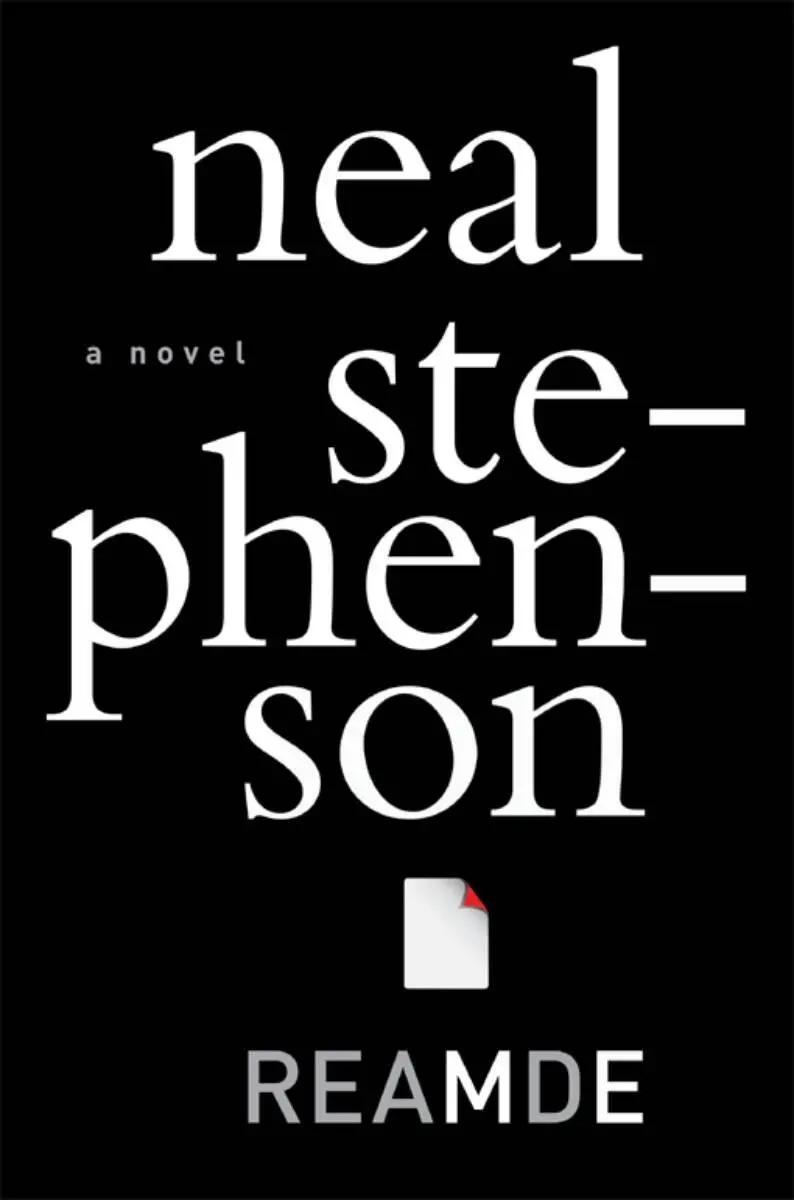
- Название:Reamde
- Автор:
- Издательство:William Morrow
- Жанр:
- Год:2011
- Город:New York
- ISBN:978-0-06-197796-1
- Рейтинг книги:4 / 5. Голосов: 1
-
Избранное:Добавить в избранное
- Отзывы:
-
Ваша оценка:
Reamde: краткое содержание, описание и аннотация
Предлагаем к чтению аннотацию, описание, краткое содержание или предисловие (зависит от того, что написал сам автор книги «Reamde»). Если вы не нашли необходимую информацию о книге — напишите в комментариях, мы постараемся отыскать её.
For Richard, the game was the perfect opportunity to launder his aging hundred dollar bills and begin his own high-tech start up—a venture that has morphed into a Fortune 500 computer gaming group, Corporation 9592, with its own super successful online role-playing game, T’Rain. But the line between fantasy and reality becomes dangerously blurred when a young gold farmer accidently triggers a virtual war for dominance—and Richard is caught at the center.
In this edgy, 21st century tale, Neal Stephenson, one of the most ambitious and prophetic writers of our time, returns to the terrain of his cyberpunk masterpieces
and
, leading readers through the looking glass and into the dark heart of imagination.
Reamde — читать онлайн бесплатно полную книгу (весь текст) целиком
Ниже представлен текст книги, разбитый по страницам. Система сохранения места последней прочитанной страницы, позволяет с удобством читать онлайн бесплатно книгу «Reamde», без необходимости каждый раз заново искать на чём Вы остановились. Поставьте закладку, и сможете в любой момент перейти на страницу, на которой закончили чтение.
Интервал:
Закладка:
Fortunately, the situation at hand was quite a bit simpler than that. Even if the rendezvous with the boat and with the containership went perfectly, the two of them would likely never see each other again. But if Sokolov were killed in an ambush in the fog and mist off the shore of Kinmen, then she could close the door on this highly satisfying but ultimately meaningless affair, and go on to live the happy and contented life that Sokolov very much wanted her to live.
And so, as he drew closer to the sound of the boat’s motor, Sokolov conceived of a plan, which seemed straightforward enough at the time, to greatly simplify both his future life and Olivia’s by firing a few shots from his weapon. This would scare the hell out of the boatman, but Sokolov thought he could bring that problem under control without too much difficulty. Once they had effected the rendezvous with the containership, Sokolov would then find some way to induce its captain to claim that the rendezvous had not occurred—that the boat carrying Sokolov had failed to show up and that Sokolov had never boarded the vessel. Two weeks from now, Sokolov would slip off the ship in Long Beach and make use of his connections in that town to lie low for a bit. Then he would make his way back to Toronto, which was where he had started. A thorough inspection of his passport stamps might turn up some inconsistencies, but he had never seen anyone actually look at those things.
As he drew closer to the place where the boat was waiting for him, he drew out both first the Makarov and then the submachine gun that he had taken last night from the jihadist and checked that both of them were in ready-to-fire condition, which was probably a good idea in any case. He reckoned that if he were trying to simulate the sounds of a battle, it would be more convincing if he could fire a few pistol shots and a burst or two from the submachine gun. He would, of course, wait until he was safely in the boat, so that the boatman would not simply run away from him in terror. To that end, he did not want to emerge from the mist with a weapon in each hand, and so he placed the Makarov in its usual push-through belt rail and slung the submachine gun over his back.
The water had become chest-deep, adequate to float a vessel of some size. Sokolov shrank down into it so that only the top of his head was protruding from the water, a somewhat difficult thing to manage since waves kept rising up to break over him. He began his final approach by sidling from one shellfish-encrusted pillar to the next. He could hear the boat’s hull rasping against one of the pillars no more than a few meters away.
Finally it began to come into focus: a long shadow riding on the water. As he drew closer the shadow resolved into a line of fat black Os: the tires slung over the boat’s side, the only things keeping it from being macerated by the stone pillars. He could see the boatman sitting erect at the stern, waiting, wondering when the mystery passenger would show up. A white rope ladder had been thrown over the port side near the bow; this was the closest corner to shore, and the boatman must have assumed Sokolov would approach from that direction and be glad of the assistance.
But those tires looked as though they would provide convenient hand- and footholds for clambering aboard, and Sokolov could see no advantage in boarding from the expected direction. So he devoted a few more moments to making his way around to the stern of the boat, half wading and half swimming now, and then approached to the point where he could get a good view of the tire and the loops of rope that he would presently be using to get aboard. Then he drew breath, sank below the surface, and covered the last few meters underwater.
When he saw the corner of the hull above him, he gathered his knees to his chest, let himself sink to the bottom, and then exploded straight up with as much force as he could produce. His hands shot out of the water first and got purchase on the tread of a tire. He brought a foot up and planted it in the tire’s rim, moved his hands up to the rope from which the tire was suspended, and then pulled with his arms and pushed with his leg, shooting up over the gunwale and sweeping his free leg around into the boat. For a moment, though his momentum was still carrying him forward, he was straddling the gunwale. The boatman was turning to look at the source of this unexpected splashing. Sokolov caught his eye for a moment, then glanced into the cargo area forward and saw three armed men lying on their bellies, all gazing in the direction of that rope ladder.
It was too late to do anything about the momentum that was carrying him over the gunwale, and the manner in which he had swung one leg over the edge and planted it on the deck now obligated him to carry on in a pirouetting movement. He spun around the planted foot, drawing his other leg into the boat, turning his back on the prone gunmen for just a moment. The movement caused the submachine gun to fly outward on its strap. He stopped hard with both feet on the deck, and the weapon swung around him until it was in front of him. He caught it in both hands, dropping to a knee, and fired a burst into the buttocks of the closest man. Half a dozen rounds entered the target’s body through the pelvis and proceeded up through his viscera in the general direction of his brain. A second man levered himself up on his elbow and looked back to see what was happening. Sokolov obliterated his face. The third man, closest to the bow, erupted to his feet and dove over the boat’s bow in one motion, chased by a fusillade of rounds from the submachine gun. Sokolov let the weapon drop and hang from its strap and shoved his Makarov through its holster. He turned to the appalled boatman and pointed in the direction of open water. Then he threw himself down on his belly and elbow-crawled up the length of the boat, slaloming around the two stricken men who were flopping and writhing vaguely as they died, and peeked between two tires for a second before withdrawing his head. Three pops sounded from a few meters away: the third operative, probably firing at him from behind one of those stone pillars. Sokolov fired a few blind shots just as a way of making this man think twice about exposing himself. He could hear the motor revving up and feel it moving beneath his chest. The next time he popped his head up for a quick look, the standing stones had all vanished in mist that was now developing into rain. The boatman continued in reverse gear until he was well out to sea, then spun the vessel around and headed straight out.
DIRECTLY THE GUNSHOTS were engulfed in the whoosh and clap of the incoming surf, and the drone of the motor dwindled and failed as the boat built distance between itself and the island. Olivia stifled a ridiculous impulse to call out Sokolov’s name. She gathered her feet under her and squatted on the flat top of the stone pillar for a minute or so, cupping her hands to her ears, straining to hear—what?—a call for aid? Screams of terminal agony? Walkie-talkie bursts? But there was nothing, and she was left asking herself whether she had really heard anything at all.
A decent, albeit foolish, instinct told her to wade to the sound of the guns. Looking down, she saw that she would have to swim, rather than wade, and that the surf would bang her around like a pachinko ball among the pillars, foamed with knife-edged oyster shells and barnacles. She had only one course of action, which was to turn her back on whatever had just happened and make her way back toward shore. And she needed to act on it now, before the water got any deeper.
She hitched the skirt of her dress up above her waist—not that it was really going to help—and stripped off her panties and, wanting to keep her hands free, shoved one arm through a leg hole and pulled the garment up to her shoulder where it would stay put. She jumped off the pillar into the water, which came up to her navel, and began wading back in the direction of the shore. This involved some guesswork since the atmosphere had become a dense white fog salted with tiny hurtling raindrops, and it was impossible to see any landmarks, let alone the sun. The surf created swirling and unpredictable currents as it found its way among the pillars and tried to knock her legs out from under her. She moved from one pillar to the next, keeping a hand out for balance, yet trying to avoid any forceful contact between her skin and those serrated, shell-slathered columns. In the early going, she feared she might be headed the wrong way, but soon enough she noticed that the water was now lapping at her buttocks, then her upper thighs, and the going was becoming easier. She was headed back toward George Chow, at least approximately.
Читать дальшеИнтервал:
Закладка:
Похожие книги на «Reamde»
Представляем Вашему вниманию похожие книги на «Reamde» списком для выбора. Мы отобрали схожую по названию и смыслу литературу в надежде предоставить читателям больше вариантов отыскать новые, интересные, ещё непрочитанные произведения.



Обсуждение, отзывы о книге «Reamde» и просто собственные мнения читателей. Оставьте ваши комментарии, напишите, что Вы думаете о произведении, его смысле или главных героях. Укажите что конкретно понравилось, а что нет, и почему Вы так считаете.