Neal Stephenson - Reamde
Здесь есть возможность читать онлайн «Neal Stephenson - Reamde» весь текст электронной книги совершенно бесплатно (целиком полную версию без сокращений). В некоторых случаях можно слушать аудио, скачать через торрент в формате fb2 и присутствует краткое содержание. Город: New York, Год выпуска: 2011, ISBN: 2011, Издательство: William Morrow, Жанр: Фантастика и фэнтези, thriller_techno, на английском языке. Описание произведения, (предисловие) а так же отзывы посетителей доступны на портале библиотеки ЛибКат.
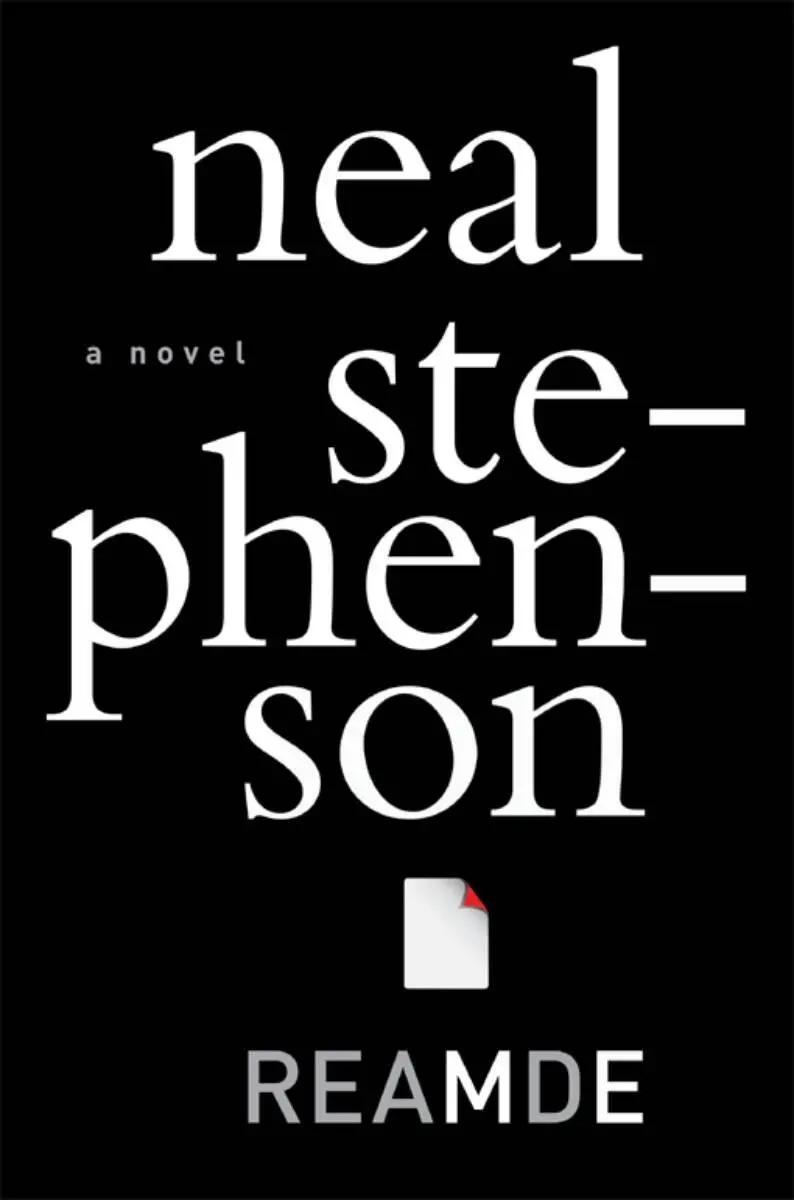
- Название:Reamde
- Автор:
- Издательство:William Morrow
- Жанр:
- Год:2011
- Город:New York
- ISBN:978-0-06-197796-1
- Рейтинг книги:4 / 5. Голосов: 1
-
Избранное:Добавить в избранное
- Отзывы:
-
Ваша оценка:
Reamde: краткое содержание, описание и аннотация
Предлагаем к чтению аннотацию, описание, краткое содержание или предисловие (зависит от того, что написал сам автор книги «Reamde»). Если вы не нашли необходимую информацию о книге — напишите в комментариях, мы постараемся отыскать её.
For Richard, the game was the perfect opportunity to launder his aging hundred dollar bills and begin his own high-tech start up—a venture that has morphed into a Fortune 500 computer gaming group, Corporation 9592, with its own super successful online role-playing game, T’Rain. But the line between fantasy and reality becomes dangerously blurred when a young gold farmer accidently triggers a virtual war for dominance—and Richard is caught at the center.
In this edgy, 21st century tale, Neal Stephenson, one of the most ambitious and prophetic writers of our time, returns to the terrain of his cyberpunk masterpieces
and
, leading readers through the looking glass and into the dark heart of imagination.
Reamde — читать онлайн бесплатно полную книгу (весь текст) целиком
Ниже представлен текст книги, разбитый по страницам. Система сохранения места последней прочитанной страницы, позволяет с удобством читать онлайн бесплатно книгу «Reamde», без необходимости каждый раз заново искать на чём Вы остановились. Поставьте закладку, и сможете в любой момент перейти на страницу, на которой закончили чтение.
Интервал:
Закладка:
A loud, high-pitched noise dominated everything: either ringing in her ears or the sound of air escaping through bullet holes in the fuselage. Maybe both. Something huge flew at her: Jones had reacted by snatching the duvet off the bed and hurling it at her face. At the same time, the pressure on her back became immense. Air was escaping from the cabin, and the higher pressure in the front of the plane was forcing the door open. She fired another round in the direction where she guessed Jones might be coming from, but then his whole weight was on her gun arm, pinning it to the floor, and she was being crushed between his body and the door. His knee came down in the middle of her chest. She used her free hand to hurl the blanket out of the way. Jones was unharmed and on top of her, reaching above his head to grab for a yellow object dangling from the ceiling. She had some difficulty making it out, because it was blurry, but then she recognized it as an oxygen mask. Jones pulled it to him, placed it over his mouth and nose, and got the elastic band over the back of his head.
Then he looked down at her.
The instructions in the safety briefing said that you should put the mask on your own face first, then tend to anyone around you who needed help. Jones had done the first bit perfectly, but now he was just gazing at her interestedly as she went to sleep.
AS SOKOLOV WAS wading out toward the sound of the boat, he began to consider all of the ways in which this might go wrong—or might already have gone wrong. This kind of thinking had been his habit for as long as he could remember. It had been amplified a thousandfold during his service in the military and transferred quite comfortably to the security consultant business. If security consultants ran the world, militaries would no longer be needed, because all possible contingencies that might lead to the application of violence would have been anticipated and dealt with long before they had developed into actual wars. Or so he had always told himself as a way to justify his choice of a second career.
The fact that visibility had dropped to much less than a hundred meters was both a good and a bad thing. It was good that Sokolov would be able to board the boat and transfer to the containership unobserved by any spies ashore. It was bad that he could not see his ride coming. In the taxi, he had asked several questions of “George Chow” about how he had made these arrangements, how he had chosen this particular boatman, and whether he might have been observed or followed by any mainland Chinese operatives. George Chow had seemed confident—a bit too breezily confident for Sokolov’s tastes—that it had all been pulled off perfectly. This sort of self-assurance, in and of itself, was frequently a warning sign. Sokolov knew nothing of George Chow and his history in this sort of business, nor of the extent to which the mainland authorities had penetrated the police and security forces of this island, and so it seemed safest for him to assume that Chow had been followed from the hotel, or (easier and cheaper) observed on security cameras as he had made his way through Jincheng and down to the waterfront to hire a boatman. If that were the case, then it would have been quite easy for a mainland operative to go and talk to the same boatman as soon as Chow departed and, through some combination of bribery and threats, get him to tell what he knew.
(“What does the boatman know?” Sokolov had asked, in the taxi.
“Only that he is to pick someone up at a certain place and time” had been the answer from the front seat. “You must tell him where you are going.”)
Anyway, the boat waiting at the rendezvous point marked on the GPS device Chow had given him might turn out to be full of men who had come over from the mainland this morning specifically to find Sokolov and either kill him or take him back to the People’s Republic of China for interrogation and God only knew what other sort of treatment.
If that came to pass and if it developed into a gunfight (which, if Sokolov had anything to say about it, it most certainly would), then how would it look—or sound, since they couldn’t see it—to Olivia and George Chow? A series of gunshots, largely muffled by the sound of surf finding its way through the thousands of stone fingers jutting out of the sand. Even if Olivia were foolish enough to attempt to wade out and investigate, she would find nothing; the boat would have departed by then. At the most there might be a corpse or two floating in the water, but it was highly improbable that she would happen upon such direct evidence. Much more likely was that the outcome would remain mysterious to both her and George Chow and that, spooked, they would get to the airport as quickly as possible and get out of this place.
In the taxi, Sokolov had asked George Chow what was going to happen when he reached the end of the voyage in Long Beach. Chow had assured him that friendly agents of the U.S. government would board the containership at that point and whisk him away to a safe place where he could be debriefed of all the information he had to offer about Abdallah Jones and given assistance in making his way through immigration formalities.
But Sokolov was in no way interested in being thus greeted and debriefed and assisted. He already had a B-1 visa, which entitled him to enter the United States any time he wanted. If he were to sneak into the United States from a containership, which, compared to what he’d been doing in the past twenty-four hours, ought to be as easy as pissing off a dock, then the worst thing that anyone could say about him was that he had not had his passport stamped when he’d entered the country: theoretically a problem, but so trivial and so distant that it hardly seemed worthy of his notice at this time. He had already given Olivia all the useful information that he had regarding the whereabouts of Abdallah Jones, and so any further debriefings in L.A. would inevitably center on topics whose elaboration could only make life more difficult for him, such as Ivanov and Wallace and what had happened yesterday morning in the apartment building. If the American authorities believed that he had been killed in an ambush in the fog and mist off the shore of Kinmen, then he would be spared such embarrassments.
There was also the matter of Olivia.
Sokolov quite liked Olivia and wanted her to be happy. He could tell from watching her face that she was unwilling to be honest with herself about the nature of the relationship that she had enjoyed with Sokolov, which had quite obviously (to Sokolov anyway) been based on simple, animal attraction. Sometimes you met someone and you just instinctively wanted to fuck their brains out. It had to do with pheromones or something. Most of the time, the feeling was not reciprocated, but sometimes it was, and then these things happened with a suddenness and intensity that could not help but be disquieting to anyone who believed that his or her life made sense . There was nothing more to it than that, though. They’d had their fun in the bunker, and probably could have had quite a bit more if circumstances had put them in a safe place together. But such relationships were unlikely to last. Olivia, a highly cultivated and rational woman, was unwilling to admit that she was the kind of person who could engage in such a liaison, and so she was even now putting her powerful brain to work coming up with a story according to which it was really much, much more than that. If it were somehow the case that they lived next door to each other or worked in the same office, then she’d have had to work through a long and dramatic and ultimately painful process of coming to terms with the fact that it was all strictly animal attraction and that there was no actual basis for a relationship there.
Читать дальшеИнтервал:
Закладка:
Похожие книги на «Reamde»
Представляем Вашему вниманию похожие книги на «Reamde» списком для выбора. Мы отобрали схожую по названию и смыслу литературу в надежде предоставить читателям больше вариантов отыскать новые, интересные, ещё непрочитанные произведения.




Обсуждение, отзывы о книге «Reamde» и просто собственные мнения читателей. Оставьте ваши комментарии, напишите, что Вы думаете о произведении, его смысле или главных героях. Укажите что конкретно понравилось, а что нет, и почему Вы так считаете.