Neal Stephenson - Reamde
Здесь есть возможность читать онлайн «Neal Stephenson - Reamde» весь текст электронной книги совершенно бесплатно (целиком полную версию без сокращений). В некоторых случаях можно слушать аудио, скачать через торрент в формате fb2 и присутствует краткое содержание. Город: New York, Год выпуска: 2011, ISBN: 2011, Издательство: William Morrow, Жанр: Фантастика и фэнтези, thriller_techno, на английском языке. Описание произведения, (предисловие) а так же отзывы посетителей доступны на портале библиотеки ЛибКат.
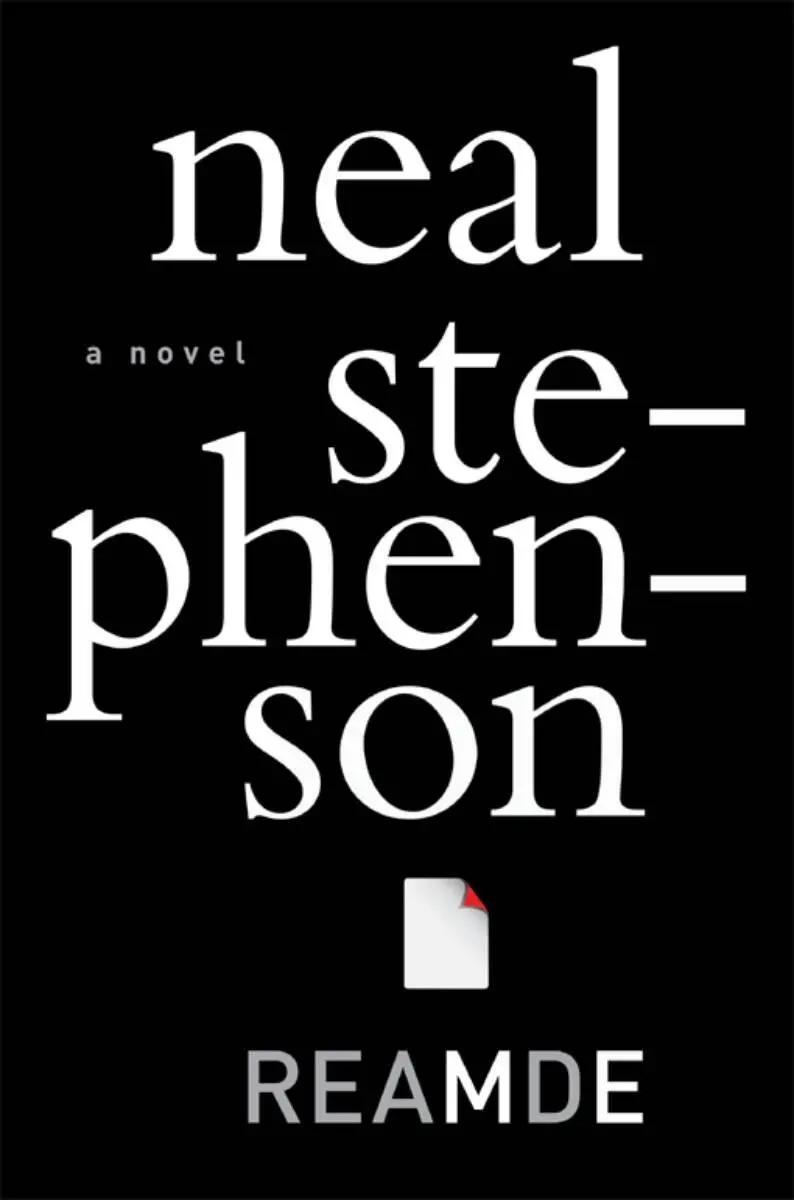
- Название:Reamde
- Автор:
- Издательство:William Morrow
- Жанр:
- Год:2011
- Город:New York
- ISBN:978-0-06-197796-1
- Рейтинг книги:4 / 5. Голосов: 1
-
Избранное:Добавить в избранное
- Отзывы:
-
Ваша оценка:
Reamde: краткое содержание, описание и аннотация
Предлагаем к чтению аннотацию, описание, краткое содержание или предисловие (зависит от того, что написал сам автор книги «Reamde»). Если вы не нашли необходимую информацию о книге — напишите в комментариях, мы постараемся отыскать её.
For Richard, the game was the perfect opportunity to launder his aging hundred dollar bills and begin his own high-tech start up—a venture that has morphed into a Fortune 500 computer gaming group, Corporation 9592, with its own super successful online role-playing game, T’Rain. But the line between fantasy and reality becomes dangerously blurred when a young gold farmer accidently triggers a virtual war for dominance—and Richard is caught at the center.
In this edgy, 21st century tale, Neal Stephenson, one of the most ambitious and prophetic writers of our time, returns to the terrain of his cyberpunk masterpieces
and
, leading readers through the looking glass and into the dark heart of imagination.
Reamde — читать онлайн бесплатно полную книгу (весь текст) целиком
Ниже представлен текст книги, разбитый по страницам. Система сохранения места последней прочитанной страницы, позволяет с удобством читать онлайн бесплатно книгу «Reamde», без необходимости каждый раз заново искать на чём Вы остановились. Поставьте закладку, и сможете в любой момент перейти на страницу, на которой закончили чтение.
Интервал:
Закладка:
They might be waiting to ambush him from the plantings outside, but if they really knew he was here and wanted to ambush him, they’d have gone about it differently. So he walked stolidly out of the building, down the drive, and out to the street. Then he broke into a jog, headed toward the ferry terminals, less than a kilometer away. He was keeping an eye out for the jihadists the entire way but saw nothing.
A ferry was loading at the terminal for Gulangyu. Sokolov swung wide around it, avoiding streetlamps, and made his way down to a smaller and lower dock nearby, where several speedboats were tied up, and their drivers sitting around smoking cigarettes and talking. These were the high-speed water taxis for moneyed passengers, and Sokolov had been eyeing them with interest the whole time he’d been in Xiamen.
On the way over he had made a large withdrawal from the Bank of CamelBak. He let them see the wad of magenta bills in his hand. This got their attention. Not in a favorable way. It made them nervous and suspicious. He could not concern himself with their emotional state just now. He nodded across the water and said, “Gulangyu.”
One of the boatmen was just a little quicker than the others; Sokolov ended up in his boat. This was a kind of small pleasure craft seen by the millions on lakes and rivers all over the world: an open white fiberglass skiff with a big outboard motor on its back, capable of seating maybe six people comfortably. Orange life vests were stored in an open bin, probably in obedience to some regulation, and disposable plastic rain ponchos were available for lightly dressed passengers caught in sudden downpours.
The ferry had already pulled away from its dock. At this time of night there were not too many people headed for Gulangyu. Most of the passengers remained in the ferry’s roofed, illuminated, Plexiglas-walled interior, perhaps to avoid a faint suggestion of a chill in the air; though around here, “chill” meant that a woman in a spaghetti-strap dress might experience goose bumps when exposed to the full force of the wind.
Not the least bit chilly were four male passengers grouped on an open deck up at the ferry’s bow, gazing toward Gulangyu, pointing and talking.
As the boat came abreast of the ferry—for it was going twice as fast as the larger vessel—Sokolov picked up a plastic poncho, swept it over his shoulders, and poked his head through the hole in the middle, then pulled the hood up over his head. He left it on, and did not look back, until a couple of minutes later, when the boatman cut his engine and let the little vessel glide the last few meters toward the Gulangyu terminal.
As he was disembarking, Sokolov glanced back and saw that the ferry was not as far behind them as he had hoped it would be. The little boat had accelerated more quickly at the beginning of the journey and jumped out to a lead, but the ferry, once it got going, moved faster than it appeared to.
Still, there was a reason why people paid more for the speedboats, and Sokolov reckoned it had to do with the congestion in the terminals. Gulangyu Island sported a number of parks, tourist attractions, and bars that attracted a younger crowd, many of whom were trying to make their way back to Xiamen at the moment, and so the terminal on this end was much more crowded.
He made as if to shrug off the plastic poncho, then thought better of it. The boatman was giving him an odd look. Sokolov held out his hand, palm up, and looked to the sky, trying to pantomime: Does it look like rain to you? He could not tell whether he was getting through to the boatman at all. Finally he plucked at it and dangled a couple of the magenta bills. These were accepted and the boatman turned away. Transaction finished.
Sokolov flipped the hood up over his shaved head. He’d removed his hair to make himself harder to identify, in the event that the PSB had found a witness to this morning’s events or caught something on a surveillance camera. But now it was making him stand out in a way that wasn’t to his advantage.
He strode through the waterfront park for a distance, startling a few pairs of young lovers, then cut uphill on a steep street channeled between old stone walls. This was one of the few roads that actually showed up on the map. It wound from side to side, following the island’s steep contours, dodging huge outcroppings of gray stone that were plastered with vines, clutched in the monstrous root systems of outlandish trees, and occasionally incised with staircases. From time to time, just after rounding a corner, Sokolov would stop and peer behind to see if anyone was coming up the same way. He saw nothing obvious. But the island’s road network was a maze, and Olivia’s building could be approached from more than one direction.
As a matter of fact, he wasn’t entirely sure he knew where he was; he felt that he should have been there by now, but in the dark he couldn’t see any of the landmarks he had picked out earlier.
His view was blocked for a while by a rank of tall trees growing on the inside of a wall, marking the edge of a compound: some school or government institution. Then he came into a crossroads and saw the landmark he’d been searching for: a hotel built atop a high stony rise, with terraces and gardens that afforded a fine view over Gulangyu, the strait, and the city beyond. He had sat there for a while earlier today, gazing down into the courtyard of Olivia’s building, watching people come and go, and trying to come up with a Plan C for getting into her apartment after Plans A and B had exposed him to unacceptable risks of detection.
So now he understood where he was and where he needed to go: up a street that forked to the left. But coming down that street toward him, filling its width from wall to wall, was a group of half a dozen young men who he could tell had been enjoying a few drinks and were now ambling toward the ferry terminal. They were in the cheerful and gregarious stage of drunkenness, accosting everyone they saw and trying to strike up conversations in a way that pretended to be friendly but was in truth quite aggressive. One of them had already seen Sokolov, absurdly conspicuous in his shaved head and plastic poncho, and was pointing him out to a fellow. Sokolov cruised into the other fork and, as soon as he was out of view, sprinted flat out for a hundred meters or so, just to get out of hailing range.
An alley presented itself on his left, and he ducked into it. Following it back toward the looming hotel, he began to see landmarks he recognized. Running up a stone stairway overarched with big old trees, he emerged into the somewhat larger street that ran past Olivia’s building. Standing right there were a couple of old ladies out for a walk who looked at Sokolov as if he were a marmoset in a zoo. He nodded to them politely and turned in the direction of Olivia’s building. Two young women emerged from a gate and pursued him up the street for a short distance, giggling and pantomiming picture-taking gestures. They wanted to get a snapshot of him to show their friends. He quickened his pace and declined the offer.
He had to get out of this fucking country now .
Then, there it was. The gateway to the compound that housed Olivia’s building, absolutely distinctive because of a tree that had taken root on top of the adjoining wall and spread its weird molten limbs all over the stonework, trying to find some actual dirt to grow in, possibly seeking refuge from the relentless attentions of three different kinds of flowering vines that were using it as a trellis. Sokolov checked in all directions and saw nothing untoward on the street. He walked through the gate into the walled garden that surrounded the building.
The place was constructed in a generally European style as reinterpreted by whatever local artisans the owner had been able to hire a hundred years ago. It was vaguely Classical, with a row of four spindly pillars supporting a veranda and, above it, a balcony. Ahead of him, on the veranda, silhouetted against the lights of the entryway, were four men, checking the place out, talking on phones. Darting their heads this way and that. Sokolov, feeling like a little kid playing some kind of ridiculous game, stepped behind a tree so that they wouldn’t see him if they looked back. It had been a hell of a long time since he had been reduced to hiding behind a tree, and he did not view it as much of a professional achievement.
Читать дальшеИнтервал:
Закладка:
Похожие книги на «Reamde»
Представляем Вашему вниманию похожие книги на «Reamde» списком для выбора. Мы отобрали схожую по названию и смыслу литературу в надежде предоставить читателям больше вариантов отыскать новые, интересные, ещё непрочитанные произведения.





Обсуждение, отзывы о книге «Reamde» и просто собственные мнения читателей. Оставьте ваши комментарии, напишите, что Вы думаете о произведении, его смысле или главных героях. Укажите что конкретно понравилось, а что нет, и почему Вы так считаете.