Neal Stephenson - Reamde
Здесь есть возможность читать онлайн «Neal Stephenson - Reamde» весь текст электронной книги совершенно бесплатно (целиком полную версию без сокращений). В некоторых случаях можно слушать аудио, скачать через торрент в формате fb2 и присутствует краткое содержание. Город: New York, Год выпуска: 2011, ISBN: 2011, Издательство: William Morrow, Жанр: Фантастика и фэнтези, thriller_techno, на английском языке. Описание произведения, (предисловие) а так же отзывы посетителей доступны на портале библиотеки ЛибКат.
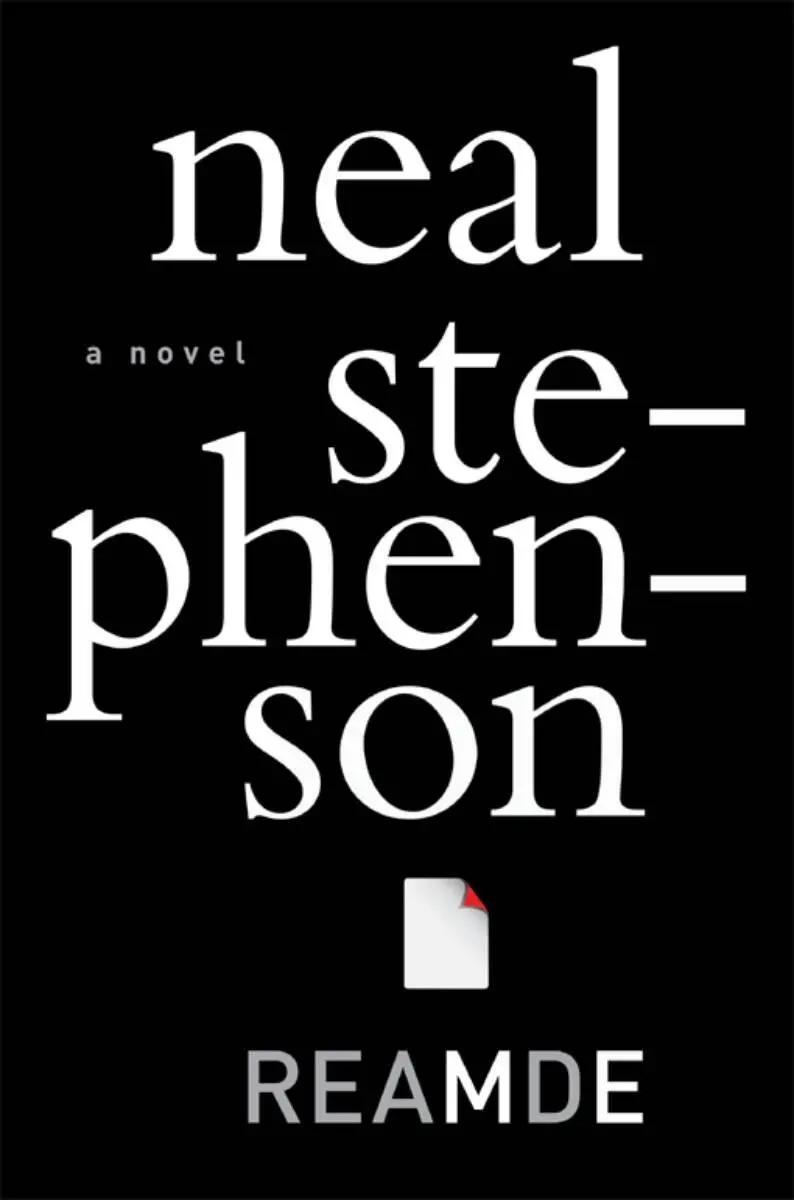
- Название:Reamde
- Автор:
- Издательство:William Morrow
- Жанр:
- Год:2011
- Город:New York
- ISBN:978-0-06-197796-1
- Рейтинг книги:4 / 5. Голосов: 1
-
Избранное:Добавить в избранное
- Отзывы:
-
Ваша оценка:
Reamde: краткое содержание, описание и аннотация
Предлагаем к чтению аннотацию, описание, краткое содержание или предисловие (зависит от того, что написал сам автор книги «Reamde»). Если вы не нашли необходимую информацию о книге — напишите в комментариях, мы постараемся отыскать её.
For Richard, the game was the perfect opportunity to launder his aging hundred dollar bills and begin his own high-tech start up—a venture that has morphed into a Fortune 500 computer gaming group, Corporation 9592, with its own super successful online role-playing game, T’Rain. But the line between fantasy and reality becomes dangerously blurred when a young gold farmer accidently triggers a virtual war for dominance—and Richard is caught at the center.
In this edgy, 21st century tale, Neal Stephenson, one of the most ambitious and prophetic writers of our time, returns to the terrain of his cyberpunk masterpieces
and
, leading readers through the looking glass and into the dark heart of imagination.
Reamde — читать онлайн бесплатно полную книгу (весь текст) целиком
Ниже представлен текст книги, разбитый по страницам. Система сохранения места последней прочитанной страницы, позволяет с удобством читать онлайн бесплатно книгу «Reamde», без необходимости каждый раз заново искать на чём Вы остановились. Поставьте закладку, и сможете в любой момент перейти на страницу, на которой закончили чтение.
Интервал:
Закладка:
A few more strikes and a pie-wedge-shaped chunk of porthole glass was knocked out, and the one man had been joined by three others. Four of them! There were only six men on the whole boat. She gripped the chair leg like a mortar and began to use what was left of the glass as a pestle, jabbing at it with short sharp blows. This was, as much as anything, a way of catching her breath. She had forgotten to breathe. She saw the door handle move and knew they were coming; she stepped back from the door, sucked in as much air as she could, and greeted the first man into the room with a blast of invective that, had he understood the dialect she was using, would have shriveled his genitals into something like raisins. Other men followed the first one in through the narrow hatch and then spread out to either sides, backed up against the walls, out of range of the flailing chair leg. The look on their faces was genuine fear. Yuxia had turned into a crazy woman, a witch. Because only a crazy woman or a witch would behave this badly when she was totally in the power of a group of men who could rape her and kill her any time they felt like it.
A man entered the cabin with such force that he practically knocked the other men down. It was the boat’s captain. He hated her. He came right at her. She instinctively swung the chair leg at him, but he must have known some martial arts because he caught it on the fly and twisted it right out of her hand and hurled it contemptuously out the door and into the sea.
Yuxia reached into her boot and pulled out the phone and held it up for all of them to see. “I have already called the police!” she announced. “You are all dead men.”
This was perhaps the only thing that could have stopped the captain in his tracks. He stood perfectly still for a count of three.
A small, cylindrical object bounced in over the cabin’s threshold and landed in the middle of the floor. This was not the first time Yuxia had ever seen one. Earlier today, Marlon and Csongor had discovered a couple of them among Ivanov’s personal effects, and they had discussed them briefly, using some English terminology that she vaguely recognized. Not commonly used English words but ones she had heard before. “Stun” and “grenade.” From movies, she understood the grenade concept well enough. The thing on the floor didn’t look like the grenades from movies and so she would not have recognized it had it not been for the lucky coincidence of the chat in the van a few hours ago.
Or maybe not such a coincidence.
It occurred to her that the grenade was missing its ring.
Yuxia turned away from it, closing her eyes, and clapped her hands to the sides of her head.
ZULA COULD NO longer remember a time when she hadn’t felt extremely conspicuous. Sitting alone in the bar of the Hyatt in damp clothes that were very much the worse for wear, she felt no more or less out of place than usual. She had gotten used to it. She was being eyed by several businessmen who, she could only suppose, were wondering how a crack whore had managed to find her way to Xiamen.
The only men in the place who weren’t looking at her were the pair at the next table: a couple of Middle Eastern/South Asian–looking guys in bulky windbreakers. Even they, however, were keeping Zula in the corners of their eyes, in case she had any thoughts of making a break for it.
Anyway, she didn’t have to wait for long before the two pilots came down. Uniformed and everything. Carrying their special pilot briefcases and dragging their rollaway bags behind them like cubical pets. They had been ready. She had talked to them on Jones’s phone. Called the hotel’s operator, asked to be patched through to the two Russians who had checked in at the same time three days ago. It had taken them a while to find the right rooms, but the first of the pilots she’d called, Pavel, had picked up the phone on the first ring. Contrary to what Jones thought, he hadn’t been lounging around watching pornography and drinking. He had been waiting.
Of course, what he’d been waiting for was the voice of Ivanov, speaking Russian. Zula speaking English had come as a distinct surprise. But she’d been able to convince Pavel that, yes, she was that girl who had been on the flights earlier in the week. That something had gone awry with the plan. And that it really would be in his best interest to come down and meet with her in the hotel bar.
Pavel and the other pilot, Sergei, approached her somewhat warily, looking her up and down. As just about any sane person would.
“Please,” she said, with a gesture. “Sit down.”
Even that took some persuading.
But that was okay. She didn’t have to persuade Pavel and Sergei of anything else. Just to sit down at this table.
As soon as Pavel and Sergei had taken their seats, the two men in the windbreakers got up and brought their club sodas over and joined them. Five now at the table. Pavel and Sergei were now even more taken aback than they had been to begin with. But proceedings were interrupted by a waitress who came over to take their orders. Zula noted with approval that both pilots asked for nonalcoholic drinks.
One of the men in the windbreakers—Khalid—announced, “Tonight, you will fly to Islamabad.”
He then smiled sweetly as Pavel and Sergei broke out into nervous laughter.
“Where is Ivanov?” Pavel wanted to know. He had asked it several times during the phone call. But Zula had never answered it directly until now.
“Dead,” she said, and looked significantly at Khalid.
Pavel and Sergei didn’t believe it for a moment. But only for a moment.
“Who is this man?” Pavel asked her.
Khalid set down his drink, reached up, grasped his zipper pull, and drew it down to his belly. The garment parted to reveal a sort of vest, sewn out of canvas, sporting a row of long, slender vertical pockets around the midriff. Each of the pockets was bulging full. From the top of each protruded a cylinder of clear plastic, like a piece of kitchen wrap that had been rolled around a flattened tube, about the size of a jumbo burrito, of amorphous yellowish-white stuff, a little bit like pie crust dough that hadn’t been rolled out yet. Electrical wires emerged from the top of each dough-tube. They were all linked together and ran up to Khalid’s shoulder and then down the sleeve of his windbreaker. He had his hand in his lap, but now coyly displayed it to Pavel and Sergei, letting them see a black plastic object topped with a red button.
Pavel and Sergei couldn’t make sense of it for a few moments. Of course it was obviously an explosive vest. Yet to see one right there on a person’s body was so shocking that the mind couldn’t accept it at first. As if you had found Hitler in your kitchen.
“I’ve been instructed to tell you a lot of gruesome stuff about what happens when it goes off,” Zula said. “Do I need to? I mean, the gist of it is that it’ll not only kill us but basically bring down half of the building.”
Neither Pavel nor Sergei had anything to say.
The windbreaker was zipped back up.
The waitress brought them their drinks. Zula asked for the check.
“I’ve also been instructed to tell you that there are two taxis waiting outside. Pavel goes in the first, Sergei in the second. One of these guys with the vests will ride in each taxi, to preserve, I guess, the threat. We’ll go straight to the airport and depart for Islamabad as soon as you can get through your preflight checklist. Are there any questions?”
There were no questions.
Leading the four men out across the lobby, Zula felt like a terrorist.
It felt sort of cool.
Not that she was in danger of signing up with these guys any time soon. The burqa requirement, the stoning, and so on pretty much ruled that out. But she had been so powerless for so long (and yet not that long—less than a week). Striding out of the Hyatt with enough PETN in her wake to take down the building gave her some weird vicarious feeling of power. The tired businessmen checking in at the registration desk were still giving her the same up-and-down body scan look. And yet she didn’t care what they thought of her any longer. She had gone beyond all that, was part of a reality much bigger and more intense than anything they could possibly imagine. They and their opinions of her were irrelevant. Puny.
Читать дальшеИнтервал:
Закладка:
Похожие книги на «Reamde»
Представляем Вашему вниманию похожие книги на «Reamde» списком для выбора. Мы отобрали схожую по названию и смыслу литературу в надежде предоставить читателям больше вариантов отыскать новые, интересные, ещё непрочитанные произведения.






Обсуждение, отзывы о книге «Reamde» и просто собственные мнения читателей. Оставьте ваши комментарии, напишите, что Вы думаете о произведении, его смысле или главных героях. Укажите что конкретно понравилось, а что нет, и почему Вы так считаете.