Neal Stephenson - Reamde
Здесь есть возможность читать онлайн «Neal Stephenson - Reamde» весь текст электронной книги совершенно бесплатно (целиком полную версию без сокращений). В некоторых случаях можно слушать аудио, скачать через торрент в формате fb2 и присутствует краткое содержание. Город: New York, Год выпуска: 2011, ISBN: 2011, Издательство: William Morrow, Жанр: Фантастика и фэнтези, thriller_techno, на английском языке. Описание произведения, (предисловие) а так же отзывы посетителей доступны на портале библиотеки ЛибКат.
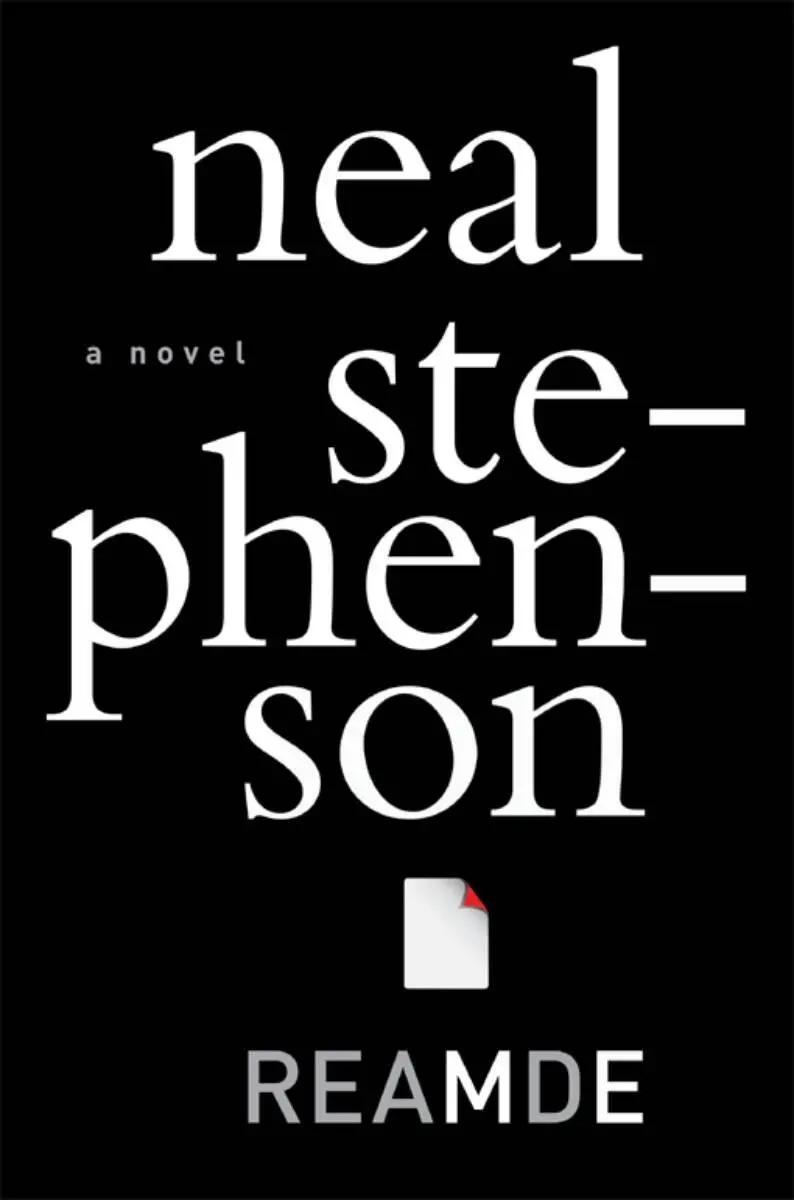
- Название:Reamde
- Автор:
- Издательство:William Morrow
- Жанр:
- Год:2011
- Город:New York
- ISBN:978-0-06-197796-1
- Рейтинг книги:4 / 5. Голосов: 1
-
Избранное:Добавить в избранное
- Отзывы:
-
Ваша оценка:
Reamde: краткое содержание, описание и аннотация
Предлагаем к чтению аннотацию, описание, краткое содержание или предисловие (зависит от того, что написал сам автор книги «Reamde»). Если вы не нашли необходимую информацию о книге — напишите в комментариях, мы постараемся отыскать её.
For Richard, the game was the perfect opportunity to launder his aging hundred dollar bills and begin his own high-tech start up—a venture that has morphed into a Fortune 500 computer gaming group, Corporation 9592, with its own super successful online role-playing game, T’Rain. But the line between fantasy and reality becomes dangerously blurred when a young gold farmer accidently triggers a virtual war for dominance—and Richard is caught at the center.
In this edgy, 21st century tale, Neal Stephenson, one of the most ambitious and prophetic writers of our time, returns to the terrain of his cyberpunk masterpieces
and
, leading readers through the looking glass and into the dark heart of imagination.
Reamde — читать онлайн бесплатно полную книгу (весь текст) целиком
Ниже представлен текст книги, разбитый по страницам. Система сохранения места последней прочитанной страницы, позволяет с удобством читать онлайн бесплатно книгу «Reamde», без необходимости каждый раз заново искать на чём Вы остановились. Поставьте закладку, и сможете в любой момент перейти на страницу, на которой закончили чтение.
Интервал:
Закладка:
When the men had come in to tie her up, one of them had knelt down in front of her, and she had stifled a gasp, thinking that he knew about the phone in her boot and that he was about to reach in there and snatch it out. She had crossed her ankles to hide it. But the man had paid no attention to the contents of her boots. Instead he had passed a rope behind her ankles and brought its ends around to the front and tied them in a knot above the phone, which meant that it was trapped in there. So securely that even being turned upside down had not shaken it loose.
After the terrible thing with the bucket, they dragged her back up to the galley. One of the crew members—the one who seemed responsible for most of the cooking—put a cup of tea in front of her. She was sick and quivering, coughing and raw chested, but basically undamaged, and so she picked up the cup, pressing it hard between both of her hands, which were shaking uncontrollably, and sipped. It was actually pretty good tea. Not as good as gaoshan cha but sharing some of the same medicinal properties, which were just what the doctor ordered for someone who had recently been upside down breathing seawater.
Until now, the main thing driving her actions had been concern for Zula. And she was still very concerned about Zula. But that emotion had now been forced out by something much more intense and immediate, which was a desire to see every man aboard this vessel dead. Not even a desire, so much as an absolute nonnegotiable requirement.
Her hands were not shaking with fear. This was rage.
After a few minutes, they moved her to a cabin: the same one, she guessed, where Zula had been held earlier. Which raised the question, What had they done with Zula?
They must be taking her into Xiamen for some reason. The whole purpose of the affair with the bucket had been to force Zula to run some errand for them.
She became so preoccupied by this that she failed to notice for a long time that the phone was buzzing against her ankle. Not just once, to announce a text, but over and over again in a steady rhythm.
She snatched it out in a panic, worried that it would go to voice mail before she could answer it. The number on the screen was hers; this was Marlon, calling her with her own phone.
“Wei?” she whispered.
In the background, she could hear a rhythmic squeaking noise.
“What is that sound?” she asked.
“Csongor rowing,” Marlon said.
DURING THE LONG run to Heartless Island, Marlon and Csongor had learned from direct observation what every waterman knew from experience, and what engineers knew from wave theory: that longer vessels inherently go faster than shorter ones. They had given the larger vessel something of a head start, since they didn’t want to follow it obviously. Not long after the beginning of the voyage, they had noticed that their quarry was pulling away from them, in spite of the fact that they were running the outboard at full throttle and felt as though its frail-seeming wooden hull would be smashed to pieces by the waves at any moment. The boat they were following did not appear to be running at high speed and yet it was gradually outdistancing them.
As they had slalomed around a few small islands along the way, they had been able to regain some lost ground by cutting straight across tidal shallows where the big boat had been obliged to swing wide. But by the time they’d hove in view of the crowded island that seemed to be their destination, the terrorists’ boat had become a nearly invisible dot, and it had required all of Csongor’s powers of concentration to maintain his focus on it and to prevent its getting lost against the background of countless other vessels.
But of course it had slowed down as it had neared its destination, and so Marlon and Csongor had finally been able to gain on it. The problem of tracking it had become slightly easier, and easier yet when it had elected to swing clear of most of the harbor’s clutter and tie up alongside a fishing vessel that stood aloof from the myriad others.
Csongor couldn’t be certain that he hadn’t become confused and lost it during those anxious minutes, so it had been with a slowly building sense of relief that he made out the damaged deck planks, the crushed pallets, and certain other identifying marks that he had memorized during the first few minutes of the chase.
Whereupon they had run out of gas and been forced to break out the oars.
Much of the remainder of the day had then been consumed with hugely important, yet infuriatingly trivial matters such as obtaining water and food. Without Csongor, Marlon would have found this easier, but still not easy. Easier because he would not have had to explain the presence of a large white man in the boat with him. But still not easy because it would have been obvious to the waterfront society of this little island that Marlon was by no stretch of the imagination a boat person. Had he shown up in a gleaming new white fiberglass runabout, they might have pegged him as a nouveau riche with a freshly acquired toy and taken little note of his obvious lack of nautical acumen. But instead he was in an old and, to put it charitably, well-broken-in working boat that had had no business making the run across open water from Xiamen in the first place. The easiest possible explanation for this combination of clues was that Marlon had stolen the boat from an honest Xiamen waterman and was now a fugitive from justice.
That had all been obvious, and so it had not seemed like a smart move to simply row the boat into the most crowded part of the harbor. Instead, although they had already been suffering from thirst and from a general feeling of being at the end of their ropes, they had taken turns rowing the boat in a wide arc around the island, looking for a less obvious place to put in. Along the way, they had swung past the fishing vessel to which the terrorists’ boat had been tied up, never coming closer than several hundred meters and trying not to stare directly at it. There had been nothing to see anyway. A couple of men had been visible through the windows on the bridge, and two more had been loafing on the main deck just aft of the superstructure, but beyond that there had been nothing to suggest that the vessel was occupied by anyone other than run-of-the-mill fishermen.
During their endless, creeping approach to this island, it had become obvious that it must have a sort of dog-bone shape, since there was a hill, covered with dark green vegetation, at each end, and the town spread across the saddle between. It was oriented roughly north-south and the terrorists’ boats were anchored toward the southern end of the harbor, where the rafts of conjoined fishing vessels petered out into grids of floating fish farms. As they crept southward, the town abruptly ceased to exist and was replaced by inhospitable terrain consisting of ancient, weathered brown sedimentary rock sloping up out of the water to be colonized by olive-drab succulents on the lower slopes and a scruffy mat of green-black tropical vegetation higher up. Csongor remarked on the fact, which to him seemed odd, that in China some places were unbelievably crowded and others were totally uninhabited but there was no in between. Marlon thought it curious that anyone should find this remarkable. If a place was going to be inhabited, then it should be used as intensively as possible, and if it was a wild place, all sane persons would avoid it.
Csongor guessed that the slope of the ground here was exactly wrong. It was gentle enough that dangerous rocky shallows extended a considerable distance from the tide line, making it a death trap for ships, and yet steep enough that, above the waterline, it was difficult to build on. And so even though they were moving at what seemed an agonizingly slow pace, they went, over the course of perhaps five minutes, from being in a place where ten thousand eyes could see them to a place where they were perfectly invisible. The strata of the bedrock, eroding at different rates, reached into the water with long bony fingers separated by deep shadowed clefts, and the hill rose above them, no man-made objects on the thing except for a radio tower at the summit.
Читать дальшеИнтервал:
Закладка:
Похожие книги на «Reamde»
Представляем Вашему вниманию похожие книги на «Reamde» списком для выбора. Мы отобрали схожую по названию и смыслу литературу в надежде предоставить читателям больше вариантов отыскать новые, интересные, ещё непрочитанные произведения.






Обсуждение, отзывы о книге «Reamde» и просто собственные мнения читателей. Оставьте ваши комментарии, напишите, что Вы думаете о произведении, его смысле или главных героях. Укажите что конкретно понравилось, а что нет, и почему Вы так считаете.