Neal Stephenson - Reamde
Здесь есть возможность читать онлайн «Neal Stephenson - Reamde» весь текст электронной книги совершенно бесплатно (целиком полную версию без сокращений). В некоторых случаях можно слушать аудио, скачать через торрент в формате fb2 и присутствует краткое содержание. Город: New York, Год выпуска: 2011, ISBN: 2011, Издательство: William Morrow, Жанр: Фантастика и фэнтези, thriller_techno, на английском языке. Описание произведения, (предисловие) а так же отзывы посетителей доступны на портале библиотеки ЛибКат.
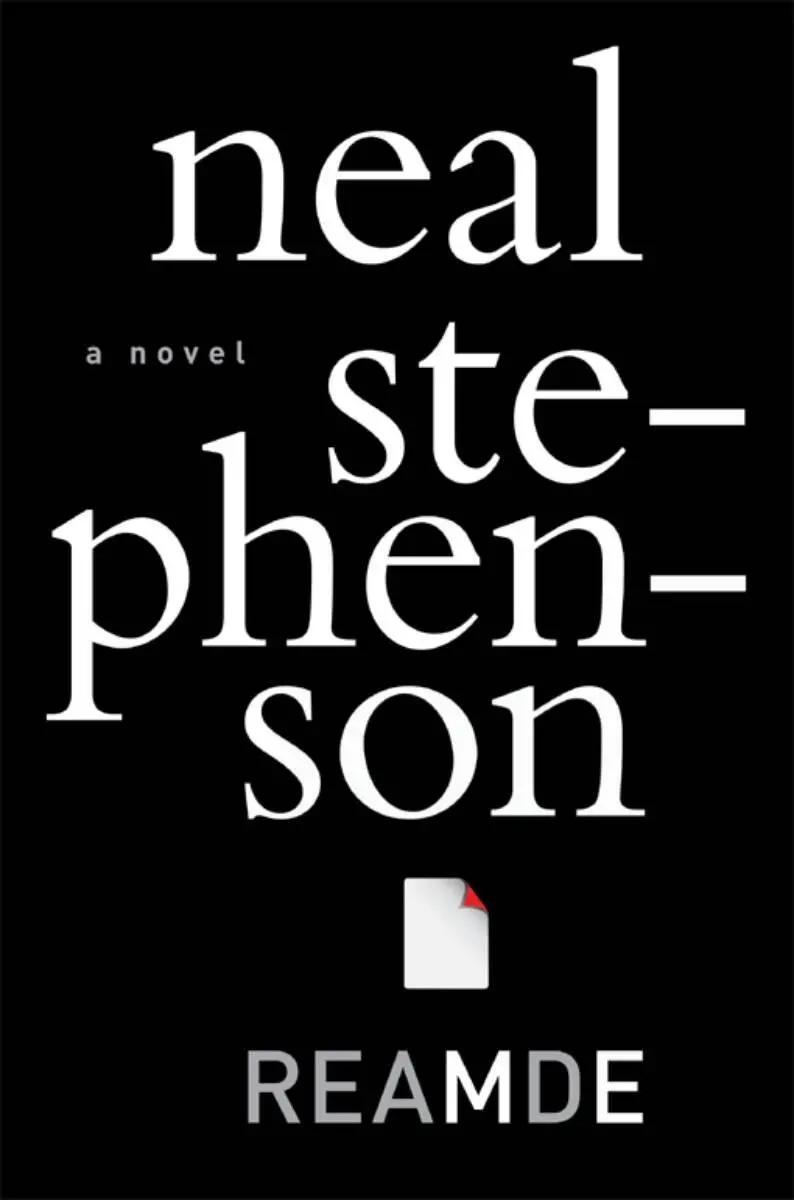
- Название:Reamde
- Автор:
- Издательство:William Morrow
- Жанр:
- Год:2011
- Город:New York
- ISBN:978-0-06-197796-1
- Рейтинг книги:4 / 5. Голосов: 1
-
Избранное:Добавить в избранное
- Отзывы:
-
Ваша оценка:
Reamde: краткое содержание, описание и аннотация
Предлагаем к чтению аннотацию, описание, краткое содержание или предисловие (зависит от того, что написал сам автор книги «Reamde»). Если вы не нашли необходимую информацию о книге — напишите в комментариях, мы постараемся отыскать её.
For Richard, the game was the perfect opportunity to launder his aging hundred dollar bills and begin his own high-tech start up—a venture that has morphed into a Fortune 500 computer gaming group, Corporation 9592, with its own super successful online role-playing game, T’Rain. But the line between fantasy and reality becomes dangerously blurred when a young gold farmer accidently triggers a virtual war for dominance—and Richard is caught at the center.
In this edgy, 21st century tale, Neal Stephenson, one of the most ambitious and prophetic writers of our time, returns to the terrain of his cyberpunk masterpieces
and
, leading readers through the looking glass and into the dark heart of imagination.
Reamde — читать онлайн бесплатно полную книгу (весь текст) целиком
Ниже представлен текст книги, разбитый по страницам. Система сохранения места последней прочитанной страницы, позволяет с удобством читать онлайн бесплатно книгу «Reamde», без необходимости каждый раз заново искать на чём Вы остановились. Поставьте закладку, и сможете в любой момент перейти на страницу, на которой закончили чтение.
Интервал:
Закладка:
Some kind of sorting process seemed to be under way. She had noticed that some of Jones’s men had more of a Middle Eastern look about them and preferred Arabic to whatever it was that the other, more Chinese-looking men spoke to each other. The latter were staying behind while the former took places on the smaller boat.
In a manner familiar to anyone who had ever packed a car for a family trip, genial confusion gave way to impatience, then furious ultimatums, then ill-advised snap decisions. Finally the lines were untied, and the smaller vessel began to move away.
Having apparently delegated Khalid to boss the skipper around and generally run the show, Jones disengaged himself from the main group and came over and sat down next to Zula. “Earlier,” he said, “I had been looking for some way of telling you that you’ve fallen in among men who are happy to stone young women to death as a penalty for wrong sorts of behavior.” And he nodded in the direction of Khalid’s crew, who had busied themselves sorting through and repacking all the gear they’d brought on board. “But you have probably guessed that already.” He turned and looked at her brightly. “Then I remembered something about Khalid. You know which one he is?”
“The one who’s glaring at me right now?”
Jones looked. “Yes. That one.” Then he turned his attention back to Zula. “When Khalid was fighting the Crusaders in Afghanistan—”
“Meaning what? Knights with red crosses on their shields?”
“The Americans, in this case,” Jones said. “He and his group were driven, for a time, out of a district that they had controlled for some years. The Americans occupied it and began to impose their culture on the place. Things changed. A school for girls was established.”
“Let me guess—Khalid didn’t approve?”
“Not at all. But there was nothing he could do except watch from the hills and bide his time. Of course, nothing prevented him and other members of his group from slipping into town occasionally, just to conduct espionage operations. They would disguise themselves—you’ll like this—by putting on burqas, so that people would think that they were women. Now, Khalid had a lot to think about beside just the girls’ school, but he did make inroads from time to time. Two men on a scooter, one driving, the other carrying a squeeze bottle full of acid. Wait until you see a group of girls walking down the street on their way to school, ride past them, aiming for the faces— squirt, squirt —” Jones pantomimed it, aiming an imaginary squirt bottle at Zula’s face, and she tried not to flinch. “It scared some of them off. And the poison gas attack very nearly closed the place down altogether. But the teacher was a tough lady. Indomitable. Irrepressible. The kind of woman you only aspire to be, Zula. And so, with plenty of help from the Americans, the school kept on going in spite of all of Khalid’s best efforts. But eventually the Americans decided, as they always do, that they had pacified the place quite enough and that they were tired of seeing their young men picked off one by one by snipers and IEDs. So they declared the job finished and they pulled out of that town. You know what Khalid did then?”
“Given the way you’re telling the story,” Zula said, “I have to guess that he closed down the girls’ school and had the teacher stoned to death or something.”
“It’s what he did before stoning her to death that’s especially interesting,” Jones said.
“And what was that?”
“He raped her.”
“Okay,” Zula said, “so what is the point of the story? That he’s not as much of a Muslim as he claims to be?”
“On the contrary,” Jones said, “he did it for the most Islamic of reasons. By his lights, anyway. I happen to disagree with him on a fine point of theology here.”
“You’re saying there’s a theological justification for what he did?”
“More like a theological motive, ” Jones said. “You see, by raping that schoolteacher, he made her into an adulteress. And you know what happens to an adulteress after she gets stoned to death?”
“She goes to hell?” Zula was trying to play this very cool, but her voice cracked.
“Precisely. So, in Khalid’s mind, he wasn’t merely killing the schoolteacher—he was doing it in a way that condemned her to—”
“I know what hell is.”
“I am merely trying to impress on you the danger of being in the power of people like Khalid.”
“I reckoned,” she grunted.
“You may have reckoned, but now you have gone beyond mere reckoning . Now you feel it so that it will guide your actions.”
“Guide, or control?”
“That’s a Western distinction. Anyway. They have now got what they wanted from you: blubbering hysteria. Nicely played. For me, its patent fakeness almost made it more moving.”
“Thanks.”
“I, on the other hand, Westerner that I am, need something that is a little more intellectual.”
“Namely?”
“ Islam, ” he said, “submission.”
“You want me to submit.”
“That bit of cleverness in the cellar this morning,” he said. “Sending Sokolov to the wrong apartment. It cost me a lot.”
“How do you think I feel right now?”
“Not as bad as you deserve.”
She had known men like this, lurking at the outer branches of the family tree. Men who seemed to attend the re-u for the sole purpose of making the small children feel bad about themselves. Fortunately Uncle John and Uncle Richard had always been around to keep them at bay.
Her uncles were not, of course, here.
She was getting tired of this. “I submit,” she said.
“No more plucky stuff?”
“No more plucky stuff.”
“No more clever plans?”
“No more clever plans.”
“Perfect and total obedience?”
This one was harder. But really not that hard, when she thought of Yuxia and the bucket. “Perfect. And total. Obedience.”
“Well chosen.”
WHEN THEY HAD turned Yuxia upside down, her greatest fear had not been being stuck headfirst into a bucket of water—for she sensed, somehow, that this was nothing more than a demonstration—but that the phone would fall out of her boot.
She had been wondering if these men had ever seen a movie. Because in the movies, prisoners were always being frisked to make sure that they didn’t have anything on them. But no such treatment had been meted out to Qian Yuxia. Perhaps it was because they were Islamists and had a taboo against touching women. Perhaps it was because she was female, therefore deemed harmless. Or maybe it was because she was wearing a snug-fitting pair of jeans and an equally snug sleeveless T-shirt, making it obvious that she was not carrying anything. Whatever the reason, they had never bothered to inspect her for contraband; they had merely taken her into a large cabin on the main deck and handcuffed her to the leg of a table. The cabin was a busy place, serving as the galley and the mess for the ship’s crew, and the table she had been chained to was the one where they took meals and drank tea. Someone was always in the place, and so she had not thought it advisable to pull the phone out of her boot and use it for anything. From time to time a buzz against her ankle would inform her that she, or rather Marlon, had just received another text message. If the place had been a little quieter, she’d have worried that someone might hear the buzz, but with the grumbling of the engines, the slap and whoosh of waves against the hull, the clanking and hissing of cookware, and bursts of static and conversation emerging from the radio’s speaker, she was safe from that. Zula had been put somewhere else, apparently in a separate cabin, and Yuxia had wondered: If their positions had been reversed, and Yuxia had been alone, what would she have done with the phone? The two basic choices being: communicate with Marlon, or call the police and tell them everything.
Читать дальшеИнтервал:
Закладка:
Похожие книги на «Reamde»
Представляем Вашему вниманию похожие книги на «Reamde» списком для выбора. Мы отобрали схожую по названию и смыслу литературу в надежде предоставить читателям больше вариантов отыскать новые, интересные, ещё непрочитанные произведения.





Обсуждение, отзывы о книге «Reamde» и просто собственные мнения читателей. Оставьте ваши комментарии, напишите, что Вы думаете о произведении, его смысле или главных героях. Укажите что конкретно понравилось, а что нет, и почему Вы так считаете.