Neal Stephenson - Reamde
Здесь есть возможность читать онлайн «Neal Stephenson - Reamde» весь текст электронной книги совершенно бесплатно (целиком полную версию без сокращений). В некоторых случаях можно слушать аудио, скачать через торрент в формате fb2 и присутствует краткое содержание. Город: New York, Год выпуска: 2011, ISBN: 2011, Издательство: William Morrow, Жанр: Фантастика и фэнтези, thriller_techno, на английском языке. Описание произведения, (предисловие) а так же отзывы посетителей доступны на портале библиотеки ЛибКат.
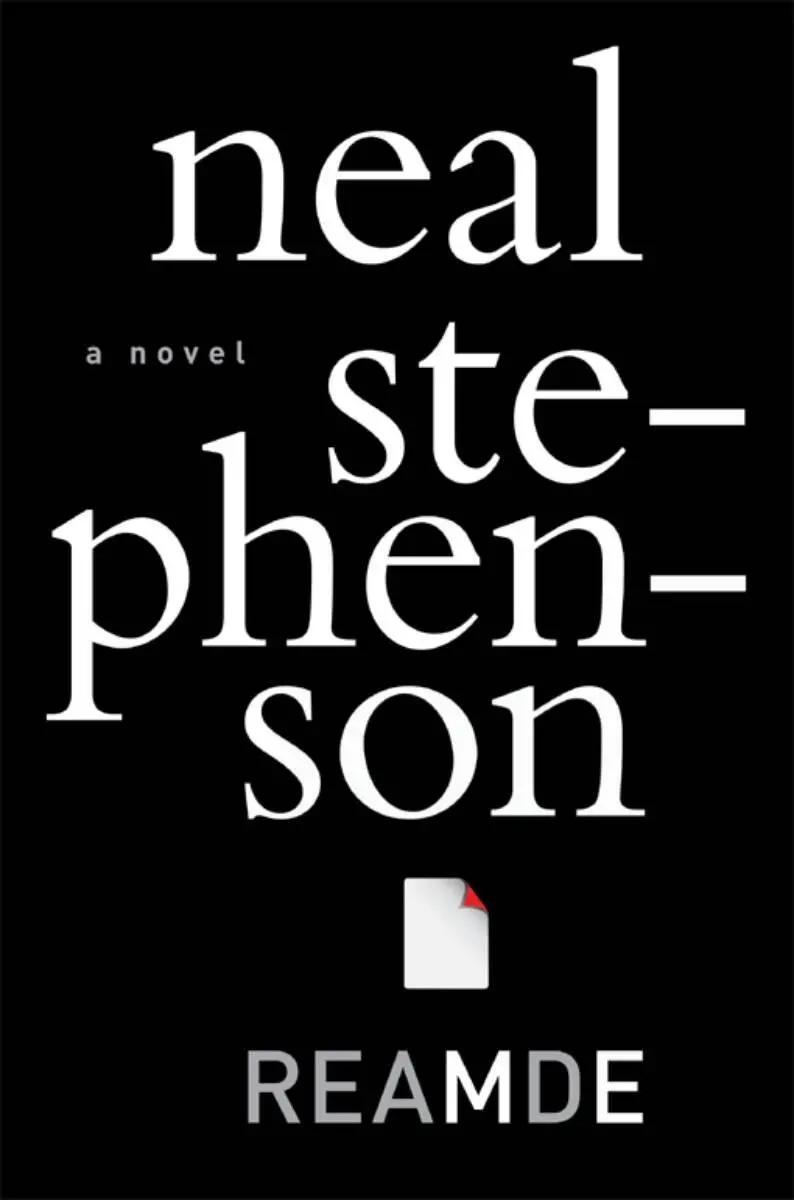
- Название:Reamde
- Автор:
- Издательство:William Morrow
- Жанр:
- Год:2011
- Город:New York
- ISBN:978-0-06-197796-1
- Рейтинг книги:4 / 5. Голосов: 1
-
Избранное:Добавить в избранное
- Отзывы:
-
Ваша оценка:
Reamde: краткое содержание, описание и аннотация
Предлагаем к чтению аннотацию, описание, краткое содержание или предисловие (зависит от того, что написал сам автор книги «Reamde»). Если вы не нашли необходимую информацию о книге — напишите в комментариях, мы постараемся отыскать её.
For Richard, the game was the perfect opportunity to launder his aging hundred dollar bills and begin his own high-tech start up—a venture that has morphed into a Fortune 500 computer gaming group, Corporation 9592, with its own super successful online role-playing game, T’Rain. But the line between fantasy and reality becomes dangerously blurred when a young gold farmer accidently triggers a virtual war for dominance—and Richard is caught at the center.
In this edgy, 21st century tale, Neal Stephenson, one of the most ambitious and prophetic writers of our time, returns to the terrain of his cyberpunk masterpieces
and
, leading readers through the looking glass and into the dark heart of imagination.
Reamde — читать онлайн бесплатно полную книгу (весь текст) целиком
Ниже представлен текст книги, разбитый по страницам. Система сохранения места последней прочитанной страницы, позволяет с удобством читать онлайн бесплатно книгу «Reamde», без необходимости каждый раз заново искать на чём Вы остановились. Поставьте закладку, и сможете в любой момент перейти на страницу, на которой закончили чтение.
Интервал:
Закладка:
Having thus secured them, he moved forward again and assisted the remainder of the crew—half a dozen men, all told—in shoving first the van and then the taxi off the side of the boat and into the water. The boat by now had crossed to the middle of the inlet and had laid in a direct course toward the great bridge that crossed over the channel by which it connected to the sea. Though most of the inlet was quite shallow, this part of it seemed to be a dredged ship channel. Both vehicles sank immediately and disappeared into murky water.
Above them, it seemed as though every police and emergency aid vehicle in the People’s Republic of China was screaming across the bridge, all headed in the same direction, and all ignoring them completely.
As the men busied themselves throwing the vehicles overboard, Yuxia felt a momentary buzzing sensation against her ankle. She reached into her boot, pulled out Marlon’s phone, and checked the screen. It was showing a text message: TURN OFF THE RINGER.
As she stared at it, a second message came in: RED BUTTON ON SIDE.
She flipped the phone over and found a tiny red button with a picture of a bell on it. She flicked it to the off position and then dropped the phone back into her boot.
CSONGOR OBSERVED THE departure of the boat from a squatting position in the shallow water beneath the pier. Only his head was above the water. He was peeking from behind an old piling. The rhythmic surge of the waves rocked his body to and fro. He had already learned that it was inadvisable to hug the piling for balance, since it was covered with barnacles that turned it into a sort of 3D saw blade, and the general effect of the waves was to rub him against it. Little wavelets fetched up against the gray-white carapaces of the barnacles and stained them pink, for blood was emerging in impressive volumes from the semifloating body of the man Csongor had shot a few moments ago.
His entire body was shaking uncontrollably, but not because he was immersed in water. Much had happened in the last few hours that went far beyond any of his past experiences, but the one that he couldn’t get out of his mind was that he had put a gun to a man’s head and pulled the trigger. Somehow this was far more upsetting than having been shot at. And actually having shot and killed this other fellow had made curiously little impression on him, though he reckoned it would come back to occupy his nightmares later.
His jittery reaction was not doing him any favors now. He was simply watching, from a few meters away, as a band of terrorists ran off with someone he cared about. And yet no amount of thinking could make the situation any better. He had already tried a frontal assault. Only Zula’s quick thinking—how did she know so much about guns!?—had saved him. The advantage of surprise had been pissed away. The only action he could take now was to wade in closer and start blasting away with the Makarov. But they would be waiting for that; and from this distance, with shaking hands, he was as likely to hit Zula or Yuxia as he was to hit one of the terrorists. He had heard the tall black man speaking about the suicide bomber, and he had watched with his own eyes as the cops in the two squad cars had listened to orders on their radios, turned around, and raced away to more important duties. So even if he had been willing to simply summon the police and hand himself over to the law, he would not have been able to get their attention.
The exchange of gunfire on the top of the pier had, of course, been witnessed by everyone in the neighborhood, and so all other small craft had darted into shore and the inlet had gone perfectly still except for the churning wake of the terrorists’ boat, laboring out toward the open sea, listing and wallowing under the weight of two wrecked vehicles. The shoreline itself was deserted.
The only exception was a small open motorboat that buzzed out from a slip a few hundred meters away and turned to run parallel to shore, headed for the pier where Csongor had been hiding. The noise of its outboard motor quavered up and down like a tone-deaf person trying to carry a tune, and it took a somewhat meandering course at first. But its pilot—a tall slender fellow in a douli, or the traditional cone-shaped hat of the Chinese workingman—seemed to be a quick learner. He gained confidence as he went along, and as he drew up alongside the pier he nudged the big hat back on his head to reveal his face: it was Marlon.
Csongor stood up and smiled, which, if you thought about it, was a perfectly idiotic thing to do under the circumstances. Marlon grinned back. Then the grin went away as he realized that he was headed for the muddy shore with no way to stop himself and not enough room to turn around.
Csongor stepped out in front of the boat, leaned forward, and put his hands against its bow, which was covered with scraps of bald tires. Its momentum forced him to back up a few steps, but very soon he brought it to a stop and then swiveled it around so that it was pointing outward again. It was made of wood, perhaps four meters long, more elongated than a rowboat, yet not quite as slender as a canoe. Its most recent paint job had been red, but the one before that had been yellow, and in its earlier history it had been blue. Made to carry things, rather than people, it was not abundantly supplied with benches: there was one in the stern for the operator of the outboard motor, and one at the prow, more of a shelf than a seat.
Ivanov’s man-purse was strapped diagonally across Csongor’s shoulder. The whole time he had been squatting beneath the pier, it had floated next to him, gradually sinking as it took on water. He peeled it off over his head and threw it into the boat, then got his hands on its gunwale, flexed his knees, jumped, and vaulted in, pitching forward headfirst, praying the little craft wouldn’t simply capsize. It seemed excitingly close to doing exactly that but righted itself. Marlon gave it some throttle, and it groaned out along the pier and into the open water of the inlet. “Get down,” he suggested. Csongor slid off the vessel’s front seat and into the dirty water slopping around in the bottom of the hull. He still felt ridiculously exposed. But when he peered forward over the bow, he noted that he could no longer see the terrorists’ boat, which meant that they could not see him. And that was all that mattered. If they looked back, all they would see was a skiff being piloted by a man in a very common style of hat. No large armed Hungarians would be visible unless Marlon drew very close to them, which seemed unlikely.
“Did you buy this, or steal it?” Csongor asked, in a tone of voice making it clear that he didn’t actually care.
“I think I bought it,” Marlon said. He was piloting with one hand and texting with the other. “The owner didn’t speak much putonghua .”
Csongor was familiarizing himself with some random stuff in the bottom of the boat that its ex-owner had not had the presence of mind to remove during what must have been an extraordinarily hasty and poorly-thought-out transaction. There was a blue umbrella, battered to the point where it could no longer fold up. Experimenting with this, he found that he could get it mostly open and use it to shade his stubbled head from the direct light of the sun. Two oars served as backup propulsion. A plastic container of the type used in the West to contain yogurt served as a bailing device. Csongor, having nothing else to do, went to work bailing. He was thirsty. He looked around and noted that Marlon hadn’t had time to procure drinking water.
AFTER THEY HAD put about half a mile of distance between themselves and the Xiamen shore, Jones knelt down and opened both halves of the handcuffs. A box of first aid supplies was produced from somewhere. Most of its contents were claimed immediately by Jones, who, with help from a member of the crew, pressed a stack of sterile pads against the side of his head and then turbaned it into place with a roll of gauze. With what remained, Yuxia went to work on Zula’s pinky. Zula had become used to keeping this balled up and pressed to her stomach, and so peeling it away from her belly and straightening the finger was a painful and bloody undertaking. It hurt and bled all out of proportion to the actual seriousness of the wound. Yuxia poured water onto it from a bottle, washing away the blood that had gone all dry and sticky. The nail wasn’t quite ready to come off and so they left it on. Then they wrapped gauze around it until her pinky had become a clumsy white baseball bat of a thing.
Читать дальшеИнтервал:
Закладка:
Похожие книги на «Reamde»
Представляем Вашему вниманию похожие книги на «Reamde» списком для выбора. Мы отобрали схожую по названию и смыслу литературу в надежде предоставить читателям больше вариантов отыскать новые, интересные, ещё непрочитанные произведения.





Обсуждение, отзывы о книге «Reamde» и просто собственные мнения читателей. Оставьте ваши комментарии, напишите, что Вы думаете о произведении, его смысле или главных героях. Укажите что конкретно понравилось, а что нет, и почему Вы так считаете.