Neal Stephenson - Reamde
Здесь есть возможность читать онлайн «Neal Stephenson - Reamde» весь текст электронной книги совершенно бесплатно (целиком полную версию без сокращений). В некоторых случаях можно слушать аудио, скачать через торрент в формате fb2 и присутствует краткое содержание. Город: New York, Год выпуска: 2011, ISBN: 2011, Издательство: William Morrow, Жанр: Фантастика и фэнтези, thriller_techno, на английском языке. Описание произведения, (предисловие) а так же отзывы посетителей доступны на портале библиотеки ЛибКат.
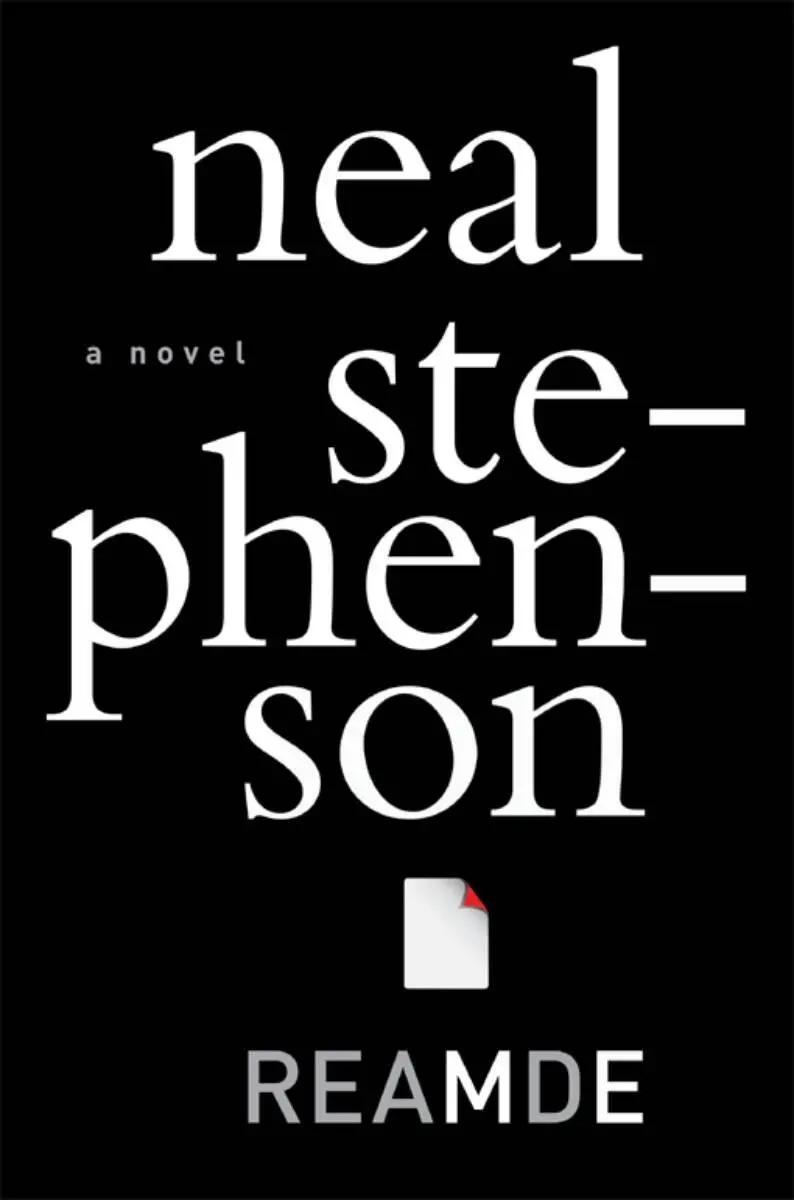
- Название:Reamde
- Автор:
- Издательство:William Morrow
- Жанр:
- Год:2011
- Город:New York
- ISBN:978-0-06-197796-1
- Рейтинг книги:4 / 5. Голосов: 1
-
Избранное:Добавить в избранное
- Отзывы:
-
Ваша оценка:
Reamde: краткое содержание, описание и аннотация
Предлагаем к чтению аннотацию, описание, краткое содержание или предисловие (зависит от того, что написал сам автор книги «Reamde»). Если вы не нашли необходимую информацию о книге — напишите в комментариях, мы постараемся отыскать её.
For Richard, the game was the perfect opportunity to launder his aging hundred dollar bills and begin his own high-tech start up—a venture that has morphed into a Fortune 500 computer gaming group, Corporation 9592, with its own super successful online role-playing game, T’Rain. But the line between fantasy and reality becomes dangerously blurred when a young gold farmer accidently triggers a virtual war for dominance—and Richard is caught at the center.
In this edgy, 21st century tale, Neal Stephenson, one of the most ambitious and prophetic writers of our time, returns to the terrain of his cyberpunk masterpieces
and
, leading readers through the looking glass and into the dark heart of imagination.
Reamde — читать онлайн бесплатно полную книгу (весь текст) целиком
Ниже представлен текст книги, разбитый по страницам. Система сохранения места последней прочитанной страницы, позволяет с удобством читать онлайн бесплатно книгу «Reamde», без необходимости каждый раз заново искать на чём Вы остановились. Поставьте закладку, и сможете в любой момент перейти на страницу, на которой закончили чтение.
Интервал:
Закладка:
A series of booms sounded from below, and the man quietly toppled over the edge and disappeared.
“Polar bears and seals,” Jones remarked. He reached up with his cuffed hand, collapsing Zula’s arm, and grabbed her hair, which was frizzed out and eminently grabbable. He wrenched her head around with a violent sweeping movement of the arm and slammed her face into the pier, then rolled over on top of her, pinning her full-length to the deck with his body on top of hers. “I’m not shielding you, by the way,” he explained, “you’re shielding me. You know how polar bears hunt?”
“From below?”
“Very good. It’s so nice having an educated person around. Your man Csongor can see up, just barely, through the cracks between the planks. He knew exactly where my man was.”
The other gunman seemed to have arrived at the same realization and was now moving around nervously, edging toward the end of the pier where the boat was waiting and the water was deeper.
The sirens were getting very close. Jones propped himself up on his elbows, taking some of his considerable weight off Zula, and gazed curiously down the pier, then, for some reason, checked his watch. Blood dribbled from the wound on the side of his head and spattered the side of her face. She turned away from it and let it drain down the side of her neck. Her pinky was starting to throb. She glanced at it and saw the nail ripped out at the base, hanging on by a few shreds of cuticle, and blood coursing out.
The pier jerked beneath them. A few moments later, a massive thud sounded from somewhere. It wasn’t especially loud, but one had the impression it had traveled from an event, far away, that had been very loud indeed.
Zula couldn’t see what the cop cars were doing, but she knew that they were close, no more than a couple of hundred feet away. There were two of them. One, then the other, turned off its siren.
Then nothing happened for half a minute. Jones just watched, fascinated, and checked his watch again.
Then the sirens came back on again, and the cars went into motion. Their frequency Dopplered down, and their volume began to diminish.
The cops were driving away from them at high speed.
“Mere anarchy is loosed upon the world,” said Jones, switching into a posh accent. He looked down at her, as if suddenly surprised to find her underneath him. “That bang was the sound of a very brave man martyring himself. Somewhere near the conference center. It seems to have drawn the cops’ attention. Which was the whole idea, of course. We have had to do rather a lot of improvising today. Speaking of which, you and I are now going to execute a very nonimprovised long walk off a short pier. If you work with me and come along nicely, I shall permit you to keep your teeth.”
JEREMY JEONG DOUBLE-BOLTED his door, which Sokolov approved of. One could not be too careful. Then he stripped off his gym togs and entered the bathroom and turned on the shower.
Sokolov rolled out from under the bed, stripped naked, and stuffed what was left of his clothes into a hotel laundry bag that he found clipped to a hanger. He dropped the CamelBak into the same and then rolled it up into a neat bundle. Having already marked the locations of the clothes he wanted, he was able to find and put on underwear, socks, shirt, and a business suit in less time than it would take Jeremy to shampoo his hair. He stuffed a necktie into his pocket and shoved his feet into a pair of shoes—a bit tight, but tolerable—and then slipped out the door, letting it close softly behind him. He took the elevator down to a mezzanine level, went into a men’s room, entered a stall, sat on a toilet, and put on the necktie, then tied his shoes. From the CamelBak he retrieved the little notebook where he had written the address of the spy woman. He exited the stall and checked his appearance in the mirror. The tie was a little askew, so he fixed it. Then he took the elevator to the lobby and approached the concierge, smiling helplessly.
“Sorry, English not so good.”
The concierge, a dazzling woman of about thirty, tried a few other Western languages on him, and they decided to stick with English.
“There is nice Chinese lady here. Extremely helpful to my company. I wish to say thanks. When I get back to Ukraine, I send her nice present, you understand?”
The concierge understood.
“Is to be surprise. Nice surprise.”
The concierge nodded.
“Here is address of woman. I try to write down correctly. Not good at writing Chinese as you can see. I think this is it.”
The woman’s eyes scanned the rudely fashioned characters, passing easily over some of them, snagging on others. Once or twice she allowed her flawless brow to wrinkle just a little. But in the end she nodded and beamed. “This is an address on Gulangyu Island,” she said.
“Yes. The little island just over there.” Sokolov waved toward the waterfront. “Problem is, when I get back to Ukraine, I cannot write woman’s address in Chinese on FedEx document. Need to have it in English. So my question for you is, can you please translate this address into English words for FedEx?”
“Of course!” said the concierge, delighted to be part of sending a lovely surprise gift to a nice Chinese lady. “It will be just a moment.”
And now a minute or two of moderate anxiety as Sokolov watched her write out the words on a hotel notepad, while handling two interruptions. He thought it very likely that Jeremy Jeong would not even notice that one of his suits was missing (he had three of them) for hours; and even then it would seem so bizarre that he would hesitate to mention it. But there was always the possibility that he was hypervigilant and prone to summoning the law at the slightest pretext, in which case Sokolov really needed to be out of here.
The concierge gave him another smile and slid the paper across the counter to him. Sokolov accepted it with profuse thanks, walked out the door, climbed into a taxi, and took it to another Western business hotel half a mile up the road. There, he availed himself of a free computer in the lobby, where he typed the spy’s English address into Google Maps.
This yielded a close-up view of an irregular street pattern, which told him nothing, so he zoomed out until he could see the whole island. He checked the scale and verified his general impression that Gulangyu was no more than a couple of kilometers in breadth. He tried to get a sense of its layout, its cardinal directions: basically, how to get to and from the ferry terminal even if he were lost. Then he turned on the satellite imagery. From this a few things were obvious. First of all, its transportation system was much more finely meshed than was hinted by the street plan, which only depicted perhaps 10 percent of the roads and rights-of-way. Or perhaps those were not roads, but alleys and walkways, private footpaths among the buildings. Second, the buildings were all roofed in tasteful earthtones, contrasting with the garish tile and sheet metal that tended to protect Xiamen’s buildings from the rain. Third, there was a lot of greenery. Fourth, the place names tended to be schools, academies, colleges, and the like; and the presence of large oval running tracks and so on suggested that they were rather nice schools.
To paraphrase Tolstoy, all rich places were alike, but each poor place was poor in its own way. The slums of Lagos, Belfast, Port-au-Prince, and Los Angeles each would have presented a completely different and bewildering panoply of risks. But just from looking at this map, Sokolov knew that he could go to Gulangyu and walk its streets and make his way in the place just as well as he could in a parky suburb of Toronto or London.
He did not want to arouse undue attention by printing it out, so he sketched a rudimentary map onto the back of the note he had received from the concierge and spent a while examining the satellite view of the building in question, getting a rough idea as to its layout and the general shape of its grounds. He noted that there was a hotel nearby, standing on considerably higher ground. Its website informed him that it had a terrace where drinks were served in the afternoons.
Читать дальшеИнтервал:
Закладка:
Похожие книги на «Reamde»
Представляем Вашему вниманию похожие книги на «Reamde» списком для выбора. Мы отобрали схожую по названию и смыслу литературу в надежде предоставить читателям больше вариантов отыскать новые, интересные, ещё непрочитанные произведения.





Обсуждение, отзывы о книге «Reamde» и просто собственные мнения читателей. Оставьте ваши комментарии, напишите, что Вы думаете о произведении, его смысле или главных героях. Укажите что конкретно понравилось, а что нет, и почему Вы так считаете.