Ted Kosmatka - Prophet of Bones
Здесь есть возможность читать онлайн «Ted Kosmatka - Prophet of Bones» весь текст электронной книги совершенно бесплатно (целиком полную версию без сокращений). В некоторых случаях можно слушать аудио, скачать через торрент в формате fb2 и присутствует краткое содержание. Город: New York, Год выпуска: 2013, ISBN: 2013, Издательство: Henry Holt and Company, Жанр: Фантастика и фэнтези, Триллер, на английском языке. Описание произведения, (предисловие) а так же отзывы посетителей доступны на портале библиотеки ЛибКат.
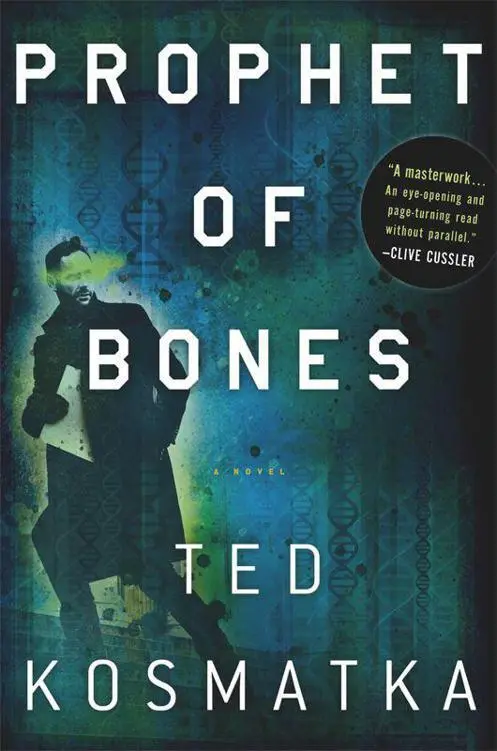
- Название:Prophet of Bones
- Автор:
- Издательство:Henry Holt and Company
- Жанр:
- Год:2013
- Город:New York
- ISBN:9780805096187
- Рейтинг книги:3 / 5. Голосов: 1
-
Избранное:Добавить в избранное
- Отзывы:
-
Ваша оценка:
Prophet of Bones: краткое содержание, описание и аннотация
Предлагаем к чтению аннотацию, описание, краткое содержание или предисловие (зависит от того, что написал сам автор книги «Prophet of Bones»). Если вы не нашли необходимую информацию о книге — напишите в комментариях, мы постараемся отыскать её.
Paul flees with two of his friends, yet within days one has vanished and the other is murdered in an attack that costs Paul an eye, and very nearly his life. Back in America, Paul tries to resume the comfortable life he left behind, but he can’t cast the questions raised by the dig from his mind. Paul begins to piece together a puzzle which seems to threaten the very fabric of society, but world’s governments and Martial Johnston, the eccentric billionaire who financed Paul’s dig, will stop at nothing to silence him.
Prophet of Bones — читать онлайн бесплатно полную книгу (весь текст) целиком
Ниже представлен текст книги, разбитый по страницам. Система сохранения места последней прочитанной страницы, позволяет с удобством читать онлайн бесплатно книгу «Prophet of Bones», без необходимости каждый раз заново искать на чём Вы остановились. Поставьте закладку, и сможете в любой момент перейти на страницу, на которой закончили чтение.
Интервал:
Закладка:
Paul saw now that it was a clawed foot that James held in his freckled hand. It was the size of a St. Bernard’s paw.
“That’s one big lizard.”
“Oh, no.” He shook his head emphatically. “This was just a juvenile. They get a lot bigger.”
“How big?”
“Big enough to worry about. Mother Nature is odd this side of the Wallace line.”
“So it would appear.”
“Not only are most of the species this side of the line not found anywhere else, a lot of them aren’t even vaguely related to anything else. It’s like God started from scratch to fill all the niches.”
James reared his arm back and flung the rotting paw into the jungle. “I’d save it for my collection, but I don’t have a way to preserve the tissue until we leave. Shame, really.”
“This a big collection of rotting lizard parts you have?”
“Oh, you have no idea.”
“How’d you get started in herpetology?”
“The bush, when I was a kid, was right out the back door. I was never any good at sports, so I used to play out there with my older brother, collecting lizards. It turned into a thing.” He shrugged. “That thing turned into this thing, and here I am.”
“Ah, so you have your brother to blame.”
“To thank, you mean. I have him to thank for this lucrative and highly fulfilling career path. Also, it’s a magnet for the ladies, in case you couldn’t guess.”
“A few days ago, McMaster mentioned a dwarf elephant.”
“Yeah, stegodons.”
“What happened to them?”
“They’ve been extinct for a long time now. This island was one of their last strongholds.”
“What killed them off?”
“Same thing that killed off a lot of the ancient fauna on the island. The classic case, a volcanic eruption. We found the ash layer just above the youngest bones.”
“Cataclysm,” Paul whispered.
Once, lying in bed with a woman, Paul had watched the moon through the window. The woman had traced his scars with her finger.
“Your father was brutal.”
“No,” Paul had said. “He was broken, that’s all.”
“There’s a difference?”
“Yeah.”
“What?”
“He was always sorry afterward.”
“That mattered?”
“Every single time.”
11
A: Incidences of local adaptation have occurred, sure. Populations adapt to changing conditions all the time.
Q: Through what process?
A: Differential reproductive success. Given genetic variability, it almost has to happen. It’s just math and genes. Fifty-eight hundred years is a long time.
Q: Can you give an example?
A: Most dogs would fall into this category, having been bred by man to suit his needs. While physically different from each other, when you study their genes, they’re all one species—though, admittedly, divided into several distinct clades.
Q: So you’re saying God created the original dog but man bred the different varieties?
A: You called it God, not me. And for the record, honey, God created the gray wolf. Man created dogs.
—Excerpted from the trial of the geneticist Mathew PooleIt came the next morning in the guise of police action. It came in shiny new Daihatsus with roll bars and off-road tires. It came with guns. Mostly, it came with guns.
Paul heard them before he saw them, men shouting in a language he couldn’t understand. He was with James at the cave’s entrance. When Paul saw the first assault rifle, he sprinted for the tents. He slid the DNA lozenges into a pouch in his belt and punched numbers on the sat phone. Gavin picked up on the second ring. “The police are here,” Paul said.
There was a pause on the other end of the line. “I just spoke to the officials today,” Gavin said. Outside the tents there were shouts—angry shouts. “They assured me that nothing like this would happen.”
“They lied.”
Behind him, James said, “This is bad.”
“Where are you?” Paul spoke into the phone.
“I’m still in Ruteng,” Gavin said.
“Then this will be over by the time you can get here.”
“Paul, it’s not safe for you th—”
Paul hung up. Tell me something I don’t know.
He took his knife from his sample kit and slit the back of the tent open. He slid through, James following close behind. They crouched in the mud. Paul saw Margaret standing uncertain at the edge of the jungle. She was frozen in place, watching the men with guns, caught somewhere between running into the camp and running away from it. Paul moved his hand, a subtle gesture to catch her attention. Their eyes met, and Paul motioned toward the jeeps.
She nodded.
They all ran for it.
A dozen yards across the mud, moving quickly. They climbed into a jeep and shut the doors. The soldiers—for that’s what Paul knew they were now—the soldiers didn’t notice them until Paul started the engine. Malay faces swung around, mouths open in shouts of outrage. A gun came up, more shouting, and the message was clear.
Here was the choice, to comply or not. It always came down to a choice.
“You’ll probably want your seat belts for this,” Paul said. Then he gunned it, spitting dirt.
“Don’t shoot, don’t shoot, don’t shoot,” James whispered softly in the backseat, eyes closed in prayer.
“What?” Paul said.
“If they shoot, they’re not police.”
A round smashed through the rear window and blew out a chunk of the front windshield, spidering the safety glass.
“Shit!” Margaret screamed.
A quick glance in the rearview, and Paul saw soldiers climbing into one of the Daihatsus. He yanked the wheel to the right.
“Not that way!” Margaret shouted. Paul ignored her and floored the accelerator.
Jungle whipped past, close enough to touch. Ruts threatened to buck them from the cratered roadway. The Daihatsu whipped into view behind them. Shots rang out, a sound like Chinese firecrackers, the ding of metal. The land sloped downward, and for a moment the road dropped away from jeep’s wheels, maxing out the suspension. The jeep landed and slid and bounced through the mud. Paul fought for control, spinning the wheel in the direction of the slide. The jeep fishtailed, and Paul spun the wheel in the other direction, gunning the engine. Mud sprayed the windows, and they accelerated through another deep rut, going airborne again.
James braced his hand against the roof of the jeep to keep from slamming his head. Margaret screamed in the passenger seat.
More shots rang out, but none struck the jeep. Their pursuers were having the same problem with the road. Still, Paul knew it was only a matter of time. There was no way they’d outrun them.
They rounded the bend, and the river came into view—wide and dumb as the sky itself. The road sloped down to the water’s edge. Paul hit the accelerator.
“We’re not going to make it across!” James shouted.
“We only need to get halfway.”
Another shot slammed into the back of the jeep—a loud crack, the sound of hammer on metal.
They hit the river in a slow-speed crash, water roaring up and over and through the broken windshield, pouring inside in a single muddy glut, soaking the interior of the jeep, the smell of muck overpowering.
Paul stomped his foot to the floor.
The jeep chugged, drifted, caught gravel. The wheels churned across stone. They got about halfway across before Paul yanked the steering wheel to the left. The world came unstuck and started to shift. The right front fender rose up, rocking with the current. The engine died. Sudden silence.
They were floating.
Paul looked back. The pursuing vehicle skidded to a halt at the shoreline and men jumped out. The jeep heaved, one wheel pivoting around a submerged rock.
Читать дальшеИнтервал:
Закладка:
Похожие книги на «Prophet of Bones»
Представляем Вашему вниманию похожие книги на «Prophet of Bones» списком для выбора. Мы отобрали схожую по названию и смыслу литературу в надежде предоставить читателям больше вариантов отыскать новые, интересные, ещё непрочитанные произведения.





Обсуждение, отзывы о книге «Prophet of Bones» и просто собственные мнения читателей. Оставьте ваши комментарии, напишите, что Вы думаете о произведении, его смысле или главных героях. Укажите что конкретно понравилось, а что нет, и почему Вы так считаете.