Elizabeth Hand - Winterlong
Здесь есть возможность читать онлайн «Elizabeth Hand - Winterlong» весь текст электронной книги совершенно бесплатно (целиком полную версию без сокращений). В некоторых случаях можно слушать аудио, скачать через торрент в формате fb2 и присутствует краткое содержание. Жанр: Фантастика и фэнтези, на английском языке. Описание произведения, (предисловие) а так же отзывы посетителей доступны на портале библиотеки ЛибКат.
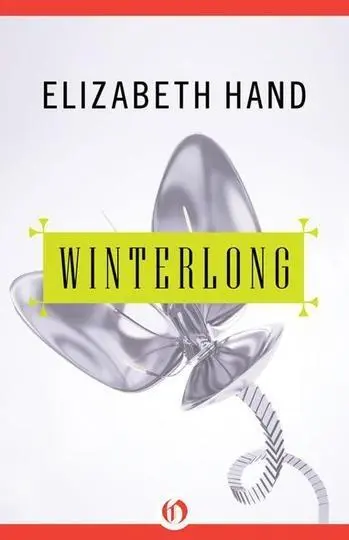
- Название:Winterlong
- Автор:
- Жанр:
- Год:неизвестен
- ISBN:нет данных
- Рейтинг книги:3 / 5. Голосов: 1
-
Избранное:Добавить в избранное
- Отзывы:
-
Ваша оценка:
Winterlong: краткое содержание, описание и аннотация
Предлагаем к чтению аннотацию, описание, краткое содержание или предисловие (зависит от того, что написал сам автор книги «Winterlong»). Если вы не нашли необходимую информацию о книге — напишите в комментариях, мы постараемся отыскать её.
Philip K Dick Award (nominee)
Winterlong — читать онлайн бесплатно полную книгу (весь текст) целиком
Ниже представлен текст книги, разбитый по страницам. Система сохранения места последней прочитанной страницы, позволяет с удобством читать онлайн бесплатно книгу «Winterlong», без необходимости каждый раз заново искать на чём Вы остановились. Поставьте закладку, и сможете в любой момент перейти на страницу, на которой закончили чтение.
Интервал:
Закладка:
I braced myself against the pine’s bole and stood, the breeze ruffling my hair. Its touch made me think of cold granite, stony earth; a pale face half-hidden by new green leaves. But I shook this melancholy from me and turned to face due west, to the river, and felt the last bit of sun slide down my cheeks.
Since I had entered it nearly two months ago it never failed to stir me, to see it thus. The City of Trees, the Senators’ abandoned capital, the forgotten City by the River. To go out upon the stage gave me great joy; but it was joy shot through with despair and feverish longing, as I felt myself buffeted by the waves of desire that my audiences tossed back upon me. I felt no triumph in my performances, as did Toby; took no ordinary pleasure as did Gitana and Fabian and the rest, with the surety of an evening spent in lovemaking afterward. And I could not be like Miss Scarlet and treat the theater as a temple, or a laboratory. She found acting a form of alchemy, a crucible in which to purify the raw lusts and loves and everyday fevers of humankind and then, having cooled them in the detachment of rehearsal, fortify herself onstage with this elixir of human memory.
No. The joy of the theater was for me the joy of longing, of yearning for that humanity which I could simulate but would never truly possess or understand. I did not yet understand that it is longing and loss, as much as anything else, that makes one truly human.
But to look like this upon the City of Trees was to understand something of men and women, of how they had lived once long ago, when the avenues were roads that stretched white and smooth and as yet unmarred by trees, and the Obelisk stood whole, and Senators ruled from atop Library Hill. It made me feel empty, somehow, and alone. But emptiness and solitude eased my heart like nothing else, they were so rare to me.
And so for a few minutes I felt as though the City belonged only to myself. That it was my secret, somehow, and my creation. As the Small Voices were mine; as were the memories of Emma and Aidan and the poet Morgan Yates and the courtesan Fancy Miramar. Small voices; random neural firings; stolen memories. But they were mine now, as I imagined this City was mine, to savor and horde and protect against the One who would steal them from me, the One who sought to drive me to despair and death as He had those others. I shook my head, then raised my fist to the dusky sky and laughed.
“You will not have me!” I cried aloud. But only the wind called back.
I thought then of an ancient poem Miss Scarlet recited sometimes when we traveled across the City to perform. She would gaze upon the ruins of Library Hill, its glory now dust and rubble beneath the greenery, and say, “The Ascendants may have abandoned the City, but the gods have not, and we have not. We hold her still, Wendy, people like you and me. We wait for the day when the Magdalene will wake again, and walk here as the lazars say the Gaping One does now. While we can still believe in Her and hope, the City is ours. They will never wrest Her from us again, not with inferno or rain or fear. ‘We are not to despair; we are not to despair.’”
Then she would recite, and afterward we would both be silent. Because it was the very ordinariness of this vision that we loved—
The dream of small lives no longer led. Of a light left burning upon a well-swept porch, and small machines clattering along the dusty avenues. The smells of scorched coffee and cheap wine hanging above a sordid little cafe. The thrum of trains moving beneath ancient avenues now enthralled by starving children and the relentless usurping trees.
I leaned back against the pine trunk. As the first star blinked in the pure and empty sky I recited softly.
“‘ … Even now, in this night
Among the ruins of the Post-Vergilian City
Where our past is a chaos of graves and the barbed-wire stretches ahead
Into our future till it is lost to sight,
Our grief is not Greek:
As we bury our dead
We know without knowing there is reason for what we bear,
That our hurt is not a desertion, that we are to pity
Neither ourselves nor our city;
Whoever the searchlights catch, whatever the loudspeakers blare,
We are not to despair.’”
Part Six: The Skeleton Transcendent

1. Catastrophes of different kinds
L AZARS WOKE ME FROM a black and dreamless sleep in the Hagioscopic Embrasure.
“It is him,” said a child’s voice. So vast was the void that had swallowed me I could not for some moments discern their figures moving about the room, although my eyes were open and gray dawn slanted from slits in the varicolored ceiling.
“Yes,” another voice lisped. “He killed Peter in the river last night. I saw him.”
“We must take him,” the first voice said, but doubtfully.
“Yes,” the other agreed, and fell into thoughtful silence.
They did not kill me, though I lay for many minutes waiting to feel their small knives in my throat, their teeth. I heard them stirring about the room, kicking at oddments that rolled across the floor, and imagined what broken toys they played with: Whitlock’s cosmetics, candicaine pipettes, a flask of absinthium emptied of its green liquor. I groped at my side for Whitlock’s body, felt nothing there. I whispered Anku’s name: nothing.
The voices sounded very young. Finally I could stand it no more. I sat up, blinking.
At the edge of the obfuscating oriels several figures squatted. One swept the floor with a cosmetic brush, drawing something in the powders and ointments spilled there. The others watched her with no great interest. Their voices were soft, curiously inert, as though nothing remained in the world to amuse or frighten them.
Surely not this empty chamber. Nopcsa’s corpse was gone, and Whitlock’s. Of Anku I saw nothing.
“Where is my familiar?” I asked.
Every head turned to stare. Then they raced to my side, giggling and shoving at one another. They gathered in a circle around me, grinning: all of them filthy, with stained hands and hair clotted with blood and dirt. They smelled of rotting meat.
“He’s awake! Where’s Dr. Silverthorn?” wondered a little girl of five or six. She had painted her cheeks with rouge and eye-powder and stuck her ratty hair with feathers. She turned to face a boy taller and older than the rest, maybe thirteen. “Oleander?”
I repeated, “Where is my familiar?—the white jackal.”
The oldest boy pushed the girl out of his way. Great open sores erupted everywhere on his arms and face. The rest of him was hidden by some dead Paphian’s costume, all sequined sighs and tears. “Your dog brought us here,” he said. “But he ran away. We didn’t hurt him, I swear.” He smiled, twitching at the sleeves of his costume so that sequins rained to the floor. “I’m Oleander.”
“And I’m Bellanca,” piped the little girl as she slipped beside him. Beneath a shift of torn indigo linen her swollen stomach bulged. What remained of her blond hair fell free of its confining ribbons, wispy feathers about sunken cheeks. She smiled. Then, to my horror, she raised three fingers to her blackened mouth. “Greetings, cousin,” she lisped sweetly.
My heart sank: more Paphian children.
“I thought that was your dog,” said another child smugly. I turned to recognize one of the lazars I had met by the Rocreek, a plain boy with intelligent eyes burning in a scarred face. He would have been a Curator. “A boy took him away—”
Читать дальшеИнтервал:
Закладка:
Похожие книги на «Winterlong»
Представляем Вашему вниманию похожие книги на «Winterlong» списком для выбора. Мы отобрали схожую по названию и смыслу литературу в надежде предоставить читателям больше вариантов отыскать новые, интересные, ещё непрочитанные произведения.






Обсуждение, отзывы о книге «Winterlong» и просто собственные мнения читателей. Оставьте ваши комментарии, напишите, что Вы думаете о произведении, его смысле или главных героях. Укажите что конкретно понравилось, а что нет, и почему Вы так считаете.