Frank Schätzing - Limit
Здесь есть возможность читать онлайн «Frank Schätzing - Limit» весь текст электронной книги совершенно бесплатно (целиком полную версию без сокращений). В некоторых случаях можно слушать аудио, скачать через торрент в формате fb2 и присутствует краткое содержание. Город: London, Год выпуска: 2013, ISBN: 2013, Издательство: Jo Fletcher Books, Жанр: Фантастика и фэнтези, на английском языке. Описание произведения, (предисловие) а так же отзывы посетителей доступны на портале библиотеки ЛибКат.
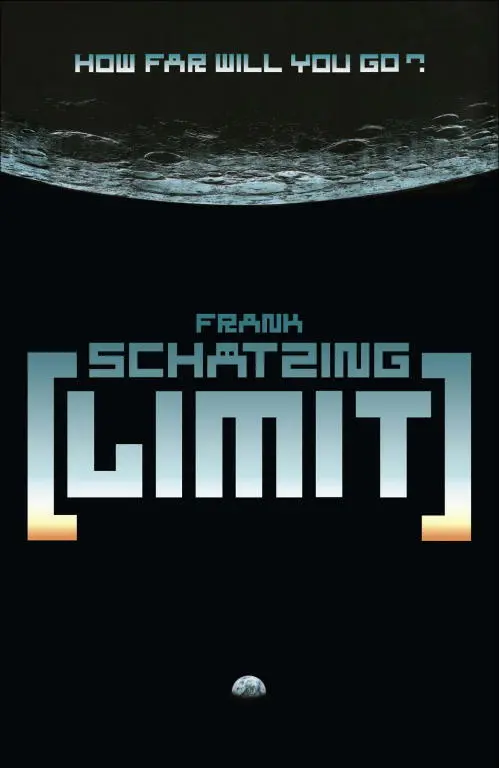
- Название:Limit
- Автор:
- Издательство:Jo Fletcher Books
- Жанр:
- Год:2013
- Город:London
- ISBN:9781849165150
- Рейтинг книги:4 / 5. Голосов: 1
-
Избранное:Добавить в избранное
- Отзывы:
-
Ваша оценка:
Limit: краткое содержание, описание и аннотация
Предлагаем к чтению аннотацию, описание, краткое содержание или предисловие (зависит от того, что написал сам автор книги «Limit»). Если вы не нашли необходимую информацию о книге — напишите в комментариях, мы постараемся отыскать её.
In 2025, entrepreneur Julian Orley opens the first-ever hotel on the moon. But Orley Enterprises deals in more than space tourism—it also operates the world’s only space elevator, which in addition to allowing the very wealthy to play tennis on the lunar surface connects Earth with the moon and enables the transportation of helium-3, the fuel of the future, back to the planet. Julian has invited twenty-one of the world’s richest and most powerful individuals to sample his brand-new lunar accommodation, hoping to secure the finances for a second elevator…
On Earth, meanwhile, cybercop Owen Jericho is sent to Shanghai to find a young female hacker known as Yoyo, who’s been on the run since acquiring access to information that someone seems quite determined to keep quiet. As Jericho closes in on the girl and the conspiracy swirling around her, he finds mounting evidence that connects her to Julian Orley as well as to the entrepreneur’s many competitors and enemies. Soon, the detective realizes that the lunar junket to Orley’s hotel is in real and immediate danger.
Limit — читать онлайн бесплатно полную книгу (весь текст) целиком
Ниже представлен текст книги, разбитый по страницам. Система сохранения места последней прочитанной страницы, позволяет с удобством читать онлайн бесплатно книгу «Limit», без необходимости каждый раз заново искать на чём Вы остановились. Поставьте закладку, и сможете в любой момент перейти на страницу, на которой закончили чтение.
Интервал:
Закладка:
In the best of moods, she followed Black.
Lunar Express
They boarded the train via an airlock and took off their helmets and suits. The air was kept at a constant pleasant temperature and the seats, as Rebecca Hsu said with a heartfelt sigh, were the right size to accommodate even an overweight traveller. The remark was addressed to Amber Orley, whom Evelyn had hardly talked to so far. Amber was friendly towards everyone though, and even Julian’s son turned out to be a sociable sort despite his initial reticence – if you could get past his air of leaden concern when it came to looking after his sister. She was visibly spoiling his mood, and Amber’s, and on top of all this she seemed to be putting a strain on Tim’s relationship with his father. None of this had escaped Evelyn’s attention. She reckoned that Lynn had been faking that attack of space sickness in the Picard. Something wasn’t right about her, and Evelyn was determined to find out what. Mukesh Nair had latched on to Tim and was letting him know how wonderful life was, so she sat down next to Amber.
‘Unless of course you’d rather sit next to your husband—’
‘No, no, that’s fine!’ Amber leaned closer. ‘We’re on the Moon, isn’t that just amazing?’
‘It’s mind-blowing!’ Evelyn agreed.
‘And then there’s the hotel,’ she said, rolling her eyes dramatically.
‘You know it then? So far they’ve made such a huge secret out of it. No pictures, no films—’
‘Now and again being in the family has its advantages. Lynn showed us the plans.’
‘I’m bursting with curiosity! Hey, look, we’re on our way.’
Imperceptibly, the train had started moving. Ethereal music floated through the cabin, light as a breath, languid, as though the orchestra were on drugs.
‘That’s so beautiful,’ said Eva Borelius, sitting behind Evelyn. ‘What is it?’
‘Aram Khachaturian,’ Rogachev answered. ‘Adagio for cello and strings, from the Gayaneh suite.’
‘Bravo, Oleg.’ Julian turned round. ‘Can you also tell us which recording?’
‘I believe it has to be the Leningrad Philharmonic, under Gennady Rozhdestvensky, isn’t it?’
‘My God, that’s connoisseurship.’ Borelius seemed stunned. ‘You really know your stuff.’
‘More than anything else, I know how fond our host is of one particular film,’ said Rogachev in an uncharacteristically cheerful tone. ‘Let’s just say I was well prepared.’
‘I had no idea that you were so interested in classical—’
‘No,’ muttered Olympiada quite audibly, ‘you wouldn’t think so to look at him.’
Here we go, thought Evelyn. This is getting better and better.
Lynn took up position in the aisle between the seats.
‘You may perhaps have noticed,’ she said, speaking into a small microphone, ‘that it’s always down to me to speak when we’re talking about the accommodation and facilities. First of all, everything that you see and do on this voyage is a premiere. You were the first guests in the Stellar Island Hotel, and you’ll be the first to set foot inside the Gaia. Obviously, you’re also the first to enjoy a ride on the Lunar Express, which will take less than two hours to transport us almost thirteen hundred kilometres to the hotel. The station we’ve just set out from actually functions more as a sort of shipping facility. Helium-3 is mined in the Mare Imbrium, to the northwest. The tanks are brought here by rail, then they’re loaded onto spaceships and brought to the OSS. The cargo line runs parallel with our rails for a while and then it turns off to the west a little before we reach our destination, so it’s entirely possible that we’ll meet a freight train on our way.’
Outside the windows they could see the landing field receding, with its blast walls rearing up around it. The maglev accelerated, drew out from the base along a long, curving downhill path and rushed towards the shadowed valley.
‘Our scheduled time of arrival at the hotel is 19.15, and there’s no need for you to bother about your luggage. The robots will take it up to your rooms, and meanwhile we’ll meet in the lobby, get to know the hotel crew, take a look around, and then you’ll have a chance afterwards to freshen up. Dinner will be a little later than usual today, at 20:30. After which I recommend you get some sleep. The journey was fairly strenuous, and you’ll be tired, besides which Neil Armstrong reported having slept exceptionally well on his first night on the Moon. So much for the full moon keeping you awake. Any more questions at the moment?’
‘Just one.’ Donoghue raised a hand. ‘Can we get a drink?’
‘Beer, wine, whisky,’ said Lynn, beaming. ‘All alcohol-free.’
‘I knew it.’
‘It’ll do you good,’ said Aileen happily, and patted his leg.
Donoghue growled something blasphemous, and as if in punishment, darkness swallowed them up. For a while they could still see the top of the crater walls bathed in harsh sunlight, and then these too were lost to view. Nina Hedegaard brought round some snacks. György Ligeti’s Requiem came over the speakers, just the right music for the pitch-black outside, and the downward slope steepened perceptibly while the Lunar Express picked up speed. Black explained that they were in a cleft between Peary and Hermite, then they shot out again into the sunlight, past jagged rock formations and towards a steep-sided hollow. It grew dark again while they passed through a smaller crater. Just a moment ago, Evelyn had been burning to winkle some secrets of family life from Amber, but now all she wanted to do was stare out in wonder at this untouched alien landscape, the archaic brutality of its cliff walls and mountain ridges, the velvet silence that lay over the dust-filled valleys and plains, the complete absence of colour. The cold sunlight fell on the edges of the impact craters, and time itself melted in its glare. Nobody felt like talking any more, and even Chucky stopped short in one of his jokes before the feeble punchline and stared out as though hypnotised. Outside, a blue-white glittering jewel lifted slowly above the horizon, gaining height with every kilometre they travelled south – their home, infinitely far away, and achingly beautiful.
Nina and Black chattered on, informative and enthusiastic. They mentioned the names of further craters, Byrd, Gioja, Main. The peaks dwindled away to hills, the chasms gave way to light-filled plains. After an hour, they reached a long rampart wall, Goldschmidt, its western edge bitten away by the jaws of Anaxagoras, and Nina told them that this was an especially recent impact. A few of them looked upwards, thinking that recent might mean just now, rather than a hundred million years ago, and then coughed or laughed nervously. They crossed Goldschmidt and sped across a desert landscape, this one a darker colour, and Julian stood up and congratulated them on crossing their first lunar sea, the Mare Frigoris.
‘And why do they call a dry old desert like this a sea?’ Miranda asked, saving her more educated fellow passengers the embarrassment of having to ask the same question.
‘Because, earlier, these dark basaltic plains were thought to be seas,’ said Julian. ‘The assumption was that the Moon had to be shaped in much the same way as the Earth was. As a result, people imagined that they could see seas, lakes, bays and swamps. What’s interesting here is how they got their names, for instance why this basin is called the Sea of Cold. There’s the Sea of Tranquillity of course, Mare Tranquillitatis, which has gone down in history thanks to Apollo 11, and by the way that’s why three tiny little craters near the landing site are called Armstrong, Aldrin and Collins, credit where it’s due. Then there’s a Sea of Serenity, a Sea of Happiness, a Sea of Clouds and another one of Rain, an Ocean of Storms, the Foaming Sea, the Sea of Waves and so on and so forth.’
Читать дальшеИнтервал:
Закладка:
Похожие книги на «Limit»
Представляем Вашему вниманию похожие книги на «Limit» списком для выбора. Мы отобрали схожую по названию и смыслу литературу в надежде предоставить читателям больше вариантов отыскать новые, интересные, ещё непрочитанные произведения.









Обсуждение, отзывы о книге «Limit» и просто собственные мнения читателей. Оставьте ваши комментарии, напишите, что Вы думаете о произведении, его смысле или главных героях. Укажите что конкретно понравилось, а что нет, и почему Вы так считаете.