Frank Schätzing - Limit
Здесь есть возможность читать онлайн «Frank Schätzing - Limit» весь текст электронной книги совершенно бесплатно (целиком полную версию без сокращений). В некоторых случаях можно слушать аудио, скачать через торрент в формате fb2 и присутствует краткое содержание. Город: London, Год выпуска: 2013, ISBN: 2013, Издательство: Jo Fletcher Books, Жанр: Фантастика и фэнтези, на английском языке. Описание произведения, (предисловие) а так же отзывы посетителей доступны на портале библиотеки ЛибКат.
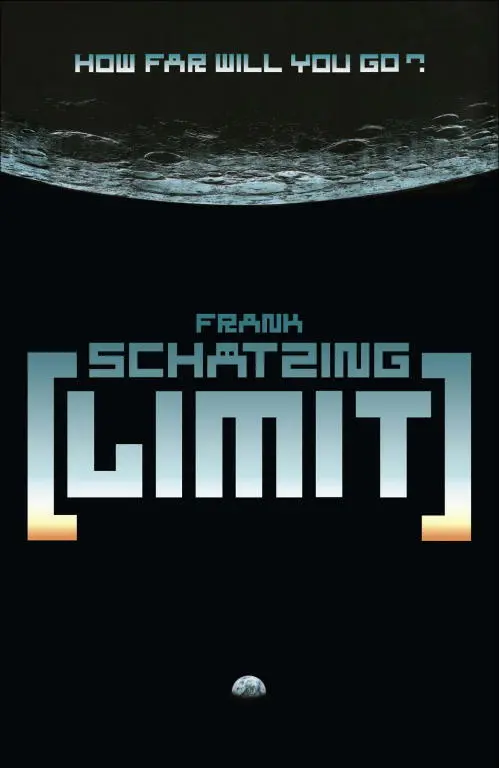
- Название:Limit
- Автор:
- Издательство:Jo Fletcher Books
- Жанр:
- Год:2013
- Город:London
- ISBN:9781849165150
- Рейтинг книги:4 / 5. Голосов: 1
-
Избранное:Добавить в избранное
- Отзывы:
-
Ваша оценка:
Limit: краткое содержание, описание и аннотация
Предлагаем к чтению аннотацию, описание, краткое содержание или предисловие (зависит от того, что написал сам автор книги «Limit»). Если вы не нашли необходимую информацию о книге — напишите в комментариях, мы постараемся отыскать её.
In 2025, entrepreneur Julian Orley opens the first-ever hotel on the moon. But Orley Enterprises deals in more than space tourism—it also operates the world’s only space elevator, which in addition to allowing the very wealthy to play tennis on the lunar surface connects Earth with the moon and enables the transportation of helium-3, the fuel of the future, back to the planet. Julian has invited twenty-one of the world’s richest and most powerful individuals to sample his brand-new lunar accommodation, hoping to secure the finances for a second elevator…
On Earth, meanwhile, cybercop Owen Jericho is sent to Shanghai to find a young female hacker known as Yoyo, who’s been on the run since acquiring access to information that someone seems quite determined to keep quiet. As Jericho closes in on the girl and the conspiracy swirling around her, he finds mounting evidence that connects her to Julian Orley as well as to the entrepreneur’s many competitors and enemies. Soon, the detective realizes that the lunar junket to Orley’s hotel is in real and immediate danger.
Limit — читать онлайн бесплатно полную книгу (весь текст) целиком
Ниже представлен текст книги, разбитый по страницам. Система сохранения места последней прочитанной страницы, позволяет с удобством читать онлайн бесплатно книгу «Limit», без необходимости каждый раз заново искать на чём Вы остановились. Поставьте закладку, и сможете в любой момент перейти на страницу, на которой закончили чтение.
Интервал:
Закладка:
Calgary, Alberta, Canada
On 21 April, Sid Bruford and two of his friends made a pilgrimage to an event in Calgary, where EMCO had proposed to outline a future that no longer existed. No one harboured any illusions that Gerald Palstein would announce anything other than the end of oil-sand mining in Alberta, which meant that all hopes were now focused on strategies for redevelopment, consolidation, or at the very least a social security plan. It was in hope of this that they were standing there, aside from the fact that it was only right and proper to be present at your own burial.
The plaza, a square park in front of the company headquarters, was filling slowly but steadily with people. As if mocking their misery, a bright yellow sun shone down on the crowd from a steel blue sky, creating a climate of new beginnings and confidence. Bruford, unwilling to abandon himself to the general bitterness, had decided to make the best of the situation. It was part of the dance of death to make fatalism look like self-confidence, to stock up on the required quota of beer and to avoid violence wherever possible. They talked about baseball for a while and stayed towards the back of the crowd, where the air was less saturated with sweat. Bruford held up his mobile and circled, trying to capture the atmosphere around them. Two pleasingly scantily clad girls came into sight, noticed him, and then started to pose, giggling. A complex of empty buildings stretched out behind them, the headquarters of a now-bankrupt firm for drilling technology, if he remembered rightly. The girls liked him – that was as sure a bet as the closure of Imperial Oil. He had handsome, almost Italian-looking features, and the sculpture of his body was his incentive for wearing little more than shorts and a muscle shirt, even in frosty temperatures. He lingered on them with the phone’s camera and laughed. The girls teased. After a few minutes he turned back to his friends for a second, then when he looked round at the girls again, he realised that they were now filming him. Flattered, he began to play the fool, pulling faces, swaggering around, and even his friends felt encouraged to join in. None of them was behaving particularly maturely, or like people who had just had their sole source of income taken from them. The girls began, amidst fits of laughter, to enact scenes from Hollywood films, prompting the boys to respond to their pantomime repertoire, calling out the solutions to one another boisterously. The day was shaping up to be more fun than expected. Besides, whenever Bruford examined his reflection in the mirror he always thought he would be better placed in the film industry than the Cold Lake open-cast mine. Perhaps he would even be grateful to EMCO one day. His mood soared up to the April sun on the wings of Icarus, with the result that he almost missed the small, bald-headed oil manager climbing up onto the platform.
Someone tapped him on the shoulder. It was time. Bruford turned his head just in time to see Palstein stumble. The man steadied himself, wobbled and then collapsed. Security personnel rushed past, forming a wall against the chanting crowd. Bruford craned his neck. Was it a heart attack, a circulatory collapse, a stroke? He pushed forwards, holding his mobile up above the heads of the agitated crowd. It was an assassination attempt, it was obvious! Hadn’t people seen enough of that kind of thing in films! The stumble, a mishap. But something had jerked the manager around before he had fallen to the floor. A shot, what else? Someone must have shot at Palstein – that had to be it!
What Bruford didn’t know was that twenty minutes before the incident, while he was filming the girls, one of the security cameras had captured him for just a few seconds, albeit blurred and out of focus. When the police came to analyse the transmitted material, they simply overlooked him.
But the people from Greenwatch didn’t.
He could still hardly believe they had managed to track him down from just that snippet of film, on the snowball principle, as Loreena Keowa, the high-cheekboned, not particularly pretty and yet somehow sweat-inducingly arousing native Indian girl had explained to him. Greenwatch had quickly come to the conclusion that the men next to him, who were easier to make out on the film, must be his friends, and then one of them had said something to an old man in the row in front of them. It was Jack ‘pain-in-the-ass’ Becker of course, he could still remember that, because Becker had wound him up no end with his sentimentality. Unlike the others, Becker, who had worn his Imperial Oil overalls that day, had been captured sharply on the film, and Keowa clearly had contacts in the human resources department of the company. She had identified him, called him and showed him the recording, upon which ‘what’s-in-it-for-me’ Becker had named both Bruford’s friends and Bruford himself.
And now he was sitting here. It was a scary world! Anyone could be tracked down. On the other hand, there were worse things than sitting next to Loreena in her rented Dodge, fifty Canadian dollars richer, watching her as she loaded his blurry videos onto her computer. Loreena in her chic clothes, which didn’t seem quite right for an eco-girl. A number of things were going through his head. Whether he should have asked for more money. What Greenwatch intended to do with the films. Why native Indian hair was always so shiny, and what he would need to do to make his that shiny for his career in Hollywood.
‘Shouldn’t we go to the police?’ he heard himself suggest. A sensible question, he thought. Loreena stared at the display, concentrating on the transfer process.
‘Rest assured, we will,’ she murmured.
‘Yes, but when?’
‘It doesn’t matter when,’ grumbled Loreena’s companion from the back seat.
‘I don’t know.’ He shook his head and made an expression of genuine concern, proof of his acting talents; he’d always known it, it was what he’d been born to do. ‘I don’t want to get dragged into anything. We’re obligated to tell them really, aren’t we?’
‘So why didn’t you do it?’
‘I didn’t think of it. But now that we’re talking about it—’
‘Yes, you’re right of course, we should reconsider the deal.’ Loreena turned her head towards him. ‘Do we know whether the material is worth fifty dollars? Perhaps there’s not even anything on there.’
Bruford hesitated. ‘But that would be your problem.’
‘But then perhaps it’s worth a hundred dollars, you see?’ She raised an eyebrow. ‘Don’t you think, Sid? On the condition that a certain someone stops asking questions and worrying about the police?’
Bruford suppressed a grin. That was exactly what he had wanted her to say.
‘Sure,’ he said thoughtfully. ‘I think that could be the case.’
She reached into her jacket and brought out another fifty, as if she had reckoned on this development. Bruford took it and put it with the other one.
‘There seems to be quite a nest in your jacket,’ he said.
‘No, Sid, there were only two. And perhaps they’ll have to go back in if I come to the conclusion that you can’t be trusted.’
‘Then I’ll just take something else.’ Now he couldn’t help but grin. ‘You have other good things inside your jacket that come in twos.’
Loreena glanced at her companion, who looked willing to resort to violence.
‘Okay,’ he muttered. ‘I’m sorry.’
‘No problem. It was a pleasure meeting you.’
He understood. With a shrug of his shoulders he opened the passenger door.
‘Oh, and one more thing, Sid, just in case you do decide to call the police in a sudden passion of loyalty to the law: the money in your pocket constitutes withholding evidence for the purpose of your own personal gain. That’s an offence, do you understand?’
Читать дальшеИнтервал:
Закладка:
Похожие книги на «Limit»
Представляем Вашему вниманию похожие книги на «Limit» списком для выбора. Мы отобрали схожую по названию и смыслу литературу в надежде предоставить читателям больше вариантов отыскать новые, интересные, ещё непрочитанные произведения.






Обсуждение, отзывы о книге «Limit» и просто собственные мнения читателей. Оставьте ваши комментарии, напишите, что Вы думаете о произведении, его смысле или главных героях. Укажите что конкретно понравилось, а что нет, и почему Вы так считаете.