John Miller - Death Draws Five
Здесь есть возможность читать онлайн «John Miller - Death Draws Five» весь текст электронной книги совершенно бесплатно (целиком полную версию без сокращений). В некоторых случаях можно слушать аудио, скачать через торрент в формате fb2 и присутствует краткое содержание. Год выпуска: 2010, ISBN: 2010, Издательство: iBooks, Жанр: Фантастика и фэнтези, на английском языке. Описание произведения, (предисловие) а так же отзывы посетителей доступны на портале библиотеки ЛибКат.
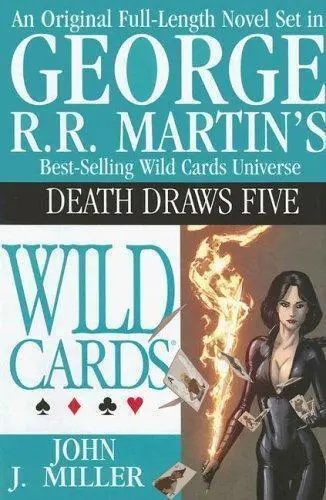
- Название:Death Draws Five
- Автор:
- Издательство:iBooks
- Жанр:
- Год:2010
- ISBN:9781596872974
- Рейтинг книги:3 / 5. Голосов: 1
-
Избранное:Добавить в избранное
- Отзывы:
-
Ваша оценка:
Death Draws Five: краткое содержание, описание и аннотация
Предлагаем к чтению аннотацию, описание, краткое содержание или предисловие (зависит от того, что написал сам автор книги «Death Draws Five»). Если вы не нашли необходимую информацию о книге — напишите в комментариях, мы постараемся отыскать её.
Death Draws Five — читать онлайн бесплатно полную книгу (весь текст) целиком
Ниже представлен текст книги, разбитый по страницам. Система сохранения места последней прочитанной страницы, позволяет с удобством читать онлайн бесплатно книгу «Death Draws Five», без необходимости каждый раз заново искать на чём Вы остановились. Поставьте закладку, и сможете в любой момент перейти на страницу, на которой закончили чтение.
Интервал:
Закладка:
If this energy feeds crops planted in it, Fortunato thought, it could feed much more as well.
Fortunato sank through the dirt as if it were the sky. He felt no sense of claustrophobia when it closed over him and he was fully interred within it as if the field were his vast grave. He sank lower and lower. Ten feet into the soil, the energy was more abundant, more vibrant, as decades of farming had only leached away bits of it. Twenty feet down it sparked and coruscated like alien-looking sea creatures living in the ocean depths. Thirty feet down Fortunato hit bedrock and stopped.
Floating in the dirt as if it were the sky, he emptied his mind until it was a complete blank. The void of him begged to be filled.
And so it was.
Suddenly he stood on the surface of a great lake whose shores lapped the slopes of what were hillsides in his own time. The land around him was lush and wild. Man had never drunk from this lake or boated upon it or polluted it with his waste and industrial run-off. It was pristine and free. The forests surrounding it were impenetrable, except for the great mammoths and other immense beasts that roamed the lake’s margins and rocky beaches.
Fortunato realized that he was seeing this land as it was thousands of years ago, before the coming of man. The lake seemed as if it would go on forever. But even landscapes change with the millennia. The Earth subsided, twisted, and moved. The climate turned drier, hotter. The lake started to shrink. The forests around it, the plants that grew in it, all died. They surrendered their richness and metamorphosed into thick black dirt that accumulated over the thousands of years it took the lake to die.
But the lake hadn’t really died. It had simply changed. It had transformed from a fluid state to rich black soil. The clumps of organic material in the soil were plants compressed into layers of peat, then broken up thousands of years later by man’s plows.
But Fortunato was down with the energy that had lingered for millennium. For longer than man had been on this continent. In the upper levels of the black earth it had slowly been leached away by farmers for two hundred, two hundred and fifty years. Down where Fortunato lingered, it was still pristine.
And, like most energy, it was begging to be used.
He embraced it. He drank it in. It filled him fuller than the sexual energy of the Tantric rituals ever did. He could feel it coursing through his astral form like lightning contained by the invisible shape of his insubstantial body. When he could drink no more of it he burst out again into the sky.
One moment he was at the bottom of the Pleistocene lake. The next he was in the sky above the camp. He willed to be there the night before, and he was. He heard the commotion and saw his son. He saw the detective protect him from the kidnappers, witnessed their flight into the woods. He followed them as they moved like actors in a tape set in fast forward, burning minutes of time in seconds, hours in minutes. He went with them as they wandered lost in the woods. He saw the detective’s bravery during the brief firefight. Saw the unexpected arrows lance out of the night and thought, My God, it’s Yeoman!, saw his son stumble back into the forest. He followed him dodging and hiding, watching as he discovered the small church and spent a fitful night there. Then he saw him cautiously go out the next day, find the store at the foot of the hill and buy some bread, cold cuts, ice cream and soda which he took back to the church. Fortunato could understand the agony of the boy’s indecision, unsure of which hand might be raised against him, cautiously waiting for help, eventually deciding that he had to go find it himself. He went back to the store to ask to use the phone, and immediately tried to leave when he recognized that the others in the shop were enemies. They went after him. He tried to run but Fortunato knew that they would catch him, and he was in his astral form unable to touch anything upon the corporeal plane. The men were closing around his son and Fortunato knew that his only slim hope was to reach out and touch a receptive mind, to find someone who could understand his pleas and come to help the boy.
Fortunato shouted for help, but he was afraid that no one would hear.
New Hampton: the woods
Jesus hung tough for awhile, but once they got him talking he wouldn’t shut up. It was Jay’s threat to teleport his gonads to a subway stop somewhere in the Bronx that broke him. Ray didn’t think that Ackroyd could actually do it, and he was pretty sure that he wouldn’t even if he could, but it was Ray’s experience that macho shit bags like Jesus were quite attached and often abnormally concerned about the state and condition of their gonads. Jesus started singing like the Jokertown Boys after Jay’s threat, revealing some items of interest, as well as some things that Ray already knew.
“It’s not like we’re committing a crime or anything,” Jesus confided, splitting his attention between Jay and the razor-sharp broad tip arrow that Yeoman was playing with as he looked on with dark, unrelenting eyes.
“Kidnapping isn’t a crime?” Yeoman asked flatly.
“Well, sure. If we were actually kidnapping someone. That would be a crime, sure. And a sin. But since we’re working for the church, what we’re doing can’t really be a sin, can it?”
“Wait a minute,” Ackroyd said. “The church?”
“Sure,” Jesus said confidently. “I am an obsequentus in the Allumbrados. We take our orders from the Cardinal. Directly.”
“You want to translate, that, please?” Ackroyd said.
Jesus shrugged. “Of course. Obsequentus—an ‘obedient’ in the Order of Allumbrados, The Enlightened Ones. That’s the middle rank in the Order, between credenti and perfecti,” Jesus added helpfully.
“You do this full time?” Yeoman asked in disbelief.
“Well, it’s more of a part-time thing—”
“Between drug sales,” Ray put in dryly. He had seen Jesus’ type often enough. He recognized his probable affiliation with the Colombians like a street-savvy cop could spot a pickpocket working the crowd in Times Square on New Year’s Eve.
Jesus shrugged. “Hey, a man’s got to eat. But you guys, you ruined my chance. If I found the kid I would have been promoted to perfectus.”
“Enough,” Ackroyd said. “What’s all this about the church? You’re talking about the Catholic Church?”
“I’m not talking about crazy-ass Protestants,” Jesus said. “I’m talking Mother Church. Rome. The Vatican.”
“What do they want with John Fortune?” Ackroyd asked, obviously having a hard time believing all this.
“I’ll tell you,” Jesus said, leaning forwards conspiratorially. “Then maybe you let me go.”
Yeoman snorted. “Yeah. Maybe.”
Jesus made gestures for them all to come closer, and Ray found himself leaning forward as if Jesus were telling ghost stories around the campfire. They all did. “John Fortune ain’t no kid. He’s the Anti-Christ.”
“Anti-Christ?” Ackroyd repeated.
Jesus nodded. “It’s true. He’s the Devil.”
“Jesus Christ,” Yeoman said.
Jesus pointed at him. “Exactly. Jesus Christ is coming. The End Times are upon us. Jesus and Satan will battle for the fate of the Earth. Jesus will win of course, but the Allumbrados have been doing all they can to smooth his way for him.”
“Like... kidnapping... John... Fortune,” Ackroyd said slowly. He and Yeoman exchanged glances as if this was the first time they’d ever agreed on anything.
Ray himself would think the whole thing was nuts if he hadn’t Barnett’s solemn assurance that John Fortune was actually Jesus Christ in his Second Coming. He wasn’t sure that he believed Barnett, but at least he was on the side that was trying to rescue the boy, not the one trying to drag him in front of some inquisition. For now his seemed to be the right side in this crazy affair. For now.
Читать дальшеИнтервал:
Закладка:
Похожие книги на «Death Draws Five»
Представляем Вашему вниманию похожие книги на «Death Draws Five» списком для выбора. Мы отобрали схожую по названию и смыслу литературу в надежде предоставить читателям больше вариантов отыскать новые, интересные, ещё непрочитанные произведения.





Обсуждение, отзывы о книге «Death Draws Five» и просто собственные мнения читателей. Оставьте ваши комментарии, напишите, что Вы думаете о произведении, его смысле или главных героях. Укажите что конкретно понравилось, а что нет, и почему Вы так считаете.