James Scotson - Planets Falling
Здесь есть возможность читать онлайн «James Scotson - Planets Falling» весь текст электронной книги совершенно бесплатно (целиком полную версию без сокращений). В некоторых случаях можно слушать аудио, скачать через торрент в формате fb2 и присутствует краткое содержание. Год выпуска: 2014, Издательство: James Garvey Books, Жанр: Фантастика и фэнтези, на английском языке. Описание произведения, (предисловие) а так же отзывы посетителей доступны на портале библиотеки ЛибКат.
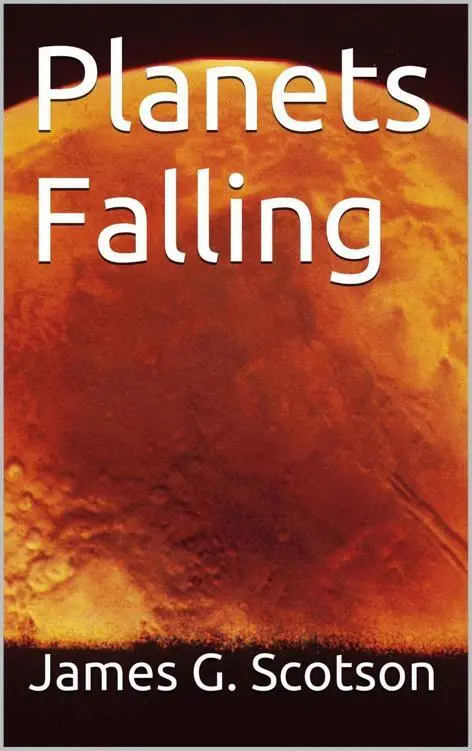
- Название:Planets Falling
- Автор:
- Издательство:James Garvey Books
- Жанр:
- Год:2014
- ISBN:нет данных
- Рейтинг книги:5 / 5. Голосов: 1
-
Избранное:Добавить в избранное
- Отзывы:
-
Ваша оценка:
Planets Falling: краткое содержание, описание и аннотация
Предлагаем к чтению аннотацию, описание, краткое содержание или предисловие (зависит от того, что написал сам автор книги «Planets Falling»). Если вы не нашли необходимую информацию о книге — напишите в комментариях, мы постараемся отыскать её.
This book is written by James G. Scotson, a practicing environmental scientist.
Planets Falling — читать онлайн бесплатно полную книгу (весь текст) целиком
Ниже представлен текст книги, разбитый по страницам. Система сохранения места последней прочитанной страницы, позволяет с удобством читать онлайн бесплатно книгу «Planets Falling», без необходимости каждый раз заново искать на чём Вы остановились. Поставьте закладку, и сможете в любой момент перейти на страницу, на которой закончили чтение.
Интервал:
Закладка:
Since she was a young girl she saw the tiny creatures in the forest beyond the farm fields. They glowed lightly, like little candle flames, always retreating into the dark trees when she approached. She spoke to them often. They only responded in giggles or silence. Of course, Amy wasn’t the first or the only one to see others in the forest. As the world healed after the ancient ones left, the spirits returned. Gods walked among them, swam in the oceans, and commanded the skies. However, rarely did the spirits pay mere humans heed. Amy was lucky to have the little ones there, watching her fields and protecting her when she was alone.
One clear night, Amy sat with her father admiring the stars and the moon. The white orb was dotted with lights that shined brightly even when its surface was clearly in shadow. Many stories existed about the origin of the tiny flickering moonlights. Some old timers said they were fireflies; others believed they were jewels. Her favorite explanation was that they were the houselights of the ancient ones, still living on the moon. But if the ancients were there, why did they never return? Did they orbit the earth revering, worshipping it? Did they fear the gods on its surface?
Her father told her stories of his childhood — hunting, exploring, his time sailing the sea. He told her that he would miss these times together. She was engaged to marry after the fall harvest. Soon she’d be busy raising a family as well as the fields. Hopefully, a daughter would arrive to learn her trade. No more time for these moments with her father. The crickets sang harmonies and the bats fluttered. And then the strange man arrived.
In the dark shadow of the barn, a large figure, taller than any man they had ever seen, appeared. He glowed lightly like the little people in the forest. It was cold, but no cloud of breath appeared from his mouth. Steam curled from his vest. His eyes were deep and coal black — the moonlights sparkled in them like crystals. Behind him appeared six tiny creatures — the same ones that flirted with Amy during her entire life. Her father grabbed her hand. She could feel the calluses and muscle, the warmth of creation in his pulse.
They both stood. Horses whinnied and the dog barked.
The glowing man raised his hand and smiled. “Hello, my friends. I’m Fromer. Your little guardians here told me to visit you. I have wonderful things to show you. Together we’ll travel further than you ever imagined. And some day, many will follow. But before I explain further, do you have any strong tea?”
After an eternity, Amy’s father stirred and nodded. She turned toward the kitchen and prepared the fire in the stove to boil some water. Fromer smiled and sat on the stump of a dead willow tree. It was time for him to embrace his destiny. He was home at last.
BOOK 2: ENDS
Chapter 44 – Amy
The village teacher sits by the fire, yapping as usual. She’s too close. If an ember goes flying, she’ll get burned. She rises, her gnarled hands waving as the story she tells reaches its climax. Her multi-colored robes spin and twirl, while her long, grey hair bobs. The crowd’s pleased with the drama, shouting and clapping. A bottle breaks in the distance. I yawn.
I’ve endured Teacher’s tall stories since I was a little girl. According to her and generations of teachers before her, the world used to belong to the ancient ones who left one day. That part’s true, I think. Someone was here before us and they made a colossal mess of things. Their trash is strewn everywhere, buried right under the surface. When I work the earth for planting I’m always finding trinkets of the past. Some I recognize — coins, buttons, bones, and lots of glass. Most things are mysteries. They served some purpose to those people, but the little boxes with symbols and shiny things with knobs mean nothing. All of us villagers throw the detritus in a pile at the outskirts of town in honor of the ones who were here before us. The mound’s huge, taller than three men, and wide as a field. Some townspeople treat it as a shrine. Maybe someday the old ones will return for their tools in that moldering heap.
The teacher links us to the past — for that I’m grateful. But my skepticism grows the further she goes back. Most towns have a few teachers that pass the stories across generations, with the flavor of the tales being as diverse and unique as the plants on the ground. From the towns I’ve visited, I’ve picked up some common themes, but the adornments and embellishments are sweeping. They do provide entertainment, helping us traverse the time at night when the darkness settles and I swear the shadows are moving out there. Crouching, with wild eyes, the teacher describes how the world formed from the void. Darkness was separated from light by the gods or the ancient ones or someone. This is where I begin to doubt just about everything we know. I’ve met only one god. And once I got to know him, he didn’t seem very godlike to me. And then there are the little ones in the forest who have flirted with me my entire life. They certainly aren’t gods. They can’t even talk.
Teacher’s stories get more interesting when she reaches the part about the demise of the ancient ones. No matter how fantastic her depiction, it’s obvious the end had to be horrific. I’ve never been to the ruins of the cities. Mostly the men, including my father and husband Wenn, have traveled to them. A few of our women are strong, wily, and perhaps daft enough to join the boys on their expeditions. When our explorers and scavengers reach the ruins, they find twisted metal jutting out from brambles and woodlots. Mountains of rock carved into strange shapes and sizes are covered by thin soil and sparse trees. Our explorers scavenge for materials to fabricate into tools and weapons. They occasionally find trinkets that fetch a good price on the market. Some traveler visiting our town is always willing to trade a chicken, smoked fish, or occasionally something special like a horse or a sword for the rings of shiny metal or the extraordinarily hard, clear rocks that father brings back in his satchel — a worn, scarred leather bag that mom made for him. He treasures that thing. When father or Wenn drink too much shine, they talk about the bones. Piles of them are scattered everywhere. Teacher says that the ancient ones were punished by the gods for trying to emulate the gods’ power. If there really are gods, they were obviously not happy with their subjects, given the destruction and death they left behind.
According to Teacher, the ancient ones were grasping for the gods’ powers. Our predecessors, if they were people, could fly through the air, mingle with the stars, and travel to the future and the past. I try to imagine my fellow villagers hovering over town, taking a trip to see their great-grandparents. If Teacher is right about this, then I wonder why my ancestors haven’t visited me yet. Another fantastic story is that the city dwellers could make fire without heat and conjure images in the empty air. Teacher’s eyes always grow wide and dark when she describes the powers these people had. Her hands contort into flying fists when she describes how they’d throw fire and light to immolate their enemies. She crinkles her forehead nodding forward when she says that, with a thought, entire cities would crumble. That’s where I begin to wonder whether the destruction was caused by gods. It seems to me that the wise, ancient ones may have done it to themselves.
It is a full moon tonight, making it tough to see the thousands of yellow and blue lights on its surface. Teacher says that the lights are the settlements — the windows of the houses — of the ancient ones. After these people were banished by the gods, they moved to the moon and to this day are forced to gaze greedily at the earth from their distant perch. When the moon is in shadow, the lights twinkle much brighter than the stars and are beautiful to watch. The moonlights change all the time. Sometimes they move off the surface into the inky darkness like shooting stars, except they streak across the sky and vanish, growing fainter rather than brighter. I’ve no idea about the true nature of these lights. But if the ancient ones are on the moon and still able to move in the void, I wonder why they never try to return. If the gods are keeping them from visiting us, wouldn’t we see them fighting in the sky?
Читать дальшеИнтервал:
Закладка:
Похожие книги на «Planets Falling»
Представляем Вашему вниманию похожие книги на «Planets Falling» списком для выбора. Мы отобрали схожую по названию и смыслу литературу в надежде предоставить читателям больше вариантов отыскать новые, интересные, ещё непрочитанные произведения.


Обсуждение, отзывы о книге «Planets Falling» и просто собственные мнения читателей. Оставьте ваши комментарии, напишите, что Вы думаете о произведении, его смысле или главных героях. Укажите что конкретно понравилось, а что нет, и почему Вы так считаете.