Мартин Рис - On the Future - Prospects for Humanity
Здесь есть возможность читать онлайн «Мартин Рис - On the Future - Prospects for Humanity» весь текст электронной книги совершенно бесплатно (целиком полную версию без сокращений). В некоторых случаях можно слушать аудио, скачать через торрент в формате fb2 и присутствует краткое содержание. Город: Princeton, Год выпуска: 2018, ISBN: 2018, Издательство: Princeton University Press, Жанр: Публицистика, sci_popular, на английском языке. Описание произведения, (предисловие) а так же отзывы посетителей доступны на портале библиотеки ЛибКат.
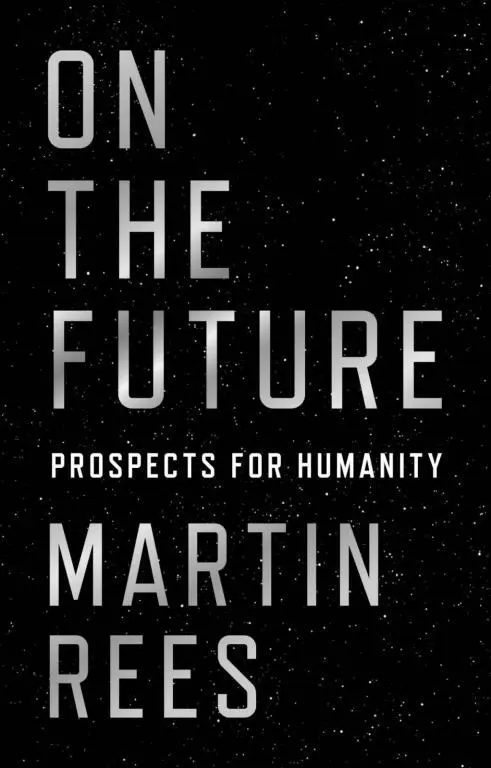
- Название:On the Future: Prospects for Humanity
- Автор:
- Издательство:Princeton University Press
- Жанр:
- Год:2018
- Город:Princeton
- ISBN:978-0-691-18044-1
- Рейтинг книги:5 / 5. Голосов: 1
-
Избранное:Добавить в избранное
- Отзывы:
-
Ваша оценка:
On the Future: Prospects for Humanity: краткое содержание, описание и аннотация
Предлагаем к чтению аннотацию, описание, краткое содержание или предисловие (зависит от того, что написал сам автор книги «On the Future: Prospects for Humanity»). Если вы не нашли необходимую информацию о книге — напишите в комментариях, мы постараемся отыскать её.
Humanity has reached a critical moment. Our world is unsettled and rapidly changing, and we face existential risks over the next century. Various outcomes―good and bad―are possible. Yet our approach to the future is characterized by short-term thinking, polarizing debates, alarmist rhetoric, and pessimism. In this short, exhilarating book, renowned scientist and bestselling author Martin Rees argues that humanity’s prospects depend on our taking a very different approach to planning for tomorrow.
The future of humanity is bound to the future of science and hinges on how successfully we harness technological advances to address our challenges. If we are to use science to solve our problems while avoiding its dystopian risks, we must think rationally, globally, collectively, and optimistically about the long term. Advances in biotechnology, cybertechnology, robotics, and artificial intelligence―if pursued and applied wisely―could empower us to boost the developing and developed world and overcome the threats humanity faces on Earth, from climate change to nuclear war. At the same time, further advances in space science will allow humans to explore the solar system and beyond with robots and AI. But there is no “Plan B” for Earth―no viable alternative within reach if we do not care for our home planet.
Rich with fascinating insights into cutting-edge science and technology, this accessible book will captivate anyone who wants to understand the critical issues that will define the future of humanity on Earth and beyond.
On the Future: Prospects for Humanity — читать онлайн бесплатно полную книгу (весь текст) целиком
Ниже представлен текст книги, разбитый по страницам. Система сохранения места последней прочитанной страницы, позволяет с удобством читать онлайн бесплатно книгу «On the Future: Prospects for Humanity», без необходимости каждый раз заново искать на чём Вы остановились. Поставьте закладку, и сможете в любой момент перейти на страницу, на которой закончили чтение.
Интервал:
Закладка:
But will the world be governable by nation-states? Two trends are reducing interpersonal trust: firstly, the remoteness and globalisation of those we routinely have to deal with; and secondly, the rising vulnerability of modern life to disruption—the realisation that ‘hackers’ or dissidents can trigger incidents that cascade globally. Such trends necessitate burgeoning security measures. These are already irritants in our everyday life—security guards, knotty passwords, airport searches, and so forth—but they are likely to become ever more vexatious. Innovations like blockchain, the publicly distributed ledger that combines open access with security, could offer protocols that render the entire internet more secure. But their current applications—allowing an economy based on crypto-currencies to function independently of traditional financial institutions—seem damaging rather than benign. It’s both salutary and depressing to realise how much of the economy is dedicated to activities and products that would be superfluous if we felt we could trust each other.
The gaps in wealth and welfare levels between countries show little sign of narrowing. But if they persist, the risk of persistent disruption will grow. This is because the disadvantaged are aware of the injustice of their predicament; travel is easier, and therefore more aggressive measures will be needed in order to control migratory pressures if they build up. But apart from direct transfers of funds in the traditional way, the internet and its successors should make it easier for services to be provided anywhere in the world, and for educational and health benefits to spread more widely. It’s in the interests of the wealthy world to invest massively in improving the quality of life and job opportunities in poorer countries—minimising grievances and ‘levelling up’ the world.
5.3. SHARED HOPES AND FEARS
All scientists have special obligations over and above their responsibility as citizens. There are ethical obligations confronting scientific research itself: avoiding experiments that have even the tiniest risk of leading to catastrophe and respecting a code of ethics when research involves animals or human subjects. But less tractable issues arise when their research has ramifications beyond the laboratory and has a potential social, economic, and ethical impact that concerns all citizens—or when it reveals a serious but still-unappreciated threat. You would be a poor parent if you didn’t care what happened to your children in adulthood, even though you may have little control over them. Likewise, scientists shouldn’t be indifferent to the fruits of their ideas—their creations. They should try to foster benign spin-offs—commercial or otherwise. They should resist, so far as they can, dubious or threatening applications of their work, and alert politicians when appropriate. If their findings raise ethical sensitivities—as will happen acutely and often—they should engage with the public, while realising that they have no distinct credentials outside their specialism.
One can highlight some fine exemplars from the past: for instance, the atomic scientists who developed the first nuclear weapons during World War II. Fate had assigned them a pivotal role in history. Many of them—men such as Joseph Rotblat, Hans Bethe, Rudolf Peierls, and John Simpson (all of whom I was privileged to know in their later years)—returned with relief to peacetime academic pursuits. But for them the ivory tower wasn’t a sanctuary. They continued not just as academics but as engaged citizens—promoting efforts to control the power they had helped unleash, through national academies, the Pugwash movement, and other public forums. They were the alchemists of their time, possessors of secret specialised knowledge.
The technologies I’ve discussed in earlier chapters have implications just as momentous as nuclear weapons. But in contrast to the ‘atomic scientists’, those engaged with the new challenges span almost all the sciences, are broadly international—and work in the commercial sector as well as in academia and government. Their findings and concerns need to inform planning and policy. So how is this best done?
Direct ties forged with politicians and senior officials can help—and links with NGOs and the private sector too. But experts who’ve served as government advisors have often had frustratingly little influence. Politicians are, however, influenced by their in-boxes, and by the press. Scientists can sometimes achieve more as ‘outsiders’ and activists, leveraging their message via widely read books, campaigning groups, blogging and journalism, or—albeit via a variety of perspectives—through political activity. If their voices are echoed and amplified by a wide public, and by the media, long-term global causes will rise on the political agenda.
Rachel Carson and Carl Sagan, for instance, were both preeminent in their generation as exemplars of the concerned scientist—and they had immense influence through their writings and speeches. And that was before the age of social media and tweets. Sagan, had he been alive today, would have been a leader of the ‘marches for science’—electrifying crowds through his passion and eloquence.
A special obligation lies on those in academia or on self-employed entrepreneurs; they have more freedom to engage in public debate than those employed in government service or in industry. Academics, moreover, have the special opportunity to influence students. Polls show, unsurprisingly, that younger people, who expect to survive most of the century, are more engaged and anxious about long-term and global issues. Student involvement in, for instance, ‘effective altruism’ campaigns is burgeoning. William MacAskill’s book Doing Good Better [8]is a compelling manifesto. It reminds us that urgent and meaningful improvements to people’s lives can be achieved by well-targeted redeployment of existing resources towards developing or destitute nations. Wealthy foundations have more traction (the archetype being the Bill & Melinda Gates Foundation, which has had a massive impact, especially on children’s health)—but even they cannot match the impact that national governments could have if there were pressure from their citizens.
I’ve already highlighted the role of the world’s religions—transnational communities that think long-term and care about the global community, especially the world’s poor. An initiative of a secular organisation, the California-based Long Now Foundation, will create a symbol that contrasts dramatically with our currently pervasive short-termism. In a cavern deep underground in Nevada, a massive clock will be built; it is designed to tick (very slowly) for ten thousand years, programmed to resound with a different chime every day over that expanse of time. Those of us who visit it in this century will contemplate a monument built to outlast the cathedrals, and will be inspired to hope that a hundred centuries from now it will indeed still be ticking—and that some of our progeny will still visit.
Although we live under the shadow of unfamiliar and potentially catastrophic hazards, there seems to be no scientific impediment to achieving a sustainable and secure world, where all enjoy a lifestyle better than those in the ‘West’ do today. We can be technological optimists, even though the balance of effort in technology needs redirection. Risks can be minimised by a culture of ‘responsible innovation’, especially in fields like biotech, advanced AI, and geoengineering, and by reprioritising the thrust of the world’s technological effort. We should remain upbeat about science and technology—we shouldn’t put the brakes on progress. Doctrinaire application of the ‘precautionary principle’ has a manifest downside. Coping with global threats requires more technology—but guided by social science and ethics.
Читать дальшеИнтервал:
Закладка:
Похожие книги на «On the Future: Prospects for Humanity»
Представляем Вашему вниманию похожие книги на «On the Future: Prospects for Humanity» списком для выбора. Мы отобрали схожую по названию и смыслу литературу в надежде предоставить читателям больше вариантов отыскать новые, интересные, ещё непрочитанные произведения.
![Мартин Рис - Всего шесть чисел. Главные силы, формирующие Вселенную [litres]](/books/414169/martin-ris-vsego-shest-chisel-glavnye-sily-formir-thumb.webp)







Обсуждение, отзывы о книге «On the Future: Prospects for Humanity» и просто собственные мнения читателей. Оставьте ваши комментарии, напишите, что Вы думаете о произведении, его смысле или главных героях. Укажите что конкретно понравилось, а что нет, и почему Вы так считаете.