Гилберт Честертон - Eugenics and Other Evils
Здесь есть возможность читать онлайн «Гилберт Честертон - Eugenics and Other Evils» весь текст электронной книги совершенно бесплатно (целиком полную версию без сокращений). В некоторых случаях можно слушать аудио, скачать через торрент в формате fb2 и присутствует краткое содержание. Год выпуска: 2014, Издательство: epubBooks Classics, Жанр: Публицистика, на английском языке. Описание произведения, (предисловие) а так же отзывы посетителей доступны на портале библиотеки ЛибКат.
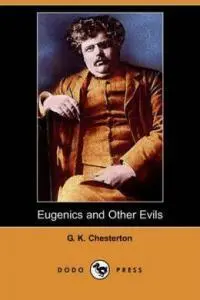
- Название:Eugenics and Other Evils
- Автор:
- Издательство:epubBooks Classics
- Жанр:
- Год:2014
- ISBN:нет данных
- Рейтинг книги:4 / 5. Голосов: 1
-
Избранное:Добавить в избранное
- Отзывы:
-
Ваша оценка:
Eugenics and Other Evils: краткое содержание, описание и аннотация
Предлагаем к чтению аннотацию, описание, краткое содержание или предисловие (зависит от того, что написал сам автор книги «Eugenics and Other Evils»). Если вы не нашли необходимую информацию о книге — напишите в комментариях, мы постараемся отыскать её.
Eugenics and Other Evils — читать онлайн бесплатно полную книгу (весь текст) целиком
Ниже представлен текст книги, разбитый по страницам. Система сохранения места последней прочитанной страницы, позволяет с удобством читать онлайн бесплатно книгу «Eugenics and Other Evils», без необходимости каждый раз заново искать на чём Вы остановились. Поставьте закладку, и сможете в любой момент перейти на страницу, на которой закончили чтение.
Интервал:
Закладка:
Now this modern refusal to undo what has been done is not only an intellectual fault; it is a moral fault also. It is not merely our mental inability to understand the mistake we have made. It is also our spiritual refusal to admit that we have made a mistake. It was mere vanity in Mr. Brummell when he sent away trays full of imperfectly knotted neck–cloths, lightly remarking, "These are our failures." It is a good instance of the nearness of vanity to humility, for at least he had to admit that they were failures. But it would have been spiritual pride in Mr. Brummell if he had tied on all the cravats, one on top of the other, lest his valet should discover that he had ever tied one badly. For in spiritual pride there is always an element of secrecy and solitude. Mr. Brummell would be satanic; also (which I fear would affect him more) he would be badly dressed. But he would be a perfect presentation of the modern publicist, who cannot do anything right, because he must not admit that he ever did anything wrong.
This strange, weak obstinacy, this persistence in the wrong path of progress, grows weaker and worse, as do all such weak things. And by the time in which I write its moral attitude has taken on something of the sinister and even the horrible. Our mistakes have become our secrets. Editors and journalists tear up with a guilty air all that reminds them of the party promises unfulfilled, or the party ideals reproaching them. It is true of our statesmen (much more than of our bishops, of whom Mr. Wells said it), that socially in evidence they are intellectually in hiding. The society is heavy with unconfessed sins; its mind is sore and silent with painful subjects; it has a constipation of conscience. There are many things it has done and allowed to be done which it does not really dare to think about; it calls them by other names and tries to talk itself into faith in a false past, as men make up the things they would have said in a quarrel. Of these sins one lies buried deepest but most noisome, and though it is stifled, stinks: the true story of the relations of the rich man and the poor in England. The half–starved English proletarian is not only nearly a skeleton but he is a skeleton in a cupboard.
It may be said, in some surprise, that surely we hear to–day on every side the same story of the destitute proletariat and the social problem, of the sweating in the unskilled trades or the overcrowding in the slums. It is granted; but I said the true story. Untrue stories there are in plenty, on all sides of the discussion. There is the interesting story of the Class Conscious Proletarian of All Lands, the chap who has "solidarity," and is always just going to abolish war. The Marxian Socialists will tell you all about him; only he isn't there. A common English workman is just as incapable of thinking of a German as anything but a German as he is of thinking of himself as anything but an Englishman. Then there is the opposite story; the story of the horrid man who is an atheist and wants to destroy the home, but who, for some private reason, prefers to call this Socialism. He isn't there either. The prosperous Socialists have homes exactly like yours and mine; and the poor Socialists are not allowed by the Individualists to have any at all. There is the story of the Two Workmen, which is a very nice and exciting story, about how one passed all the public houses in Cheapside and was made Lord Mayor on arriving at the Guildhall, while the other went into all the public houses and emerged quite ineligible for such a dignity. Alas! for this also is vanity. A thief might become Lord Mayor, but an honest workman certainly couldn't. Then there is the story of "The Relentless Doom," by which rich men were, by economic laws, forced to go on taking away money from poor men, although they simply longed to leave off: this is an unendurable thought to a free and Christian man, and the reader will be relieved to hear that it never happened. The rich could have left off stealing whenever they wanted to leave off, only this never happened either. Then there is the story of the cunning Fabian who sat on six committees at once and so coaxed the rich man to become quite poor. By simply repeating, in a whisper, that there are "wheels within wheels," this talented man managed to take away the millionaire's motor car, one wheel at a time, till the millionaire had quite forgotten that he ever had one. It was very clever of him to do this, only he has not done it. There is not a screw loose in the millionaire's motor, which is capable of running over the Fabian and leaving him a flat corpse in the road at a moment's notice. All these stories are very fascinating stories to be told by the Individualist and Socialist in turn to the great Sultan of Capitalism, because if they left off amusing him for an instant he would cut off their heads. But if they once began to tell the true story of the Sultan to the Sultan, he would boil them in oil; and this they wish to avoid.
The true story of the sin of the Sultan he is always trying, by listening to these stories, to forget. As we have said before in this chapter, he would prefer not to remember, because he has made up his mind not to repent. It is a curious story, and I shall try to tell it truly in the two chapters that follow. In all ages the tyrant is hard because he is soft. If his car crashes over bleeding and accusing crowds, it is because he has chosen the path of least resistance. It is because it is much easier to ride down a human race than ride up a moderately steep hill. The fight of the oppressor is always a pillow–fight; commonly a war with cushions—always a war for cushions. Saladin, the great Sultan, if I remember rightly, accounted it the greatest feat of swordsmanship to cut a cushion. And so indeed it is, as all of us can attest who have been for years past trying to cut into the swollen and windy corpulence of the modern compromise, that is at once cosy and cruel. For there is really in our world to–day the colour and silence of the cushioned divan; and that sense of palace within palace and garden within garden which makes the rich irresponsibility of the East. Have we not already the wordless dance, the wineless banquet, and all that strange unchristian conception of luxury without laughter? Are we not already in an evil Arabian Nights, and walking the nightmare cities of an invisible despot? Does not our hangman strangle secretly, the bearer of the bow string? Are we not already eugenists—that is, eunuch–makers? Do we not see the bright eyes, the motionless faces, and all that presence of something that is dead and yet sleepless? It is the presence of the sin that is sealed with pride and impenitence; the story of how the Sultan got his throne. But it is not the story he is listening to just now, but another story which has been invented to cover it—the story called "Eugenius: or the Adventures of One Not Born," a most varied and entrancing tale, which never fails to send him to sleep.
Chapter II
True History of a Tramp
He awoke in the Dark Ages and smelt dawn in the dark, and knew he was not wholly a slave. It was as if, in some tale of Hans Andersen, a stick or a stool had been left in the garden all night and had grown alive and struck root like a tree. For this is the truth behind the old legal fiction of the servile countries, that the slave is a "chattel," that is a piece of furniture like a stick or a stool. In the spiritual sense, I am certain it was never so unwholesome a fancy as the spawn of Nietzsche suppose to–day. No human being, pagan or Christian, I am certain, ever thought of another human being as a chair or a table. The mind cannot base itself on the idea that a comet is a cabbage; nor can it on the idea that a man is a stool. No man was ever unconscious of another's presence—or even indifferent to another's opinion. The lady who is said to have boasted her indifference to being naked before male slaves was showing off—or she meant something different. The lord who fed fishes by killing a slave was indulging in what most cannibals indulge in—a satanist affectation. The lady was consciously shameless and the lord was consciously cruel. But it simply is not in the human reason to carve men like wood or examine women like ivory, just as it is not in the human reason to think that two and two make five.
Читать дальшеИнтервал:
Закладка:
Похожие книги на «Eugenics and Other Evils»
Представляем Вашему вниманию похожие книги на «Eugenics and Other Evils» списком для выбора. Мы отобрали схожую по названию и смыслу литературу в надежде предоставить читателям больше вариантов отыскать новые, интересные, ещё непрочитанные произведения.



Обсуждение, отзывы о книге «Eugenics and Other Evils» и просто собственные мнения читателей. Оставьте ваши комментарии, напишите, что Вы думаете о произведении, его смысле или главных героях. Укажите что конкретно понравилось, а что нет, и почему Вы так считаете.