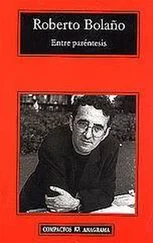
Roberto Bolaño - Between Parentheses - Essays, Articles and Speeches, 1998-2003
Здесь есть возможность читать онлайн «Roberto Bolaño - Between Parentheses - Essays, Articles and Speeches, 1998-2003» весь текст электронной книги совершенно бесплатно (целиком полную версию без сокращений). В некоторых случаях можно слушать аудио, скачать через торрент в формате fb2 и присутствует краткое содержание. Год выпуска: 2011, Издательство: New Directions, Жанр: Публицистика, Критика, на английском языке. Описание произведения, (предисловие) а так же отзывы посетителей доступны на портале библиотеки ЛибКат.
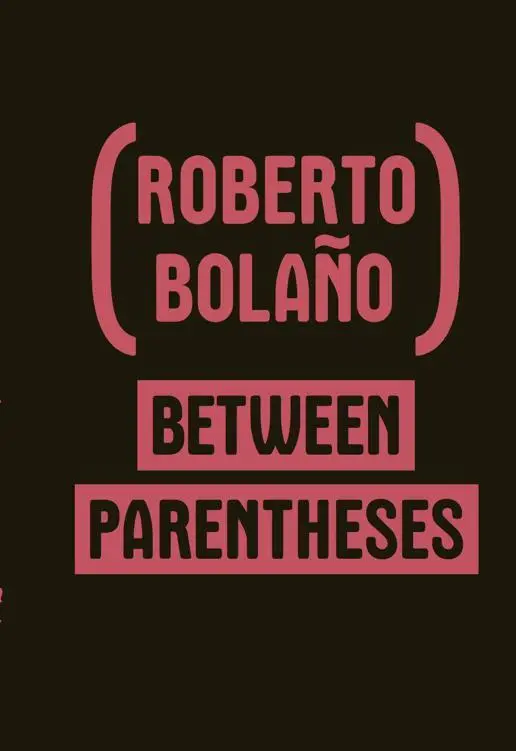
- Название:Between Parentheses: Essays, Articles and Speeches, 1998-2003
- Автор:
- Издательство:New Directions
- Жанр:
- Год:2011
- ISBN:нет данных
- Рейтинг книги:4 / 5. Голосов: 1
-
Избранное:Добавить в избранное
- Отзывы:
-
Ваша оценка:
Between Parentheses: Essays, Articles and Speeches, 1998-2003: краткое содержание, описание и аннотация
Предлагаем к чтению аннотацию, описание, краткое содержание или предисловие (зависит от того, что написал сам автор книги «Between Parentheses: Essays, Articles and Speeches, 1998-2003»). Если вы не нашли необходимую информацию о книге — напишите в комментариях, мы постараемся отыскать её.
The Savage Detectives
Between Parenthese
Between Parentheses: Essays, Articles and Speeches, 1998-2003 — читать онлайн бесплатно полную книгу (весь текст) целиком
Ниже представлен текст книги, разбитый по страницам. Система сохранения места последней прочитанной страницы, позволяет с удобством читать онлайн бесплатно книгу «Between Parentheses: Essays, Articles and Speeches, 1998-2003», без необходимости каждый раз заново искать на чём Вы остановились. Поставьте закладку, и сможете в любой момент перейти на страницу, на которой закончили чтение.
Интервал:
Закладка:
It may be that no one ever will receive this call. It may be that the underground surrealists never existed or that by now they’re just a handful of old tricksters. It may be that those who receive the call never keep the appointment, because they think it’s a joke or because they can’t make it. “After centuries of philosophy, we’re still living off the poetic ideas of the first men,” wrote Breton. This sentence isn’t a reproach, as one might think, but a statement of fact on the threshhold of mystery.
AN ATTEMPT AT AN EXHAUSTIVE CATALOG OF PATRONS
I never had a patron. No one ever hooked me up with anyone so I could get a grant. No government or institution ever offered me money, no elegant gentleman ever pulled out his checkbook for me, no tremulous lady (quivering with a passion for literature) ever invited me to tea and committed herself to providing me with a meal a day. But over the years I’ve come across many patrons, in person or in books.
Most common of all is the fortyish homosexual who suddenly realizes that his life is empty and who devotes himself, belatedly, to filling it with meaning. Deep down, this kind of patron wants to be an artist with a patron of his own, a fortyish and violent patron, who in turn also has a patron, who in turn is taken up by other patrons, and so on ad infinitum. Generally the works that excite this kind of patron are faux self-portraits.
There’s also the patron with blood ties. It’s usually the brother or sister of the artist or poet in question and the relationship between the two of them is like the bond between a bird and a crag. In these circumstances desperation goes by the name of love. Defeat on all fronts is assured.
Then comes the invisible patron. His protegé will never be on first-name terms with him. In fact, in some cases he’ll never see him. The invisible patron is capable of raping a writer without the writer even noticing. The invisible patron isn’t a meek and prudent soul, as one might imagine. On the contrary: he’s usually a clever brute.
Then we have the melancholy grandma. Who isn’t the grandmother of her protegés, of course, or even a great aunt, and who to a certain degree resembles those elderly Russian ladies, lovers of literature, who for a time filled the streets of Paris, Venice, and Geneva. The grandmas dress impeccably. They talk about Proust as if they’d known him. Sometimes they reminisce about candlelit evenings in palaces one has never heard of. They possess (out of ignorance) a high regard for authors who’ve been translated into more than three languages, and their collections of dictionaries and encyclopedias are often impressive. They’re in danger of extinction.
In no danger of extinction, meanwhile, are the cultural attachés who on nights when the moon is full imagine themselves patrons. It goes without saying, since everybody takes it for granted, that cultural attachés are more attaché than cultural. During their brief reigns their friends take what they can get, which may not be much, but which for them is a lot, everything.
Also in no danger of extinction are those Latin American professors at American universities. Their idea of the patron is based on brute force and boundless cowardice. Most are on the left, politically speaking. To attend a dinner with them and their favorites is like gazing into a creepy diorama in which the chief of a clan of cavemen gnaws a leg while his acolytes nod and laugh. The patron-professor in Illinois or Iowa or South Carolina resembles Stalin and that’s the strangest and most original thing about him.
Then comes an amorphous mass of patrons of different stripes and assorted misfortunes. There are the neurotic virgins, the good Samaritans, the sourpusses, the frustrated housewives, the suicidal bureaucrats, the poet who suddenly discovers he has no talent, the person who thinks no one understands him, the drunk who recites Sallustius, the fat man who wishes he were thin, the bitter man who wants to create a new canon, the neostructuralist who doesn’t understand half of what he says, the priest who yearns for hell, the lady who insists on good manners, the businessman who writes sonnets.
Behind this crowd, however, hides the one true patron. If you have patience enough to search, maybe you’ll catch a glimpse of what you’re looking for. And when you find it, you’ll probably be disappointed. It isn’t the devil. It isn’t the State. It isn’t a magical child. It’s the void.
§All translations from Archilochus are by Guy Davenport, from
Archilochus, Sappho, Alkman: Three Lyric Poets of the Late Greek Bronze Age , Univ. of California Press, 1980. —tr.
III. (SEPTEMBER 2002 — JANUARY 2003)
JIM
Like everybody else, I once had a friend called Jim. I never saw a sadder American. Once he left for Peru on a trip that should have lasted six months at least, but two months later there he was again. What is poetry, Jim? the Mexican street kids would ask. Jim would listen to them and then he’d vomit. Lexicon, eloquence, quest for the truth. In Central America he was mugged several times. Which was odd for someone who’d been a marine and was a Vietnam vet. His wife was a Chicana poet who every so often threatened to leave him.
Once I saw him watching the fire-swallowers on the streets of Mexico City. I saw him from behind and I didn’t say hello, but it was clearly Jim. The ragged hair, the dirty white shirt, the back hunched as if it still felt the weight of a rucksack and of fear. The red neck, a neck that somehow suggested a lynching in the countryside, a black and white countryside without billboards or the lights of gas stations, a countryside as the countryside is and should be: endless vacant lots without remedy, bricked- or boarded-up rooms from which we’ve escaped and that await our return.
Jim had his hands in his pockets. The fire-swallower shook his torch and laughed fiercely. With his blackened face, he might have been thirty-five or fifteen. He wasn’t wearing a shirt, and a vertical scar rose from his navel to his breastbone. Every so often he filled his mouth with flammable liquid and spat out a long snake of fire. People stopped to watch and then went on their way, except for Jim, who stood motionless on the edge of the sidewalk, as if he expected something more from the fire-swallower, a tenth signal after having deciphered the usual nine, or as if in the fire-swallower’s sooty face he had spotted the face of an old friend or someone he had killed. For a long time I stood watching him. At the time I was eighteen or nineteen and I thought I was immortal. If I had known that I wasn’t, I would have turned around and gotten out of there. Maybe I got tired of staring at Jim’s back and the faces of the fire-swallowers. The fact is that I went up to him and called his name. Jim didn’t seem to hear me. When he turned around at last I saw that his face was sweaty. He seemed feverish and was slow to recognize me: he nodded at me and then turned back toward the fire-swallower. When I reached him I realized that he was crying. He was probably feverish too. At the same time, I discovered — with less astonishment than with which I write it now — that the fire-swallower was working exclusively for him. Occasionally the flames flickered out just a few feet from where we were standing.
Are you trying to get barbecued? I asked. A stupid, thoughtless thing to say, but suddenly I realized that that was exactly what Jim wanted. “Screw me, voodoo me / screw me, voodoo me,” was the chorus, I seem to remember, of a song that was popular that year in some dive bars. Screwed and under some voodoo curse is what Jim looked like he was. Let’s get out of here, I said. I also asked whether he was high, whether he was sick. He shook his head. The fire-swallower glanced at us. Then, with his cheeks puffed out like Eolus, the god of the wind, he came toward us. I knew in an instant that it wasn’t exactly wind that he was going to spew. Let’s go, I said, and I pulled Jim away from the terrible edge of the sidewalk.
Читать дальшеИнтервал:
Закладка:
Похожие книги на «Between Parentheses: Essays, Articles and Speeches, 1998-2003»
Представляем Вашему вниманию похожие книги на «Between Parentheses: Essays, Articles and Speeches, 1998-2003» списком для выбора. Мы отобрали схожую по названию и смыслу литературу в надежде предоставить читателям больше вариантов отыскать новые, интересные, ещё непрочитанные произведения.






Обсуждение, отзывы о книге «Between Parentheses: Essays, Articles and Speeches, 1998-2003» и просто собственные мнения читателей. Оставьте ваши комментарии, напишите, что Вы думаете о произведении, его смысле или главных героях. Укажите что конкретно понравилось, а что нет, и почему Вы так считаете.