Margaret Dean - Endurance - A Year in Space, A Lifetime of Discovery
Здесь есть возможность читать онлайн «Margaret Dean - Endurance - A Year in Space, A Lifetime of Discovery» весь текст электронной книги совершенно бесплатно (целиком полную версию без сокращений). В некоторых случаях можно слушать аудио, скачать через торрент в формате fb2 и присутствует краткое содержание. Город: New York, Год выпуска: 2017, ISBN: 2017, Издательство: Alfred A. Knopf, Жанр: Биографии и Мемуары, sci_cosmos, на английском языке. Описание произведения, (предисловие) а так же отзывы посетителей доступны на портале библиотеки ЛибКат.
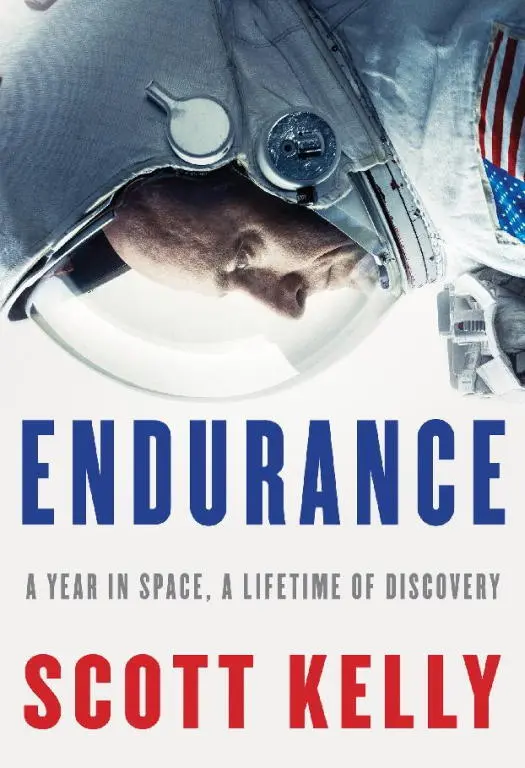
- Название:Endurance: A Year in Space, A Lifetime of Discovery
- Автор:
- Издательство:Alfred A. Knopf
- Жанр:
- Год:2017
- Город:New York
- ISBN:978-1-524-73159-5
- Рейтинг книги:3 / 5. Голосов: 1
-
Избранное:Добавить в избранное
- Отзывы:
-
Ваша оценка:
Endurance: A Year in Space, A Lifetime of Discovery: краткое содержание, описание и аннотация
Предлагаем к чтению аннотацию, описание, краткое содержание или предисловие (зависит от того, что написал сам автор книги «Endurance: A Year in Space, A Lifetime of Discovery»). Если вы не нашли необходимую информацию о книге — напишите в комментариях, мы постараемся отыскать её.
The veteran of four space flights and the American record holder for consecutive days spent in space, Scott Kelly has experienced things very few have. Now, he takes us inside a sphere utterly inimical to human life. He describes navigating the extreme challenge of long-term spaceflight, both existential and banal: the devastating effects on the body; the isolation from everyone he loves and the comforts of Earth; the pressures of constant close cohabitation; the catastrophic risks of depressurization or colliding with space junk, and the still more haunting threat of being unable to help should tragedy strike at home—an agonizing situation Kelly faced when, on another mission, his twin brother’s wife, Gabrielle Giffords, was shot while he still had two months in space.
Kelly’s humanity, compassion, humor, and passion resonate throughout, as he recalls his rough-and-tumble New Jersey childhood and the youthful inspiration that sparked his astounding career, and as he makes clear his belief that Mars will be the next, ultimately challenging step in American spaceflight.
A natural storyteller and modern-day hero, Kelly has a message of hope for the future that will inspire for generations to come. Here, in his personal story, we see the triumph of the human imagination, the strength of the human will, and the boundless wonder of the galaxy.
Endurance: A Year in Space, A Lifetime of Discovery — читать онлайн бесплатно полную книгу (весь текст) целиком
Ниже представлен текст книги, разбитый по страницам. Система сохранения места последней прочитанной страницы, позволяет с удобством читать онлайн бесплатно книгу «Endurance: A Year in Space, A Lifetime of Discovery», без необходимости каждый раз заново искать на чём Вы остановились. Поставьте закладку, и сможете в любой момент перейти на страницу, на которой закончили чтение.
Интервал:
Закладка:
I had been in Beeville for about a year when I got my wings. My parents came for the occasion (my brother was unable to attend because of his own Navy duties). We lined up in our white dress uniforms for the ceremonial pinning on of our wings. My mother pinned my wings on me, a glowing, proud expression on her face. I remembered the day she had graduated from the police academy, when I got to see her lined up with her classmates in uniform, and the impression that sight had made on me. Now things had come full circle.
I WAS ASSIGNED to Fighter Squadron 101, the Grim Reapers, and moved to Naval Air Station Oceana in Virginia Beach, Virginia, for initial training on the F-14 Tomcat. My roommate and I drove overnight and I started my training almost immediately. Just as I had done with other aircraft, I progressed quickly from familiarization training to formation training to basic intercepts—finding another airplane and locking onto it with the radar. Eventually I began to learn basic air combat maneuvers, and this was when we began to feel like true fighter pilots. I practiced flying against a similar airplane (another F-14), a dissimilar airplane (like the A-4 or F-16, the Navy’s best approximation of the Soviets’ MiG), and flying against different numbers of enemy planes. All of this training would culminate in taking the airplane to the ship, which would be much harder than it had been in the T-2 and the A-4, since the Tomcat had such poor flying qualities and we had to qualify at night.
There is no training version of the F-14; there is no stick in the backseat, meaning the instructor can’t take over for the student. We did a lot of classroom work first, learning the systems of the airplane, then putting in many hours in the simulator before climbing into the cockpit for the first time.
My first two flights were with an experienced pilot in the backseat, who was memorable for the chew he had in his mouth at all times, including while flying the jet. He must have just swallowed the spit. After that, I flew only with an instructor RIO (radio intercept officer, like Goose in Top Gun ). I found it odd to have someone who wasn’t a pilot grading me on my flying skills.
We quickly advanced to learning to fly the airplane in combat: air-to-air gunnery, basic intercepts day and night, single- and multiplane air-to-air engagements and low-altitude flight training. Air-to-air gunnery involved a lot of airplanes flying in a pattern around another airplane, which towed a banner the others were trying to shoot at. These exercises were done using real bullets, which seems like a terrible idea, though I never saw anyone get shot by accident. Each of us had bullets painted with a different color so the instructors would be able to tell who had hit the target how many times. Just as with bombing, I wasn’t particularly good at this, but I enjoyed the competitive aspect.
The night before I tried to land the F-14 for the first time on the USS Enterprise off the coast of Virginia, I lay awake in bed for a long time. Our instructor had told us, “You won’t be able to sleep, so just try to lie still and think about nothing so you get some rest.” This turned out to be good advice and has served me well many times in the years since.
My first arrested landing was a complete disaster. I landed so low that my tailhook hit the back of the ship. That’s called a hook slap, and it’s not good. Basically, if I’d been any lower I would have crashed, and that would have been the end of me and my RIO. While none of my subsequent approaches were as bad as that hook slap, I didn’t get much better. After a while, the instructors had seen enough and sent me home. I had disqualified.
I landed back at Naval Air Station Oceana with a weird feeling of disbelief. After my RIO and I jumped out of the plane, he looked at me with concern. I must have appeared as bewildered as I felt.
“Hey, you’ll figure it out,” he told me with an awkward pat on the shoulder. “Don’t worry about it. Shake it off.”
I could only mutter in response. There had been so much riding on this, and I had failed. As I went inside and took off my gear piece by piece—helmet, harness, G suit—I couldn’t believe how much I sucked at this. I didn’t know how I could improve if I got another chance, and it was possible I wouldn’t get one.
I thought about what I might do with my life if I couldn’t fly jets in the Navy. I had once picked up an application to the CIA at a college fair. That might be interesting. I thought about the FBI—that is, assuming the Navy would discharge me rather than send me out to fly a heavy airplane, work on a ship, or, worst of all, fly a desk. I had a couple of weeks to think about what my alternatives were while the Navy deliberated over my fate.
In the end, they decided to give me a second chance. I started all over in the carrier qualification phase, where I was paired up with a RIO who had been given the call sign “Scrote” because some unkind squadron mates had decided his face looked like a scrotum. Scrote had a good reputation for helping pilots who were having trouble behind the boat like me.
“You know, you can fly the airplane okay, but you’re not flying it all the time,” he told me. “You’re on altitude and airspeed, but you’re not on top of it.” I had been trained to keep my altitude within a two-hundred-foot range, so I didn’t worry if I was ten feet off the precise altitude, or twenty, or fifty. But Scrote pointed out that this imprecision in the end would lead me far from where I needed to wind up, and fixing it would take a lot of my attention. I had to always be making small, constant corrections if I wanted to make the situation better. He was right. My flying got better, and I’ve been able to apply what I learned from him to a lot of other areas of life as well.
My second attempt to qualify was on a black night with no moonlight. As I got within a couple of miles of the ship, I felt the pressure of what I was about to do. I started peeking out from my scan of the instruments inside the cockpit to see whether I could spot the ship. It was disorienting to see the faint lights of the carrier in an ocean of black. At three-quarters of a mile, the air traffic controller told me to “call the ball,” to start flying the approach visually (rather than using the aircraft’s instruments). My first thought was, Oh, shit, but I flew as I had been trained to, made small corrections to power and lineup. The glow of the flight deck that had looked so dim from the air became brighter until it was an all-encompassing yellow haze, and the next thing I knew I felt the tug of the arresting cable. I felt I had arrived on some alien planet, a new landscape that looked absolutely surreal. I had landed safely and successfully on that dark night.
The day you qualify to land on an aircraft carrier is a big deal, and when you do it at night, it’s an even bigger one. As with many things that were a big deal in my squadron, it was traditional to have a party to celebrate it. This party was at my house, a three-story condo a few blocks from the beach that I shared with two other guys. To prepare for the party, we bought a ton of beer, some chips, and some Jell-O for making Jell-O shots.
My roommate’s girlfriend had brought a friend to the party—Leslie Yandell. I remember seeing Leslie sitting on my couch talking with her friends and drinking a beer. She was cute, with a bright smile and curly blond hair. I decided to talk to her for a bit and found out that she had grown up in Georgia but lived nearby. Her stepfather was a dentist, and she worked as a receptionist in his dental practice. She was easy to talk with, and I liked her laugh, so I asked her out for the next weekend. She said yes.
Читать дальшеИнтервал:
Закладка:
Похожие книги на «Endurance: A Year in Space, A Lifetime of Discovery»
Представляем Вашему вниманию похожие книги на «Endurance: A Year in Space, A Lifetime of Discovery» списком для выбора. Мы отобрали схожую по названию и смыслу литературу в надежде предоставить читателям больше вариантов отыскать новые, интересные, ещё непрочитанные произведения.








Обсуждение, отзывы о книге «Endurance: A Year in Space, A Lifetime of Discovery» и просто собственные мнения читателей. Оставьте ваши комментарии, напишите, что Вы думаете о произведении, его смысле или главных героях. Укажите что конкретно понравилось, а что нет, и почему Вы так считаете.