Shakespeare
Здесь есть возможность читать онлайн «Shakespeare» весь текст электронной книги совершенно бесплатно (целиком полную версию без сокращений). В некоторых случаях можно слушать аудио, скачать через торрент в формате fb2 и присутствует краткое содержание. Год выпуска: 2005, ISBN: 2005, Жанр: Биографии и Мемуары, на английском языке. Описание произведения, (предисловие) а так же отзывы посетителей доступны на портале библиотеки ЛибКат.
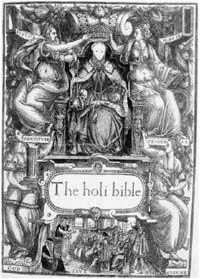
- Название:Shakespeare
- Автор:
- Жанр:
- Год:2005
- ISBN:978-0-307-49082-7
- Рейтинг книги:5 / 5. Голосов: 1
-
Избранное:Добавить в избранное
- Отзывы:
-
Ваша оценка:
Shakespeare: краткое содержание, описание и аннотация
Предлагаем к чтению аннотацию, описание, краткое содержание или предисловие (зависит от того, что написал сам автор книги «Shakespeare»). Если вы не нашли необходимую информацию о книге — напишите в комментариях, мы постараемся отыскать её.
Shakespeare — читать онлайн бесплатно полную книгу (весь текст) целиком
Ниже представлен текст книги, разбитый по страницам. Система сохранения места последней прочитанной страницы, позволяет с удобством читать онлайн бесплатно книгу «Shakespeare», без необходимости каждый раз заново искать на чём Вы остановились. Поставьте закладку, и сможете в любой момент перейти на страницу, на которой закончили чтение.
Интервал:
Закладка:
Was King Leir , also written in 1587, an earlier version of Shakespeare’s tragedy? It begins with the famous division of the kingdom, but then diverges from the later version; there are more elements of conventional romance, derived from the popular stories of the period. In particular King Leir has a happy ending in which Leir and his good daughter are reunited. King Leir was performed by the Queen’s Men at a time when it is conjectured that Shakespeare was part of that company, and it is in many respects an accomplished and inventive piece of work. But it is so utterly unlike anything written even by the young Shakespeare that his authorship must be seriously in question. Another possible form of transmission suggests itself. If Shakespeare did indeed act in it, the plot and characters of the original may have lodged in his imagination. In the other early dramas related to Shakespeare, there is a notable consonance between lines and scenes. There is no such resemblance between Leir and Lear , except for the basic premise of the plot. So it seems likely that, on this occasion, Shakespeare was reviving an old story without much reference to the original play. King Leir is utterly unlike King Lear .
There is a third play that can be dated to 1587, if only because of a reference to it in Tarlton’s Jests . “At the Bull in Bishops-gate was a play of Henry the fift, where in the judge was to take a box on the eare; and because he was absent that should take the blow, Tarlton himselfe, ever forward to please, took upon him to play the same judge, beside his owne part of the clowne.” The Bull here is the Red Bull; the clown, Tarlton, died in 1588 and so this version of King Henry V must predate that time. Tarlton was also a member of the Queen’s Men, so the associations are clear enough. The Famous Victories of Henry V , “as it was plaide by the Queenes Maiesties Players,” has survived in an edition published in 1593. It is not a particularly graceful or elegant piece of work, but it does contain scenes and characters that were later taken up by Shakespeare in the two parts of Henry IV and in Henry V . In particular the “low” acquaintances of Prince Harry, Falstaff and Bardolph and the others, are anticipated in the crude but effective humour of Ned and Tom, Dericke and John Cobler, in The Famous Victories . Other incidents in Shakespeare’s plays are also based upon scenes in this earlier drama. Again, as in the case of King Leir , it seems likely that he acted as a member of the Queen’s Men in The Famous Victories and then at a later date employed the elements of the plot that most appealed to him.
There are other intriguing productions that, from internal and external evidence, we may ascribe approximately to 1588. One of the most significant is The Taming of a Shrew , which without doubt is the model or forerunner of The Taming of the Shrew . There are of course differences between A Shrew and The Shrew. A Shrew is set in Greece rather than Italy, employs different names for most of the characters and is little more than half the length of the more famous play. But there are also strong resemblances, not least in the storyline, and a large number of verbal parallels – including exact repetitions of such recondite phrases as “beat me to death with a bottom of a brown thread.” The conclusions are clear enough. Either Shakespeare took over lines and scenes from the work of an unnamed and unknown dramatist, or he was improving upon his own original. On the principle that the simplest explanation is the most likely, we can suggest that Shakespeare’s The Taming of the Shrew was a revision and revival of one of his first successes. The later version is immeasurably deeper and richer than the original; the poetry is more accomplished, and the characterisation more assured. Since they were published some twenty-nine years apart, the author certainly had time and opportunity to re-create or reinvent the text. We may use a simile drawn from another art. A Shrew is a drawing, while The Shrew is an oil-painting. But the difference in execution and composition, the difference between a sketch and a masterpiece, cannot conceal the underlying resemblance. This was obvious enough to the publishers and printers involved in producing editions of both plays; they were both licensed under the same copyright. The publisher of A Shrew went on to print editions of The Rape of Lucrece and the first part of Henry IV , so he retained his Shakespearian connections.
The most intriguing factor, however, in this early play of Shakespeare is the habit of purloining Marlowe’s lines; most of the interpolations were removed at a later date, when they were no longer considered timely, but to a large extent they characterise A Shrew . The two parts of Tamburlaine had been performed in 1587, and when A Shrew’s Fernando (aka Petruchio) feeds Kate from the point of his dagger, he is satirising a similar scene in Marlowe. The young Shakespeare also continually parodies the language of Doctor Faustus , which strongly suggests that it was the successor of Tamburlaine on the stage in 1588. There is the old proverb about imitation being the sincerest form of flattery, and from the evidence of A Shrew Shakespeare was mightily impressed by Marlowe’s rhetorical verse. But it is clear that he already had a highly developed sense of the ridiculous, and realised that the bravura of Marlovian poetry might seem inept in a less rarefied context. At a later date he would contrast the high rhetoric of the heroic protagonists with the low demotic of the ordinary crowd. The young Shakespeare had, in other words, an instinctive comic gift.
In both versions of the drama he also reveals a highly theatrical sensibility. The play is set within a play; the themes of disguise, of changing costume, are central to his genius; his characters are very good fantasists who change identity with great ease. They are all, in a word, performers. The whole essence of the wooing between Kate and Petruchio is performance. There is here a plethora of words. The young Shakespeare loved word-play of every kind, as if he could not curb his exuberance. He loved quoting bits of Italian, introducing Latin tags, making classical allusions. For all these reasons the play celebrates itself. It celebrates its being in the world, far beyond any possible “meanings” that have been attached to it over the centuries.
The Taming of a Shrew was in turn satirised by Nashe and Greene in Menaphon , published in 1589, and in a play entitled A Knack to Know a Knave , reputed to be the fruit of their collaboration. We must imagine an atmosphere of rivalry and slanging which, depending on local circumstances, was variously good-humoured or bitter. Each young dramatist quoted from the others’ works, and generally added to the highly coloured and even frenetic atmosphere of London’s early drama. Only Shakespeare, however, seems to have quoted so extensively from his rival Marlowe; the evidence of A Shrew in fact suggests that there was some reason for his being accused, by Greene, of decking himself in borrowed plumes. It is all very high-spirited stuff, and A Shrew is nothing if not swift and vivacious, but the egregious theft of Marlowe’s lines suggests that he did not intend the play to be taken very seriously. It was simply an entertainment of the hour. Yet, like many English farces, it proved to be a popular success.
If he could already triumph in comedy, there was no reason why he should not have tried his hand at history. Two of the other plays emerging in 1588, plausibly attributed to the young dramatist, are Edmund Ironside and The Troublesome Raigne of King John. Edmund Ironside has been the subject of much scholarly dispute, 1the controversy further inflamed by the fact that a manuscript version of the play can be located in the Manuscript Division of the British Library. It is written in a neat legal hand, on partly lined paper also used for legal documents, and displays several of Shakespeare’s characteristic quirks of spelling and orthography. The eager student may call up the document, and gaze with wild surmise on the ink possibly drawn from Shakespeare’s quill. Like the mask of Agamemnon and the Shroud of Turin, however, the relics of the great dead are the cause only of bitter rivalries and contradictory opinions. Palaeography is not necessarily an exact science.
Читать дальшеИнтервал:
Закладка:
Похожие книги на «Shakespeare»
Представляем Вашему вниманию похожие книги на «Shakespeare» списком для выбора. Мы отобрали схожую по названию и смыслу литературу в надежде предоставить читателям больше вариантов отыскать новые, интересные, ещё непрочитанные произведения.





Обсуждение, отзывы о книге «Shakespeare» и просто собственные мнения читателей. Оставьте ваши комментарии, напишите, что Вы думаете о произведении, его смысле или главных героях. Укажите что конкретно понравилось, а что нет, и почему Вы так считаете.