Array Slash - Slash
Здесь есть возможность читать онлайн «Array Slash - Slash» — ознакомительный отрывок электронной книги совершенно бесплатно, а после прочтения отрывка купить полную версию. В некоторых случаях можно слушать аудио, скачать через торрент в формате fb2 и присутствует краткое содержание. Город: New York, Год выпуска: 2007, ISBN: 2007, Издательство: HarperCollins, Жанр: Биографии и Мемуары, на английском языке. Описание произведения, (предисловие) а так же отзывы посетителей доступны на портале библиотеки ЛибКат.
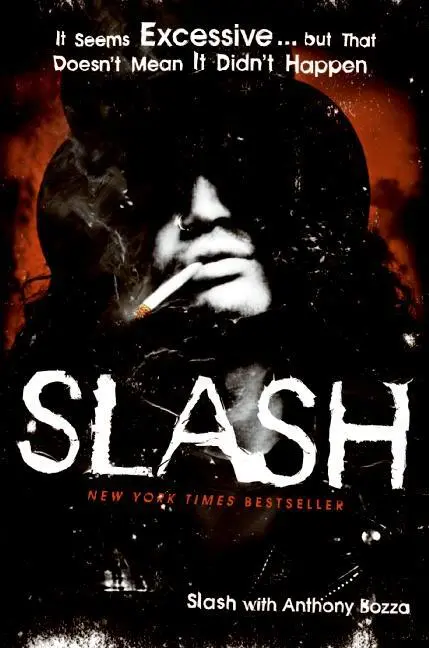
- Название:Slash
- Автор:
- Издательство:HarperCollins
- Жанр:
- Год:2007
- Город:New York
- ISBN:9780061752353
- Рейтинг книги:5 / 5. Голосов: 1
-
Избранное:Добавить в избранное
- Отзывы:
-
Ваша оценка:
Slash: краткое содержание, описание и аннотация
Предлагаем к чтению аннотацию, описание, краткое содержание или предисловие (зависит от того, что написал сам автор книги «Slash»). Если вы не нашли необходимую информацию о книге — напишите в комментариях, мы постараемся отыскать её.
(
) “Entertaining and educational… a crash course for aspiring rock gods.”
(
magazine)
From one of the greatest rock guitarists of our era comes a memoir that redefines sex, drugs, and rock ’n’ roll He was born in England but reared in L.A., surrounded by the leading artists of the day amidst the vibrant hotbed of music and culture that was the early seventies. Slash spent his adolescence on the streets of Hollywood, discovering drugs, drinking, rock music, and girls, all while achieving notable status as a BMX rider. But everything changed in his world the day he first held the beat-up one-string guitar his grandmother had discarded in a closet.
The instrument became his voice and it triggered a lifelong passion that made everything else irrelevant. As soon as he could string chords and a solo together, Slash wanted to be in a band and sought out friends with similar interests. His closest friend, Steven Adler, proved to be a conspirator for the long haul. As hairmetal bands exploded onto the L.A. scene and topped the charts, Slash sought his niche and a band that suited his raw and gritty sensibility.
He found salvation in the form of four young men of equal mind: Axl Rose, Izzy Stradlin, Steven Adler, and Duff McKagan. Together they became Guns N’ Roses, one of the greatest rock ’n’ roll bands of all time. Dirty, volatile, and as authentic as the streets that weaned them, they fought their way to the top with groundbreaking albums such as the iconic
and
and
.
Here, for the first time ever, Slash tells the tale that has yet to be told from the inside: how the band came together, how they wrote the music that defined an era, how they survived insane, never-ending tours, how they survived themselves, and, ultimately, how it all fell apart. This is a window onto the world of the notoriously private guitarist and a seat on the roller-coaster ride that was one of history’s greatest rock ’n’ roll machines, always on the edge of self-destruction, even at the pinnacle of its success. This is a candid recollection and reflection of Slash’s friendships past and present, from easygoing Izzy to ever-steady Duff to wild-child Steven and complicated Axl.
It is also an intensely personal account of struggle and triumph: as Guns N’ Roses journeyed to the top, Slash battled his demons, escaping the overwhelming reality with women, heroin, coke, crack, vodka, and whatever else came along.
He survived it all: lawsuits, rehab, riots, notoriety, debauchery, and destruction, and ultimately found his creative evolution. From Slash’s Snakepit to his current band, the massively successful Velvet Revolver, Slash found an even keel by sticking to his guns.
Slash
Slash — читать онлайн ознакомительный отрывок
Ниже представлен текст книги, разбитый по страницам. Система сохранения места последней прочитанной страницы, позволяет с удобством читать онлайн бесплатно книгу «Slash», без необходимости каждый раз заново искать на чём Вы остановились. Поставьте закладку, и сможете в любой момент перейти на страницу, на которой закончили чтение.
Интервал:
Закладка:
Of course nothing’s perfect. The funny thing is that whenever everything was going well, Axl always made it interesting. One of the sticky spots in the re-formation was that once we got into full gear, Axl wanted to add keyboards to our sound. He wanted to hire Dizzy Reed, the keyboardist for the Wild, the generic L.A. band who had practiced next door to us in our dingy storage unit studio at Sunset and Gardner. Dizzy was a nice guy; I just didn’t see any reason why we needed a keyboard player in Guns. I was adamantly against it and felt that it diluted the sound of what was already a great rock-and-roll band. Piano or electric is cool, but I’m old-school and I was never into phony synthesizer sounds.
Axl, on the other hand, felt passionate about the artistic evolution the band needed to make. Our conversations weren’t too heated because we were making an effort… so sometimes we’d crack jokes about it, and he knew the rest of us didn’t want to do it. All the same, as adamantly as I was against it, he was for it.
So in the spirit of keeping things happy, I finally and reluctantly gave in and so did the other guys. It wasn’t worth going backward. Dizzy became a hired gun and we proceeded to pick on him relentlessly. He was like the Ronnie Wood of Guns N’ Roses.
That was really the only creative glitch. Writing the songs for Illusion s felt like the way I’d always pictured an early Stones session to be back in the day; just hanging out up in a house in the Hollywood Hills working out ideas together. It was good to have Izzy, Axl, Duff, and me in the same room again. And more or less sober. I mean, I always had my cocktail, but I wasn’t into heavy tipping-the-bottle-style drinking. It was sad, though, that Steven wasn’t really there for any of it.
As I feared, he had become the odd man out. At rehearsals, Duff and I had the tedious job of dealing with him. While Axl was aware of the situation, he wasn’t obligated to watch over Steven 24/7 like we were. And as for Izzy, he would have nothing to do with it at all. Steven was becoming a heavier burden every day.
I couldn’t deny the fact that kicking Steven out of Guns N’ Roses for drug abuse was kind of ridiculous and excessively harsh.
WHEN WE STARTED REHEARSING THE material that’s when Steven’s house of cards came crashing down. He was utterly useless when put to the test: most of the time he’d fade away from the proper time signature somewhere in the middle of a song or just forget where he was altogether. He was just incapable of locking in with Duff or me like he used to do. It was pretty dire; something had to be done. The band finally had momentum; we’d finally written new stuff and we needed to start recording and not stagnate. We couldn’t have it be an undertaking just to get through a song at rehearsal.
That’s not to say we weren’t really patient with Steven. We tried everything we could think of, though we probably should’ve taken further action… though I’m not sure what that could have been. We’d gone so far as to bring in people like Bob Timmons, the rehab specialist who had helped clean up Mötley Crüe, and others who were experienced in dealing with extreme cases. Their efforts were futile.
We got an offer to play Farm Aid in Indiana on April 7, 1990. That gig got us fired up in the same way that those gigs with the Stones had done for us not too long before. These kind of jump starts would kick the band into gear and get it all flowing again because when the band was working, we fired on every cylinder.
We put together a few songs just for the show; we worked up a cover of the U.K. Subs’ classic “Down on the Farm” and we fine-tuned “Civil War.” I was really excited to get out there and play together again, but things went south quickly. The second we walked out onstage, Steven took a run up to the drum riser, which is a pretty big platform that’s hard to miss, and took flight. I assume he was planning on landing next to his kit, but his depth perception and reflexes were clearly impaired, so he ended up landing about four feet short. I watched it as if it were happening in slow motion…. It was more than embarrassing. Steven hobbled through the show, and our performance was dodgy at best, though well received by the Farm Aid crowd. We all knew why we weren’t happy: the timing was all over the place. There’s a certain groove and rhythm that Guns and Steven had, and when that went missing the band lost its confidence because we had to use guesswork. That’s not what the band was ever about—it was based on a ton of cocksureness.
There couldn’t have been a better way for Steven to reveal to us that he’d been lying about being clean—even a full confession wouldn’t have come off as honestly as his playing at that show. It was obvious we had a real problem. He was using, and had probably been using in his room up until the minute before leaving for the venue. Afterward, he was still in denial, and as open and social as ever. It was so awkward and uncomfortable talking to a guy who you know in his mind is thinking the exact opposite of what he’s saying. His whole presentation was drowned in bullshit.
At this point the truth was that if his playing had been fine, I don’t think anyone would have cared what he was doing to himself—at least I wouldn’t have. If you can handle both the music and the drugs, more power to you. We weren’t really concerned for Steven’s health as much as we were pissed off that his addiction was handicapping his performance, and therefore the rest of us. Since the bass and drums are the foundation of any rock band, the situation was very disconcerting all around.
Farm Aid was the last show we ever played with him. When we got back to L.A., Steven got even worse—I don’t know, maybe because he knew the end was near, or maybe because heroin is that shrewd of a devil. There were a few more rehab stints, but they were short-lived, maybe twenty-four to forty-eight hours at a time. The last straw came when we were asked to donate a track to a charity album called “Nobody’s Child,” which benefited Romanian children orphaned during the Romanian revolution in 1989. We thought it’d be a great forum for “Civil War.” By then we were completely alienated from Steven. In that session, there was us and there was him. After it was finished, before Mike Clink could mix it, he found that he had to cut and paste the whole drum track together. These were the days before digital recording, so Mike was working on tape and it took him hours and hours in the editing bay to get the song to function timingwise.
The writing was on the wall, and things quickly came to a head. Axl’s patience as far as Steve went was long gone, so we had the inevitable get-together to discuss the situation; with Alan’s support, Axl insisted that we give Steven a written ultimatum. It was a contract that Steve was forced to sign, that at best we hoped would scare him sober and at worst would orchestrate his departure from the band. The paperwork was clear; it said that if Steven showed up high to recording sessions, he’d be fined. If he did this three times, he’d be fired, or something along those lines. Steven signed it, he agreed to all of the terms, and like anyone caught in the throes of smack, he ignored all of the promises he made and continued the way he had been. He made one effort—he tried Buprinex, but he was too weak to kick the smack altogether.
In my eyes, it seemed to me that Axl didn’t like Steven. Steven had an unbridled enthusiasm for drums and rock and roll and life in general. He was hyper and totally fun to be around. But he was also blatantly honest and outspoken about his opinions to Axl or anyone else in the band. Oftentimes his opinion was in Axl’s face, which wasn’t the way that Axl operated. Steven was unfiltered, saying exactly what he felt and he didn’t pussyfoot around. Duff and I were used to it and took Steven’s comments with a grain of salt, so we could tune him out. But Axl was more sensitive than we were, which Duff and I also understood. With Axl, I didn’t want to slow things down at a rehearsal or a studio by confronting him with his lateness or whatever. But Steven would make a comment or get in his face and that never worked. But Steven could never be calculated; whatever he blurted out was always true; it was an innocent side effect of his personality. Unfortunately, up against Axl’s hyperemotional sensitivity level, I’m sure Steven offended Axl more often than not without even knowing it. I can see how Steven inadvertently pushed Axl’s buttons; but that said, I don’t think Axl ever really gave Steven his just credit for what he brought to Guns musically, which was a dynamic that I think hurt Steven. But what do I know? There is probably much more to it than that which I can’t speak to.
Читать дальшеИнтервал:
Закладка:
Похожие книги на «Slash»
Представляем Вашему вниманию похожие книги на «Slash» списком для выбора. Мы отобрали схожую по названию и смыслу литературу в надежде предоставить читателям больше вариантов отыскать новые, интересные, ещё непрочитанные произведения.

![Сол Слэш Хадсон - Slash. Демоны рок-н-ролла в моей голове [litres]](/books/387912/sol-slesh-hadson-slash-demony-rok-n-thumb.webp)


Обсуждение, отзывы о книге «Slash» и просто собственные мнения читателей. Оставьте ваши комментарии, напишите, что Вы думаете о произведении, его смысле или главных героях. Укажите что конкретно понравилось, а что нет, и почему Вы так считаете.