Michael Koryta - Last Words
Здесь есть возможность читать онлайн «Michael Koryta - Last Words» весь текст электронной книги совершенно бесплатно (целиком полную версию без сокращений). В некоторых случаях можно слушать аудио, скачать через торрент в формате fb2 и присутствует краткое содержание. Город: New York, Год выпуска: 2015, ISBN: 2015, Издательство: Little, Brown and Company, Жанр: Триллер, на английском языке. Описание произведения, (предисловие) а так же отзывы посетителей доступны на портале библиотеки ЛибКат.
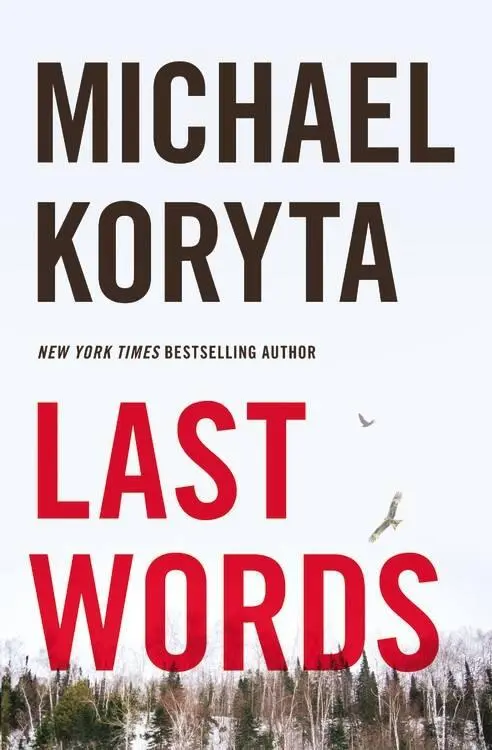
- Название:Last Words
- Автор:
- Издательство:Little, Brown and Company
- Жанр:
- Год:2015
- Город:New York
- ISBN:978-0-316-12263-4
- Рейтинг книги:3 / 5. Голосов: 1
-
Избранное:Добавить в избранное
- Отзывы:
-
Ваша оценка:
Last Words: краткое содержание, описание и аннотация
Предлагаем к чтению аннотацию, описание, краткое содержание или предисловие (зависит от того, что написал сам автор книги «Last Words»). Если вы не нашли необходимую информацию о книге — напишите в комментариях, мы постараемся отыскать её.
As Novak knows all too well, some crimes never do get solved. But it’s not often that the man who many believe got away with murder is the one calling for the case to be reopened. Ten years ago, a teenaged girl disappeared inside an elaborate cave system beneath rural farmland. Days later, Ridley Barnes emerged carrying Sarah Martin’s lifeless body. Barnes has claimed all along that he has no memory of exactly where — or how — he found Sarah. His memory of whether she was dead or alive at the time is equally foggy. Tired of living under a cloud of suspicion, he says he wants answers — even if they mean he’ll end up in the electric chair.
But what’s he really up to? And Novak knows why he’s so unhappy to be in Garrison — but why are the locals so hostile towards him? The answers lie in the fiendish brain of a dangerous man, the real identity of a mysterious woman, and deep beneath them all, in the network of ancient, stony passages that hold secrets deadlier than he can imagine. Soon Novak is made painfully aware that if he has any chance of returning to the life and career he left behind in Florida, he’ll need to find the truth in Garrison first.
Last Words — читать онлайн бесплатно полную книгу (весь текст) целиком
Ниже представлен текст книги, разбитый по страницам. Система сохранения места последней прочитанной страницы, позволяет с удобством читать онлайн бесплатно книгу «Last Words», без необходимости каждый раз заново искать на чём Вы остановились. Поставьте закладку, и сможете в любой момент перейти на страницу, на которой закончили чтение.
Интервал:
Закладка:
The house seemed to be occupied, with two vehicles parked outside, but the windows were dark, lights either lost to the power outage or turned off ahead of sleep. The outbuilding where his father had once taught him how to work wood with chisels and how to take a punch without tears had collapsed in on itself, the remains looking like something that had been subjected to a long, slow squeeze. A sapling was growing through a hole in the roof. Ridley skirted the building in a wide, looping arc, keeping his distance from whatever lingered there.
Fifty yards beyond the outbuilding, right where the field grass began to give itself over to brush at the edge of the tree line, the strip pit announced itself in a series of rock slabs burped up by the earth and then forgotten. The ash tree whose roots had once provided a chin-up bar — style exit had died and fallen on its side. Someone had taken the time to limb it with a chain saw but had left most of the massive trunk and root ball untouched. They loomed above the pit now like bulwarks hastily erected against an invading army.
You didn’t need a rope to descend into this pit, but Ridley wanted to work fast, and the ropes allowed for that. He freed them from his pack, scraped the snow clear beneath one of the uneven spots of the trunk, and then slid the rope around it and cinched it. A good anchor, and an easy one.
He was wearing a headlamp but hadn’t turned it on yet, performing all of the tasks so far with ease, because the night didn’t seem the least bit dark to him. Not aboveground, where the white snow held starlight and traces of a rarely seen moon. He glanced at the house, sure that he’d heard a whisper, but there was no sign of movement, and when he heard the whisper again, he knew that it was his own name, and he knew who was calling for him. He kept his eyes away from the remains of the woodshop, slipped into the strip pit, and began to rappel down into the darkness, closing his eyes against memories of outstretched hands scrambling to catch him before he could make it deep enough.
No hands chased him today. He went about ten feet down, until the neck of the pit narrowed, and then he clicked on the headlamp, keeping it to the dim red setting that was designed to protect night vision. He wasn’t worried about his night vision but he didn’t want to draw attention to himself if anyone in the house got up to take a piss. You could see the pit from the bathroom window. The bathroom window had been the place where Ridley usually reentered the house late at night. His sister, the one who now lived with her family in Rhode Island, had always unlocked it again after their father passed out. She’d been very young in those days, but still she had remembered Ridley, and stayed awake for him. The only one in the house who would.
He hated making this return, thought now that this had been a terrible idea. It had made some sort of karmic sense, leaving as much evil in this place as possible, but he should have known he would have to come back for one piece of it or another at some point. The world above didn’t just let you put things away and move on. It sent you back for them in time, or — far worse — brought them back up for you.
When the walls of the pit began to squeeze his thighs, he let the rope go slack. This was the place where his father had never been able to follow, not even with his most diligent efforts. He was a bigger man and he drank too much and exercised too little. Ridley remembered being on a date, back in the days when such things had been possible in his life, during which the woman noticed how little he ate and said, “What are you watching your figure for?” It had been a joke, and she’d laughed without knowing why when Ridley said, “Ease of escape.” That had not been a joke. They hadn’t had a second date.
He wriggled his legs down and through and now he was essentially sitting on the bottom of the pit, his legs stretched out but his face and torso pressing against stone. He paused to shed the bulkier outer layer he was wearing, balled it up, and pushed it into the rocks, and then he began to dig with his heels, slowly drawing his body down into the gap beneath the stone. By the time you were done with this maneuver, you were lying flat on your back, your face staring straight up to the top of the pit, your arms pinned against your sides, useless for protection. Ridley’s father used to throw rocks or, if they were available, beer bottles at him until he disappeared from sight. It had been a very good thing that the old man did most of his drinking from cans; the glass littered the rocks and laced your flesh with cuts when it was safe to emerge.
He’d experimented with a headfirst approach a few times, not wanting to have that experience of staring straight up into daylight and what waited there, but the feetfirst approach was faster, and when Ridley took to the pit, speed was usually of the essence.
He slid into position now and took a deep breath, bracing himself for the tight slide that waited. Above him, the snow whirled down through the blackness, and a few stars glittered. It was beautiful, and he wanted to lie there and drink it in. He lingered too long, though, and his father caught him, bounding up to the lip of the pit and leaning down, leering at him with a wolf’s smile.
Ridley closed his eyes and used his heels to drag himself under the stone and out of sight.
That squeeze beneath the stone pulled you into a tomb of rock. If you were brave enough — or scared enough — you could keep pulling yourself forward with your heels, though, and eventually you’d come out into a small chamber. Ridley had a sense now of just how small it was, but in his boyhood, the place had seemed impossibly massive, big enough for treasure chests and pirate hideouts. High enough to allow you to sit upright if not quite stand, about eight feet in diameter, and, best of all, accessible only through an opening the size of a small oven door, easily sealed with a rock if you needed protection. He had spent more hours in that small chamber than he could count. He hauled himself toward it again, pausing once to lift his head and kiss the stone roof for luck, the way he always had. It felt like kissing an old tombstone, but the taste was damp and earthy and comforting.
Once inside the little chamber, he sat up and took a few deep breaths. This was the place where all bad things became good, where all negative energy became fuel. His sister had called it the Batcave, but she was wrong, it was more like Superman’s phone booth, a place where you transformed. There was an old metal ammunition box tucked in one corner, a relic from the Army Navy store in Bloomington, a gift from Ridley’s parents on some long-ago Christmas. It had held his sacred things when he was a child, and still did. He opened it, paused to examine a rusted Swiss Army knife and a few arrowheads and the dusty remains of a letter and a poem he’d written to a girl from school but never delivered to her locker. At the bottom of the box was the most recent addition, a DVD in a plastic case, labeled with a date written in black Sharpie: December 13, 2013.
Ridley extracted the DVD and slipped it into the cargo pocket of his pants then restored the other items to their proper places and closed the ammo box and put a flat rock over the top of it and leaned another against that. Of all the hiding places he had, this was the poorest construction, but he believed it also had the smallest risk of a human encounter. This was the place where he’d intended to leave as much evil as possible, here in the chamber room, where the evil might in time be transformed into something else, something good.
Foolish, childish notions.
The DVD rode along in his pocket as he slipped back out of the chamber, found his rope, and began to ascend. There was no sign of his father. He climbed on toward a howling wind and a sky that was just beginning to flush around the edges.
Читать дальшеИнтервал:
Закладка:
Похожие книги на «Last Words»
Представляем Вашему вниманию похожие книги на «Last Words» списком для выбора. Мы отобрали схожую по названию и смыслу литературу в надежде предоставить читателям больше вариантов отыскать новые, интересные, ещё непрочитанные произведения.




Обсуждение, отзывы о книге «Last Words» и просто собственные мнения читателей. Оставьте ваши комментарии, напишите, что Вы думаете о произведении, его смысле или главных героях. Укажите что конкретно понравилось, а что нет, и почему Вы так считаете.