Michael Koryta - Last Words
Здесь есть возможность читать онлайн «Michael Koryta - Last Words» весь текст электронной книги совершенно бесплатно (целиком полную версию без сокращений). В некоторых случаях можно слушать аудио, скачать через торрент в формате fb2 и присутствует краткое содержание. Город: New York, Год выпуска: 2015, ISBN: 2015, Издательство: Little, Brown and Company, Жанр: Триллер, на английском языке. Описание произведения, (предисловие) а так же отзывы посетителей доступны на портале библиотеки ЛибКат.
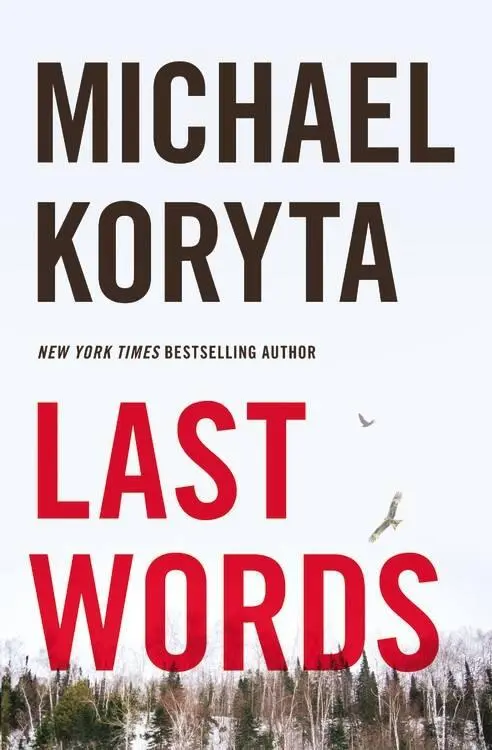
- Название:Last Words
- Автор:
- Издательство:Little, Brown and Company
- Жанр:
- Год:2015
- Город:New York
- ISBN:978-0-316-12263-4
- Рейтинг книги:3 / 5. Голосов: 1
-
Избранное:Добавить в избранное
- Отзывы:
-
Ваша оценка:
Last Words: краткое содержание, описание и аннотация
Предлагаем к чтению аннотацию, описание, краткое содержание или предисловие (зависит от того, что написал сам автор книги «Last Words»). Если вы не нашли необходимую информацию о книге — напишите в комментариях, мы постараемся отыскать её.
As Novak knows all too well, some crimes never do get solved. But it’s not often that the man who many believe got away with murder is the one calling for the case to be reopened. Ten years ago, a teenaged girl disappeared inside an elaborate cave system beneath rural farmland. Days later, Ridley Barnes emerged carrying Sarah Martin’s lifeless body. Barnes has claimed all along that he has no memory of exactly where — or how — he found Sarah. His memory of whether she was dead or alive at the time is equally foggy. Tired of living under a cloud of suspicion, he says he wants answers — even if they mean he’ll end up in the electric chair.
But what’s he really up to? And Novak knows why he’s so unhappy to be in Garrison — but why are the locals so hostile towards him? The answers lie in the fiendish brain of a dangerous man, the real identity of a mysterious woman, and deep beneath them all, in the network of ancient, stony passages that hold secrets deadlier than he can imagine. Soon Novak is made painfully aware that if he has any chance of returning to the life and career he left behind in Florida, he’ll need to find the truth in Garrison first.
Last Words — читать онлайн бесплатно полную книгу (весь текст) целиком
Ниже представлен текст книги, разбитый по страницам. Система сохранения места последней прочитанной страницы, позволяет с удобством читать онлайн бесплатно книгу «Last Words», без необходимости каждый раз заново искать на чём Вы остановились. Поставьте закладку, и сможете в любой момент перейти на страницу, на которой закончили чтение.
Интервал:
Закладка:
He moved upward using a daisy chain attached to his climbing harness — a laborious process but a quick one if you were good. He’d secure a bolt above him, clip the daisy chain in, and use it to pull himself up until the bolt was at waist level. Then he’d reach up and install another bolt. A dynamic rope was tied to his harness, and this ran down to his belay man. If a bolt failed, the belayer would arrest his fall. Ridley understood that they preferred this approach and understood that perhaps it was safer, but he’d worked alone for so long that he didn’t trust the idea. If he couldn’t stop his fall himself, then let him fall.
He wasn’t going to fall, though.
By the time he had the seventeenth bolt in, he was able to get his hands on the lip of rock just below the ceiling. He hung there and caught his breath and rested for a minute while he searched the shadowed rocks for the right spot. He remembered that it had looked like nothing more than a large crack.
“How long now?” the sheriff asked, and the question put Ridley back into action, reminding him that there was no rest allowed. The sheriff was inquiring with the ground team, those still down in the funnel, as to how much time had passed since they last heard Novak’s voice. The whispered calls had ceased when Ridley was on his twelfth bolt.
“Nine minutes,” someone in the funnel said.
“Gotta move,” another voice responded. “Clock is ticking.”
If we’re lucky, Ridley thought. Could be that the clock has stopped, boys and girls.
He’d been certain that the chute entrance was here, but now he was second-guessing himself, beginning to worry that they’d spent all this time climbing toward the wrong spot on the ceiling. Then his headlamp beam caught it, and he realized why he’d missed it the first time — it was awfully small.
“Entrance located,” Ridley called, and he pointed toward it.
The sheriff’s voice said, “I don’t see it.”
Ridley stretched and got his hand hooked into the crevice. “Right here.”
One of the rescue-team members said, “No way we’re getting through that. No way.”
Ridley had to admit that it didn’t look encouraging. It was the sort of space that most people wouldn’t want to poke their heads into, let alone their bodies.
“I’ve been through,” Ridley said. And then, more for himself than the rest of them, he added, “It opens up a little. Once you get going, it’s not so bad at all.”
But his mouth was dry and his heart was thundering.
“Give me just a second,” he said, and then he closed his eyes and drank in the darkness, imagined he was folding it around himself like a shroud, then smoothing the shroud over each individual nerve ending. It was a burial shroud — the nerves were being put to permanent rest, one at a time, until all that remained within him was darkness and peace. In his mind, the nerves waved like blades of tall grass in the wind until he stilled them with the dark shroud.
“All right,” he said. “I’m going in now. Anmar, you give me at least a minute lead time before you follow. If there’s trouble getting through, we don’t need two people on top of each other in there.”
“Got it. I’ll follow, but I won’t breathe down your neck.”
“Hang on,” the sheriff said. “I don’t want him going first.”
There were a few murmurs of agreement. Anmar and Cecil were noticeably silent. Ridley called back and said, “Tell him, guys. Tell him why that is a bad idea.”
Cecil’s voice was soft and grudging. “It’s about speed, Sheriff. He’s fast, and he’s been through it before, which is the big difference. If we lose speed, we might lose our chance.”
The sheriff was still objecting when Ridley pulled his body up and reached into the gap with both arms. When his hands found purchase on the rough rock, he dragged his head into position, happy that there was a good foothold to help with balance, and leaned down so that the headlamp illuminated the interior, which looked like the inside of a stone air duct, and not a big one. The scene wasn’t made any more appealing by the way the duct angled steeply down.
“Going in,” he called, and then he lowered his head and pushed it forward. The helmet banged against rock immediately, and he twisted, hearing a scraping noise on all sides, and got his helmet through. His shoulders wedged tight. The sensation told him, Stop, you do not belong in here, but Ridley ignored the warning and wriggled forward. His feet were free now, kicking in open air above the ninety-foot drop, and he heard the sheriff say, “Good Lord.” The belay rope tangled in Ridley’s feet, and he wriggled again and got a few inches farther in, sure that he was solid now and would not fall. The rope was bothering him, and though he knew Anmar and the others would insist he keep it, he called, “Off rope,” and, with difficulty, found the carabiner and unclipped it. He was untethered now, on his own. His head and torso were jammed into the crack in the stone, but his legs were still outside, and he knew that from down below, he must look like a rabbit being consumed by a snake.
His helmet scraped off the rock again as he used his elbows to pull himself forward. His headlamp had gotten jostled and was angled up a bit, which was a problem because the crawl was angled down. With the light pointed up, most of what lay ahead was dark.
He drove forward using his elbows. His feet left the air and found stone as he slipped all the way into the chute, thinking that it was going to be one hell of a hard thing to get Novak back up through here if he was in bad shape.
Don’t do that, he scolded himself. The minute you began to worry about getting back out, panic could rise, claustrophobia could set in. One of the great myths of caving was that regulars couldn’t be touched by claustrophobia. That was what the weekend warriors said, maybe, but people who’d spent a lot of time underground had seen others get stuck or had gotten stuck themselves or both. Real cavers understood real consequences.
But you’re not going to get stuck. You’ve made it through here before.
Yes, he had. Ten years ago. And if a single piece of rock had fallen in that decade, he’d be worming himself right into a dead end.
Takes most rocks ten thousand years to fall.
Not all of them.
He paused there, the back-and-forth interior dialogue beginning to get to him, the worries about backing out of the chute into a ninety-foot fall — all of it swirling, threatening. This was where a cave could start to break your mind, and if you were brooding over these things in the dark...
That was what he’d practiced for all of these years, ever since his last descent into Trapdoor: control in the dark. He knew no panic. Not anymore. And no one would ever suffer the consequences of Ridley’s panic in the dark again.
He closed his eyes, breathed a few times, and then continued on with his eyes closed. At this pace, you didn’t need your eyes anyhow. Hell, at this pace, he could crawl over razor blades and just give himself a nice smooth shave.
Inch, inch, inch. The slope was getting steeper, and he knew that he was angling down behind the wall now.
When his shoulders caught, he wasn’t immediately unnerved. He opened his eyes and assessed what little he could — not much to see except the backs of his hands — and tried to shimmy his shoulders around and loosen the grip.
It didn’t loosen.
Well, now. Well. He was breathing faster, not all that different from the sheriff back in the entrance crawl, and he wet his lips and sucked in air and reminded himself yet again that he’d done this once before. Back when he hadn’t known whether it was open, he’d gotten through. He took as deep a breath as he could manage with the squeeze on his ribs, braced his toes against the floor, and drove forward.
Читать дальшеИнтервал:
Закладка:
Похожие книги на «Last Words»
Представляем Вашему вниманию похожие книги на «Last Words» списком для выбора. Мы отобрали схожую по названию и смыслу литературу в надежде предоставить читателям больше вариантов отыскать новые, интересные, ещё непрочитанные произведения.




Обсуждение, отзывы о книге «Last Words» и просто собственные мнения читателей. Оставьте ваши комментарии, напишите, что Вы думаете о произведении, его смысле или главных героях. Укажите что конкретно понравилось, а что нет, и почему Вы так считаете.