Lee Child - Night School
Здесь есть возможность читать онлайн «Lee Child - Night School» весь текст электронной книги совершенно бесплатно (целиком полную версию без сокращений). В некоторых случаях можно слушать аудио, скачать через торрент в формате fb2 и присутствует краткое содержание. Жанр: Триллер, на английском языке. Описание произведения, (предисловие) а так же отзывы посетителей доступны на портале библиотеки ЛибКат.
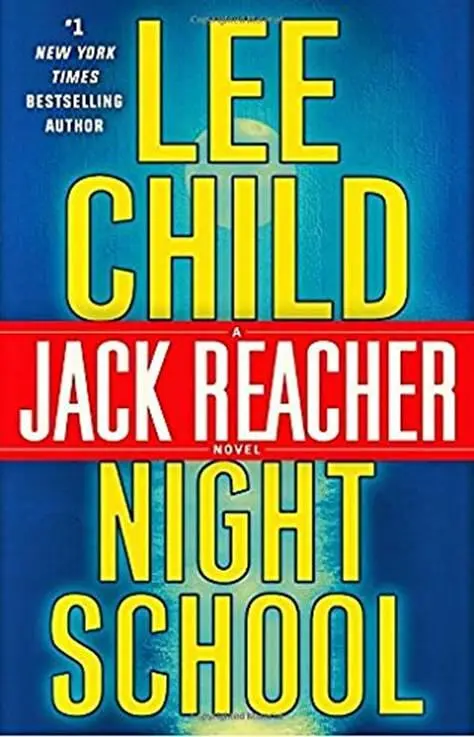
- Название:Night School
- Автор:
- Жанр:
- Год:неизвестен
- ISBN:нет данных
- Рейтинг книги:4 / 5. Голосов: 1
-
Избранное:Добавить в избранное
- Отзывы:
-
Ваша оценка:
Night School: краткое содержание, описание и аннотация
Предлагаем к чтению аннотацию, описание, краткое содержание или предисловие (зависит от того, что написал сам автор книги «Night School»). Если вы не нашли необходимую информацию о книге — напишите в комментариях, мы постараемся отыскать её.
It's 1996, and Reacher is still in the army. In the morning they give him a medal, and in the afternoon they send him back to school. That night he's off the grid. Out of sight, out of mind.
Two other men are in the classroom – an FBI agent and a CIA analyst. Each is a first-rate operator, each is fresh off a big win, and each is wondering what the hell they are doing there.
Then they find out: A jihadist sleeper cell in Hamburg, Germany, has received an unexpected visitor – a Saudi courier seeking safe haven while waiting to rendezvous with persons unknown. A CIA asset undercover inside the cell has overheard the courier whisper a chilling message: "The American wants a hundred million dollars."
For what? And who from? Reacher and his two new friends are told to find the American. Reacher recruits the best soldier he has ever worked with: Sergeant Frances Neagley. Their mission heats up in more ways than one, while always keeping their eyes on the prize: If they don't get their man, the world will suffer an epic act of terrorism.
From Langley to Hamburg, Jalalabad to Kiev, Night School moves like a bullet through a treacherous landscape of double crosses, faked identities, and new and terrible enemies as Reacher maneuvers inside the game and outside the law.
Night School — читать онлайн бесплатно полную книгу (весь текст) целиком
Ниже представлен текст книги, разбитый по страницам. Система сохранения места последней прочитанной страницы, позволяет с удобством читать онлайн бесплатно книгу «Night School», без необходимости каждый раз заново искать на чём Вы остановились. Поставьте закладку, и сможете в любой момент перейти на страницу, на которой закончили чтение.
Интервал:
Закладка:
Griezman’s secretary’s in-box was piled high.
Muller was not a brave man, but he was a loyal comrade-in-arms. He made a deal with himself. He would read through the in-tray, but he wouldn’t search Griezman’s desk. A sensible compromise. He felt all reasonable people in the movement would agree with him. Information was important, but so was keeping a guy in a job at the highest level. Or close to it.
He clamped the pile of papers between his palms and carried them away, down the hallway, to the fire door, and down the fire stairs, to his own floor, and his own hallway, and his own office.
–
Neagley called Landry in McLean, Virginia, and asked him about Wiley’s family. His uncles, specifically. Possibly one in particular, who maybe lived close by, and had an influence on the kid growing up.
Landry said, “Wiley has no uncles.”
“You sure?”
“Both parents were only children.”
“Great-uncles?”
“I’ll take a look.”
“What was the state of the parents’ marriage?”
“The father took off early and was never seen again. The mother raised Wiley as a single parent. No brothers or sisters. Just the two of them.”
“Did the mother get a boyfriend later? He might have been called an uncle in front of the kid.”
“Could have been one after another. Could have been a lot of uncles.”
“Can you check?”
“We’d have to find the mother and get some agents to pay a call. That kind of thing has to be done face to face. It takes time. Old boyfriends aren’t in the databases. And some aren’t happy memories.”
“It might be worth it. If the great-uncles don’t pan out.”
“Could take days. You nearly had the guy.”
“He’s still in the city.”
Neagley killed the call and checked the AWOL file for the crewmate who had mentioned the uncle. She dialed the Frankfurt MPs and told them to bring the guy in for further and better particulars. Then she checked Wiley’s personnel file for the commanders who had written his initial fitness reports. Fort Benning, and then Fort Sill. She called a friend in Personnel Command. The Benning guy had moved on to Bragg. The Sill guy was still in Oklahoma, three years later. She got the numbers and started dialing.
–
Muller scanned one scrap of paper after another. Griezman’s output was prodigious. Most of it was normal ass-covering bullshit. Trivia from below to be shoveled up above. Standard practice. Everyone did it. No one ever wanted the buck to stop with him. No one ever wanted to be at an official inquiry, saying, “Yes, it was me who judged it not worth passing on. So it’s all my fault.”
There were routine reports from every kind of case. None of them meant anything. Until five stapled pages about Helmut Klopp. An interrogation. Photographs. Issues with the translator. No knowledge of what had been said in the bar. Actual conversation had not been overheard. The American investigators were named as Reacher and Neagley. But that was all. Nothing about where they were staying. Muller thought the consulate, maybe. Or maybe not. They were U.S. Army, not CIA. A hotel? Nothing was mentioned.
He plowed on. Safe enough, as long as he kept his light low and his door shut. An unexpected visitor could be counted on to knock. Or at least call out. Not that there would be an unexpected visitor. It was late, and the building was quiet. Eventually he came to an interim report about a surveillance operation. Recent. That evening, in fact. He had dumped the pile upside down. He was reading it in chronological order. The surveillance had been fruitless. The negative result had been communicated to Reacher in his hotel room. Which meant the Hamburg police had run an operation for the American military.
Interesting.
Reacher’s hotel was not named, but the switchboard number Griezman had called was recorded. The traffic division had access to a standard reverse phone directory, so Muller started his computer and looked up the number.
And got the hotel’s name.
He knew the place very well. A bijou establishment on a side street, in a good but not-quite-best neighborhood. Sometimes the manager called to complain about people parking right in front. Because that ruined the image. They had a guy with a top hat. Where was he supposed to stand? Muller himself had been out there twice. Nothing he could do. Not without two years of due process to get the curb changed. Which the city’s lawyers would never allow. Suppose all the small hotels wanted the same treatment? Chaos. It was already bad enough with the big brands.
Muller picked up his desk phone and dialed Dremmler at home.
Chapter 24
Reacher stepped around the guy with the top hat and set out walking. It was midnight local time. The streets were lit by lamps on poles, and by the soft light of storefronts dimmed to a nighttime glow, and by the blue flicker of late shows on television sets behind undraped apartment windows. He walked a figure-of-eight around two random blocks and saw no one behind him. Or ahead of him. Or in the shadows. Just a routine precaution. A habit. He was thirty-five years old and still alive. Had to mean something.
He found the street with the bar in it. Where Klopp had seen Wiley the first time. Where Billy Bob and Jimmy Lee had sold their scrap Berettas. Where German ID was for sale. He stopped forty yards short and eyeballed the place from an angle. The ground floor of the stone building, the center door, the planked wood façade, varnished and shiny. The small windows, with their lace curtains, and their paper flags. The lights were on inside. By night they looked warm and welcoming.
Reacher crossed the street and went in through the door. Inside it was smoky and loud. It was late, but there were maybe sixty people still in there, mostly men, in tight private groups of three or four. Some were at tables, and some were standing, cramped and back-to-back with other huddles. There were upholstered benches under the windows. All were full, like seats on a rush-hour subway. Reacher eased through the crowd, gently but firmly, like a police horse at a riot. Most folks got out of his way fast enough. They looked like business people, or clerical workers. Some of them senior, some of them doing well. Reacher didn’t see Wiley. He didn’t expect to. He was a lucky man, but not that lucky. He sensed people looking at him from behind. Delayed reaction. Weren’t we warned about a man like that?
He made it to the bar after a roundabout route, and he wedged himself in, and waited to be served. Both bartenders were men. Both had heavy canvas aprons tied around their waists. One glanced his way. Reacher asked for a cup of black coffee. The guy set an espresso machine going, and ducked back for his money. Reacher asked him no questions. Life wasn’t like the television shows. Bartenders never spilled the beans. Why would they? Who came first, the sixty people they had to live with every night of their lives, or the lone guy they had never seen before?
Instead he carried his coffee into the crowd and sat down in the spare seat where three guys were at a four-top table. They looked at him like he had committed an embarrassing faux pas, and then they looked away, and a lot of coughing and false starts indicated they were changing the subject. And commenting. Reacher heard the word arschloch, which he knew from many in-country arguments meant asshole . But he didn’t react. Instead he drained his cup and headed for the pay phone on the opposite wall. He got a coin ready and dialed Orozco.
Orozco said, “Are we in trouble?”
Reacher said, “No, we’re good. If I get the guy.”
“I thought you almost had him.”
“I screwed up. I didn’t expect a woman messenger. Live and learn.”
Читать дальшеИнтервал:
Закладка:
Похожие книги на «Night School»
Представляем Вашему вниманию похожие книги на «Night School» списком для выбора. Мы отобрали схожую по названию и смыслу литературу в надежде предоставить читателям больше вариантов отыскать новые, интересные, ещё непрочитанные произведения.






Обсуждение, отзывы о книге «Night School» и просто собственные мнения читателей. Оставьте ваши комментарии, напишите, что Вы думаете о произведении, его смысле или главных героях. Укажите что конкретно понравилось, а что нет, и почему Вы так считаете.