Tom Savage - Mrs. John Doe
Здесь есть возможность читать онлайн «Tom Savage - Mrs. John Doe» весь текст электронной книги совершенно бесплатно (целиком полную версию без сокращений). В некоторых случаях можно слушать аудио, скачать через торрент в формате fb2 и присутствует краткое содержание. Жанр: Триллер, на английском языке. Описание произведения, (предисловие) а так же отзывы посетителей доступны на портале библиотеки ЛибКат.
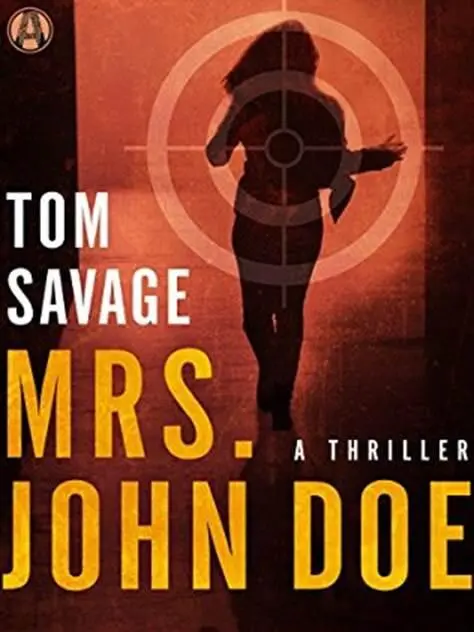
- Название:Mrs. John Doe
- Автор:
- Жанр:
- Год:неизвестен
- ISBN:нет данных
- Рейтинг книги:5 / 5. Голосов: 1
-
Избранное:Добавить в избранное
- Отзывы:
-
Ваша оценка:
Mrs. John Doe: краткое содержание, описание и аннотация
Предлагаем к чтению аннотацию, описание, краткое содержание или предисловие (зависит от того, что написал сам автор книги «Mrs. John Doe»). Если вы не нашли необходимую информацию о книге — напишите в комментариях, мы постараемся отыскать её.
Nora Baron's life is perfect. She lives on Long Island Sound, teaches acting at a local university, and has a loving family. Then one phone call changes everything. She's informed that her husband, Jeff, has died in a car crash while on a business trip in England. Nora flies to London to identify the body, which the police have listed as a "John Doe." When she leaves the morgue, a man tries to steal her purse containing Jeff's personal effects. Clearly, all is not as it seems.
At her hotel, Nora receives a cryptic message that leaves her with more questions than answers. She follows the message's instructions to France, where a fatal encounter transforms her into a fugitive. Wanted for murder, on the run in a shadowy landscape of lies, secrets, and sudden violence, Mrs. "John Doe" must play the role of a lifetime to stay one step ahead of a ruthless enemy with deadly plans for her – and for the world.
Praise for Mrs. John Doe
"This is a rare spy thriller, smart, beautifully written, and stay-up-all-night enjoyable!" – Gayle Lynds, New York Times bestselling author of The Assassins
"It isn't easy to blindside a fellow suspense author, but Tom Savage manages to fool me every time. A clever, compelling, and cinematic page-turner in which nothing is as it seems, Mrs. John Doe opens with a twist I didn't see coming and closes with a satisfying bang. This longtime Savage fan ranks Mrs. John Doe right up there with Precipice." – Wendy Corsi Staub, New York Times bestselling author of The Black Widow
"Tom Savage's Mrs. John Doe races a fictional path somewhere between Alfred Hitchcock and Agatha Christie, a modern heroine-on-the-run spy thriller dealing with some of our time's deadliest challenges." – James Grady, New York Times bestselling author of Last Days of the Condor
"Savage twists the plot in two startling ways, and Nora's transformation from wealthy home-focused wife to clever investigator holds up brilliantly… I enjoyed each page, gasped at the swift twists, and came away with a hunger for more of the same, whether it be thrills, France, or books by Tom Savage." – Kingdom Books
"If you like books that make your pulse pound, where the images conjured up by your mind while reading are better than the best 'action' movie, Mrs. John Doe should be on your shelf." – Back Porchervations
"Cloak-and-dagger suspense, dark, shadowy figures, secret agents, and a diabolical terrorist plot that must be thwarted combine to create… a shocking, heart-pounding, unrelenting thrill ride." – The Book Reviews
Praise for Tom Savage
"Savage knows the mystery novel inside and out, and it shows on every page." – James Patterson
"A master of the high-speed thriller." – Michael Connelly
"A very gifted writer who creates living, breathing characters, wonderful dialogue, and mesmerizing tension." – Nelson DeMille
"Savage writes with fierce energy, piercing holes in the shredding fabric of our society, where no one is safe, no one is free from harm." – Lorenzo Carcaterra
Mrs. John Doe — читать онлайн бесплатно полную книгу (весь текст) целиком
Ниже представлен текст книги, разбитый по страницам. Система сохранения места последней прочитанной страницы, позволяет с удобством читать онлайн бесплатно книгу «Mrs. John Doe», без необходимости каждый раз заново искать на чём Вы остановились. Поставьте закладку, и сможете в любой момент перейти на страницу, на которой закончили чтение.
Интервал:
Закладка:
She lowered the gun to her side, glancing to her left and right. The air outside was cold, and drops of rain were beginning to land on the patio. Lights shone from the windows of the nearest houses, but the proximity of other, living people was no comfort to her-quite the opposite. She shut the back door and crossed the darkened kitchen, careful to avoid the body and the water, stopping only to turn off the burner under the saucepot. Then she went back through the swinging door to the front hallway and the other bodies. Vivian and Bill, so still and silent. And Claudia, so proud of her collegiate son, her Vito. Minutes ago, they were three vital people, and now they were gone, just like that.
She probably wouldn’t be sick again-her trip upstairs had put paid to that-but she was aware of the possibility of shock. She must think, and she must move while she was still able to do so, before grief or numbness or hysteria set in. She was an actor, onstage in mid performance, a thousand paying customers watching and the cast and crew depending on her, and the show must go on. Her friends were dead; nothing could be done for them now. The police weren’t an option, any more than they’d been at Solange’s apartment in Paris, and for the same reason. They would detain her; they might even suspect her, accuse her, charge her. There wasn’t time for that; the clock was ticking. At three o’clock tomorrow afternoon her husband would die…
She thought, I was never here.
Nobody knew she’d come here tonight-nobody alive, at any rate. Even the killer, moving silently through the house while she stood at Vivian’s bathroom sink, had not detected her presence. He’d made a cursory check of the darkened bedrooms, gone back downstairs, and left through the kitchen. If she hadn’t switched off that glaring bathroom light mere moments before he’d opened the bedroom door, she’d be dead now.
She moved to the hall closet and put on her gray coat. Then she steeled herself and went back into the living room. She picked up her martini glass from the coffee table and dropped it in her bag. She winced at the sight of Bill Howard and then focused on the cellphone he’d left lying on the table. She was debating whether to risk using it to make a call when it began to vibrate. It moved slightly on the tabletop, the low sound almost inaudible. Nora stared, fascinated, then abruptly snatched it up and checked the readout: Elder .
Craig Elder was finally returning Bill’s calls. A wave of pure relief was immediately replaced by trepidation. Did she dare answer it? They might be listening, whoever they were: Maurice Dolin and his creatures? Think! she commanded herself. I must give him a message without actually saying anything…
Another vibration. He wouldn’t wait much longer, and then he’d be gone. She snapped the phone on, raised it to her ear, and instantly became Dame Maggie Smith. She spoke in a low, cultured British accent.
“Mr. Howard’s office. Ms. Hughes speaking. May I help you?”
There was a slight pause, an intake of breath. She heard clattering and muffled conversations and soft, atonal Eastern music in the background, samisens and woodblocks. A Japanese restaurant? Then she heard, “Um, hello, Ms. Hughes. This is Craig Elder, returning Mr. Howard’s call. Is he available?”
Good. He was playing along. “Hello, Mr. Elder. I’m afraid Mr. Howard is OC at the moment, but he said to tell you he’ll send the package to you as soon as he’s free. Are you at home now?”
Another sharp intake of breath from the other end of the line. She’d often heard Jeff use that term, OC, meaning out of commission, and Craig would certainly know what it implied in their profession. He recovered quickly and said, “No, I’m not home now, I’m getting takeaway, but I’m on my way there as soon as my order is ready. Please ask him to send the package there. Do you understand, Ms. Hughes? My address is in his phone, if he’s forgotten it. I’ll be waiting.”
“I understand. I’ll give him the message, and he’ll deliver it to you directly, Mr. Elder. Goodbye.”
She broke the connection, then peered down at the phone, looking for the correct buttons. A bit of trial and error finally produced Bill’s electronic address list. It was the fifth entry, after Vivian, Solange, the main office of MI6, and the current prime minister. A flat on the first floor- second floor, Nora the American reminded herself-of an apartment house on Queensway in Bayswater.
She memorized the address, wiped the phone clean with a tissue from her bag, and dropped it back on the coffee table. She stared at Bill Howard in the chair, his forehead pressed into the bright fabric, his arm dangling to the carpet. The silence of the house closed in on her, a palpable presence. She must go, she must get away from all this death, she must breathe fresh air. She wanted to run and run until she couldn’t run anymore. She moved swiftly back through the archway to the front hall.
The doorbell rang, a sudden, shrill noise in the quiet house. Nora froze, staring over at the front door ten feet away, beyond Vivian’s body. They couldn’t have come back, not so soon. Why would they? As far as they knew, they’d killed everyone in the-
The bell rang again, followed by a soft knocking. Then came a tiny voice through the wood. “Missus? Missus Bellini? ’Ello? It’s Shine Gahs’n f’m t’mahkit. ’Ello?”
Shane Garson from the market. With the cream. Dear God! She couldn’t open the door, couldn’t let him see her, couldn’t let him see Vivian lying there in plain sight. But the lights were on, and he’d wonder. More to the point, his mother would wonder a few minutes from now, when the boy returned to the grocery store with the undelivered package. An anxious phone call to Claudia’s number, then Vivian’s number, and then the woman-Bessie?-would come here herself. When she saw the lights and received no answer at the door…
The ringing and knocking continued for a few more moments, then abruptly stopped. He was going away now, back to the shop. Nora figured that she had ten, maybe fifteen minutes before this house, this street, this entire neighborhood would be swarming with police.
A last glance at her friend, dear Vivian, and she was off down the hall, through the swinging door, past the faceless body in the dark, wet kitchen, and out into the rainy night. She bundled the gun back into the shawl and dropped it into her bag, then fished around for the foldaway umbrella and popped it open, but it did little to shield her from the downpour. The patio, the lawn, the back gate. She was weeping now, the hot tears mingling with the icy drops that lashed at her face, blinding her. The martini glass was discarded in a trash can a few doors down, shattered beyond recognition. She hurried away down the long, dark service road, soaking wet and freezing, half running, half staggering, lurching toward the distant lights, biting back sobs as she listened for the imminent shriek of approaching sirens.
Chapter 36
Nora didn’t know where she was anymore. She’d never been familiar with this part of London, and the rain and her advancing shock only added to her awful sense of disorientation. She was running east, in the direction from which she’d arrived earlier in the taxi, but the immaculate streets and well-appointed houses that rushed by her might as well have been on some alien planet, all abstract shadows and wet streaks of light. Now a large main thoroughfare appeared up ahead, and she remembered it from the cab ride. Was it called Park Road? Something like that.
She emerged from a side street into St. John’s Wood Road, and there was a junction on her left. Yes, that was Park Road, over there. And here, miraculously, was a big black cab, pulling over at an awning and discharging an elderly couple into the capable hands of their doorman, waiting at the curb with an oversize umbrella. Nora hurried over and threw herself into the vacated backseat. The doorman shut the door for her and led his tenants away. Nora leaned back against the seat and shut her eyes, thinking furiously.
Читать дальшеИнтервал:
Закладка:
Похожие книги на «Mrs. John Doe»
Представляем Вашему вниманию похожие книги на «Mrs. John Doe» списком для выбора. Мы отобрали схожую по названию и смыслу литературу в надежде предоставить читателям больше вариантов отыскать новые, интересные, ещё непрочитанные произведения.








Обсуждение, отзывы о книге «Mrs. John Doe» и просто собственные мнения читателей. Оставьте ваши комментарии, напишите, что Вы думаете о произведении, его смысле или главных героях. Укажите что конкретно понравилось, а что нет, и почему Вы так считаете.