Dale Brown - Puppet Master
Здесь есть возможность читать онлайн «Dale Brown - Puppet Master» весь текст электронной книги совершенно бесплатно (целиком полную версию без сокращений). В некоторых случаях можно слушать аудио, скачать через торрент в формате fb2 и присутствует краткое содержание. Город: New York, Год выпуска: 2016, ISBN: 2016, Издательство: William Morrow, Жанр: Триллер, на английском языке. Описание произведения, (предисловие) а так же отзывы посетителей доступны на портале библиотеки ЛибКат.
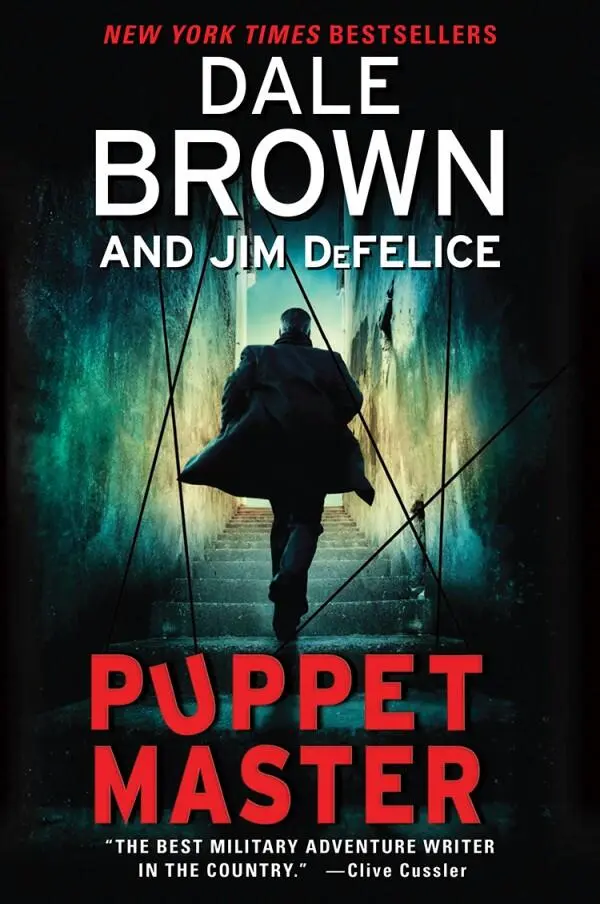
- Название:Puppet Master
- Автор:
- Издательство:William Morrow
- Жанр:
- Год:2016
- Город:New York
- ISBN:9780062411310
- Рейтинг книги:5 / 5. Голосов: 1
-
Избранное:Добавить в избранное
- Отзывы:
-
Ваша оценка:
Puppet Master: краткое содержание, описание и аннотация
Предлагаем к чтению аннотацию, описание, краткое содержание или предисловие (зависит от того, что написал сам автор книги «Puppet Master»). Если вы не нашли необходимую информацию о книге — напишите в комментариях, мы постараемся отыскать её.
, intelligent machines take center stage as America battles the Russian mafia in Eastern Europe
Louis Massina is revolutionizing the field of robotics. His technological wonders are capable of locating disaster survivors, preventing nuclear meltdowns, and replacing missing limbs. After one of Massina’s creations makes a miraculous rescue, an FBI agent recruits him to pursue criminals running a massive financial scam — and not coincidentally, suspected of killing the agent’s brother. Massina agrees to deploy a surveillance “bot” that uses artificial intelligence to follow its target. But when he’s thrust into a dangerous conspiracy, the billionaire inventor decides to take matters into his own hands, unleashing the greatest cyber-weapons in the world and becoming the Puppet Master.
Puppet Master — читать онлайн бесплатно полную книгу (весь текст) целиком
Ниже представлен текст книги, разбитый по страницам. Система сохранения места последней прочитанной страницы, позволяет с удобством читать онлайн бесплатно книгу «Puppet Master», без необходимости каждый раз заново искать на чём Вы остановились. Поставьте закладку, и сможете в любой момент перейти на страницу, на которой закончили чтение.
Интервал:
Закладка:
“When are you going to tell him he’s free to go?” asked Hightower.
“Would you do it?”
“Me?”
“I’m not sure I can trust myself not to hit him,” Jenkins confessed. “Or pound the wall on his way out.”
Told he could go, Tolevi walked out of the interrogation room and down the hall to the lavatory, moving as deliberately as he could. He guessed that they would still be observing him. This release might even be a trick.
Standing in front of the men’s room mirror, he tried to smooth the wrinkles from his jacket. He combed his hair straight back, patting the sides. He was due for a cut.
I look like I have two black eyes.
More than likely Johansen had gotten him released. Though it was possible this whole thing was part of an elaborate plot to pressure him into doing whatever job the CIA officer was pushing.
Whatever that was. It had to be big for Johansen to meet him in person. And not even on a train.
Tolevi’s thoughts turned to his daughter. She’d be getting up soon, to go to school. He needed to get home and talk to her before then, find out what the hell she was doing.
Had she stolen an ATM card? He didn’t want to jump to conclusions, but there seemed to be no other logical explanation.
What was the punishment for that? Grounding for a year?
What if she just found the card? Or told him that. What would he say?
She’d broken curfew, so the card was irrelevant. That definitely earned her a punishment. A stricter curfew and, better, loss of computer privileges, except for homework.
That was the Achilles’ heel — homework. The teachers assigned every damn thing on the Internet. You’d think they never heard of libraries, let alone pencils and paper.
Tolevi continued to brood on what to do about Borya as he collected his suitcase and left the building. The real solution here was to hire a full-time, live-in babysitter; the “nanny” he was using to check on her was clearly ineffectual.
And what would a new babysitter do? Put her in chains?
Maybe that was the best way.
The suitcase bumped along after him as he strode toward the front hall. Tolevi stopped and examined it. One of the wheels was chipped.
I oughta send these idiots a bill.
Once, ten years before, Stephan Stratowich had blown off a speeding ticket in Florida, figuring that by the time the police caught up with him, he would be out of the state, immune to anything they could do.
And he was — until two years later, when he was stopped at a routine DWI checkpoint in Illinois. He’d passed the breathalyzer test easily — Stratowich touched alcohol only on his birthday — but then was detained on a warrant check: the Florida court where his ticket was answerable had filed a bench warrant when he failed to show.
That experience weighed on him now, pushing him to settle the speeding ticket he’d gotten the day before with a quick visit to city court. He was hoping he could plea-bargain the damn thing in person that morning. If that didn’t work, then he’d pay the damn thing and be done with it. He couldn’t afford to take any chances.
One of his “uncles” could probably get him out of it. But he was already deeply in debt, and he didn’t need to add another favor to the fifteen grand.
Stratowich quickened his pace as he neared the FBI building, which happened to be on his way. If he was paranoid about speeding tickets, he was absolutely on alert when it came to the Bureau. Yet it held a certain fascination. You had to know the enemy if you were going to conquer him.
He had just decided to cross the street when he saw the door to the building open. A man was framed in the light behind him.
Gabor Tolevi.
Tolevi?
Stratowich froze. He couldn’t imagine what Tolevi might be doing there.
Before he could decide whether to approach him or not, a black Uber car drove up and stopped a few yards from the building. Tolevi — it absolutely had to be him, pulling a suitcase and carrying a briefcase — stepped out into the street, asked the driver a question, then jumped in the back.
Stratowich stepped back into the shadows, shielding his face as the car passed. He caught a bit of the passenger’s profile, enough to confirm, at least in his mind, that it was in fact Tolevi. Though he couldn’t for the life of him imagine why Tolevi would be talking to the FBI.
His uncle might. Perhaps this might be worth shaving a little interest off the debt.
Leg Work
Flash forward
Johnny Givens walked into Louis Massina’s office, powered by pride, adrenaline, and a dollop of nervousness.
“Mr. Givens,” said Massina cheerfully, rising from his desk to meet him halfway. “So good to see you.”
Johnny extended his hand. The two men shook.
It’s amazing to think I’m touching a fake hand, thought Johnny. As artificial as my legs.
“I’m told you’re making excellent progress,” said Massina.
“Thank you for your help,” said Johnny.
“You’ve put the effort in. It’s all you.”
Massina smiled broadly. He was an interesting man — a genius, surely, and a rich one. Yet he was “real,” humble in many ways. He didn’t talk down to Johnny, as many people did. Nor did he offer bs pep talks.
“Things are moving ahead?” asked Massina.
“Yes. I didn’t come to thank you. I came to ask for a job.”
“A job? Aren’t you — you’re still with the FBI?”
“The Bureau isn’t going to let me go back to the field. I’m on, uh, a furlough. Unpaid.”
“I see.”
“I’d like to be part of your security unit,” said Johnny. “I’ve been thinking about your organization, the things you guys are into. You can use people like me.”
“You’ve only been out of the hospital for a few weeks.”
“Nearly a month.”
A long furrow appeared on Massina’s forehead. Johnny’s exaggeration was a silly lie.
“I’m not a scientist,” said Johnny. He had rehearsed a long speech, but now, faced with giving it in person, he faltered. He’d intended to list his assets as an investigator, wanted to point out how Smart Metal really needed someone like him who could spot trouble, maybe check over security flaws, be involved…
But the words wouldn’t come. His mouth had suddenly dried up. His tongue stuck to the bottom of his mouth.
“We may be able to find a place,” said Massina. “But only after your rehabilitation is over.”
“I know what you’re doing — you’re pursuing this investigation into the mafya and the bank scams. I can be part of that.” Even in Johnny’s ears, his voice sounded an octave too high — tinny, almost pleading.
Definitely pleading.
“None of that concerns you,” said Massina, suddenly cold. “You go and complete your rehabilitation. Take care of yourself. The recovery period is at least a year. The drugs that have gotten you to this point—”
“I’m ready to work now.”
“Come back when rehabilitation is over,” said Massina. “Then we’ll sit down with my HR people and figure out where you’ll fit in. Assuming you don’t want to stay with the government.”
Anger suddenly welled inside Johnny. Why the hell did he lose his legs? And his heart?
“I’m afraid I have a full slate of appointments today,” said Massina, abruptly going back to his desk. “Several people are waiting to talk to me.”
“Listen.” Johnny trembled. “I need a job.”
Damn it to hell! Don’t you dismiss me, too!
“I will help,” said Massina. “When your rehab is complete. When the doctors say it’s complete.”
Читать дальшеИнтервал:
Закладка:
Похожие книги на «Puppet Master»
Представляем Вашему вниманию похожие книги на «Puppet Master» списком для выбора. Мы отобрали схожую по названию и смыслу литературу в надежде предоставить читателям больше вариантов отыскать новые, интересные, ещё непрочитанные произведения.











Обсуждение, отзывы о книге «Puppet Master» и просто собственные мнения читателей. Оставьте ваши комментарии, напишите, что Вы думаете о произведении, его смысле или главных героях. Укажите что конкретно понравилось, а что нет, и почему Вы так считаете.